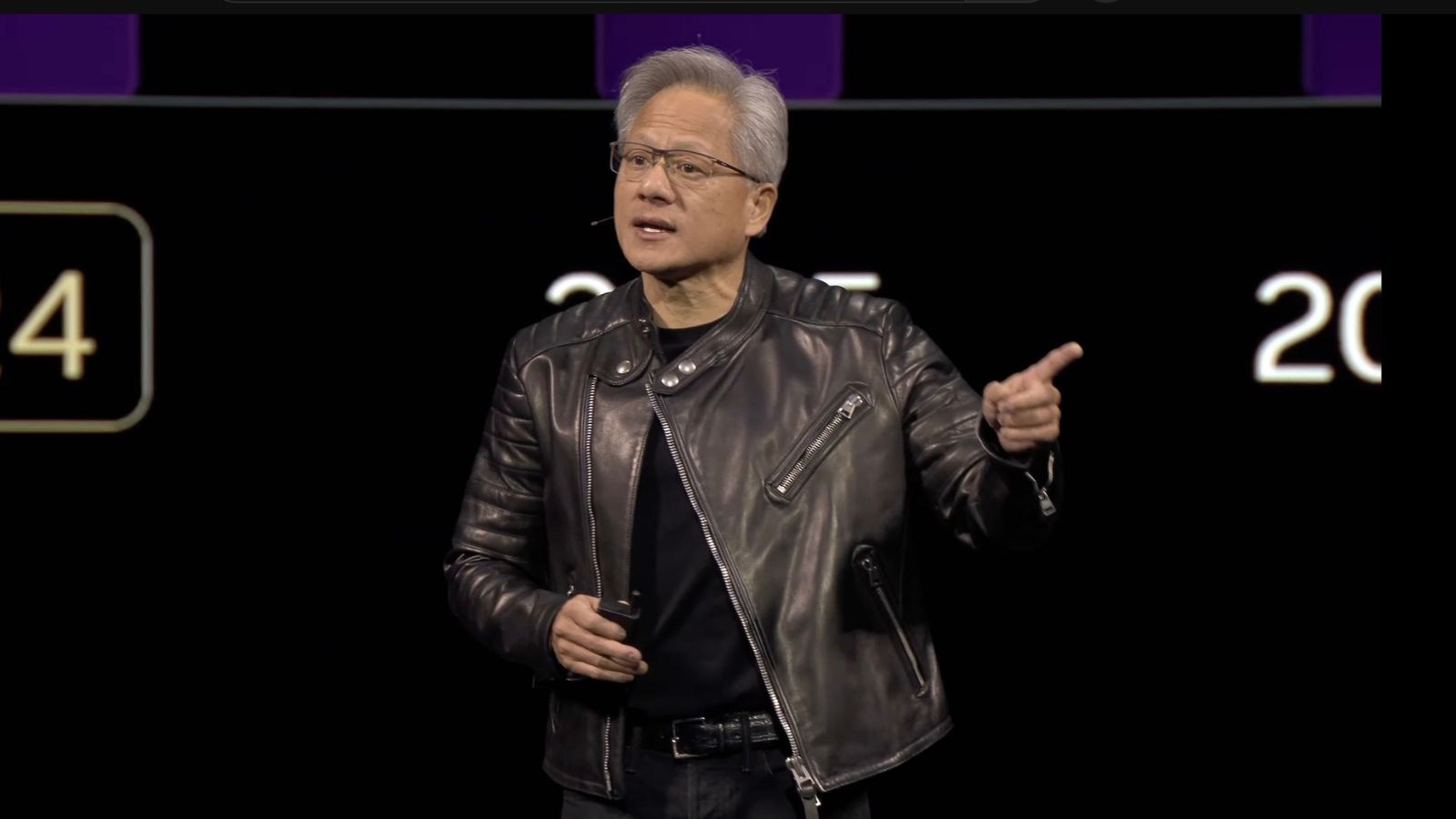

San Jose, California — In a moment that may come to define the next phase of the artificial intelligence revolution, Nvidia’s chief executive Jensen Huang stood before a packed audience at the company’s annual developer conference and made a declaration that stunned even seasoned investors: demand for its next-generation AI chips could reach $1 trillion in the coming years.
The figure, tied to Nvidia’s Blackwell and upcoming Vera Rubin architectures, is more than a financial projection. It is a signal, perhaps the clearest yet, that the global economy is entering a new era where computing power, not oil or labor, determines geopolitical and corporate dominance.
According to Reuters reporting on $1 trillion in AI chips demand, Nvidia has sharply revised its expectations upward, reflecting a surge in what executives describe as the next phase of the AI boom.
Just a year earlier, Nvidia had estimated roughly $500 billion in demand for these systems. The doubling of that projection reflects what Huang described as a structural shift in how artificial intelligence is built, deployed, and monetized.
At the heart of this transformation is the rapid rise of the AI inference economy, where machines generate real-time outputs at scale. Nvidia is betting heavily that inference, not training, will define the future of computing.
For years, the AI boom has been driven by training large models. But as highlighted in analysis of inference workloads and AI agents, the industry is now shifting toward deployment, where systems must respond instantly to billions of queries.
This shift is driving unprecedented demand for chips, and positioning Nvidia at the center of a new technological arms race.
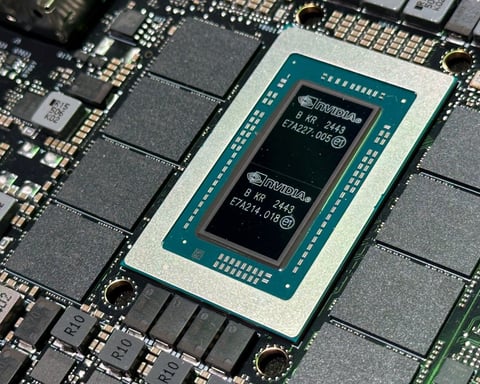
The company’s Vera Rubin architecture is designed specifically for this new phase. Unlike earlier systems, it focuses on efficiency and scale, enabling AI applications to operate continuously rather than intermittently.
Industry analysts describe Rubin as a next-generation AI computing platform capable of reshaping global AI infrastructure. Its integration of CPUs, GPUs, and networking technologies reflects Nvidia’s broader strategy of building entire ecosystems rather than standalone chips.
That ecosystem approach is central to Nvidia’s dominance. As explored in analysis of Nvidia’s expanding AI ecosystem, the company has evolved beyond hardware into a full-stack provider of AI infrastructure.
This includes software frameworks, developer tools, and cloud partnerships, all designed to lock customers into Nvidia’s platform.
But the stakes extend far beyond Silicon Valley.
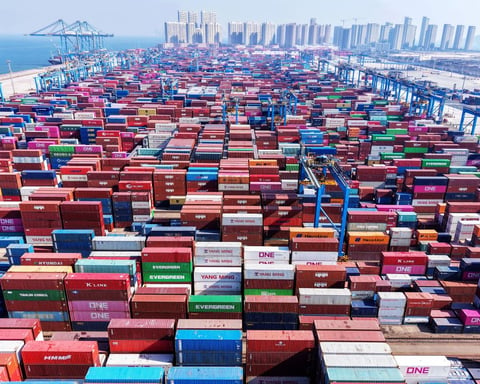
Governments and corporations around the world are racing to secure access to massive compute infrastructure. As noted in reporting on AI infrastructure expansion, the scale of investment in data centers and AI systems is reaching unprecedented levels.
These massive data center investments are transforming AI into a foundational layer of the global economy — one that touches everything from finance and healthcare to defense and surveillance.
The implications are profound. Control over global compute demand is increasingly seen as a strategic asset, shaping economic and geopolitical power.
Nvidia’s ambitions are not without competition. Tech giants and startups alike are developing alternative architectures, while governments impose restrictions that complicate global supply chains.
Yet Nvidia continues to push forward. Reports suggest its upcoming systems could be significantly more powerful than Blackwell, reinforcing its technological lead.
At the same time, partnerships and large-scale deals are accelerating adoption. The company’s growing role in AI infrastructure and global compute demand highlights how deeply embedded it has become in the industry’s future.
Still, not everyone is convinced.
Some investors warn that expectations may be outpacing reality. Concerns about supply constraints, rising costs, and potential overcapacity have introduced volatility into the market.
But even skeptics acknowledge the scale of the opportunity.
The economics of AI are shifting toward continuous usage. Unlike training, which occurs periodically, inference happens every time a system is used. Each query, each response, each automated action requires compute power.
This creates a recurring demand cycle, one that could sustain growth for years to come.
Nvidia is positioning itself not just as a supplier, but as the backbone of this new economy.
Its roadmap extends beyond Rubin, with future architectures already in development. Each generation promises greater performance, lower costs, and broader applications.
This relentless innovation reflects a deeper reality: the AI race is not a single event, but an ongoing transformation.
And at its center lies a simple question — who controls the infrastructure?
If Nvidia’s $1 trillion projection proves accurate, the answer may shape the future of global power.
For now, the company stands at the forefront of a technological revolution that is redefining industries, economies, and the very nature of work.
Whether it can maintain that position remains uncertain.
But one thing is clear: the race for AI dominance has entered a new phase — and it is measured not in lines of code, but in trillions of dollars.