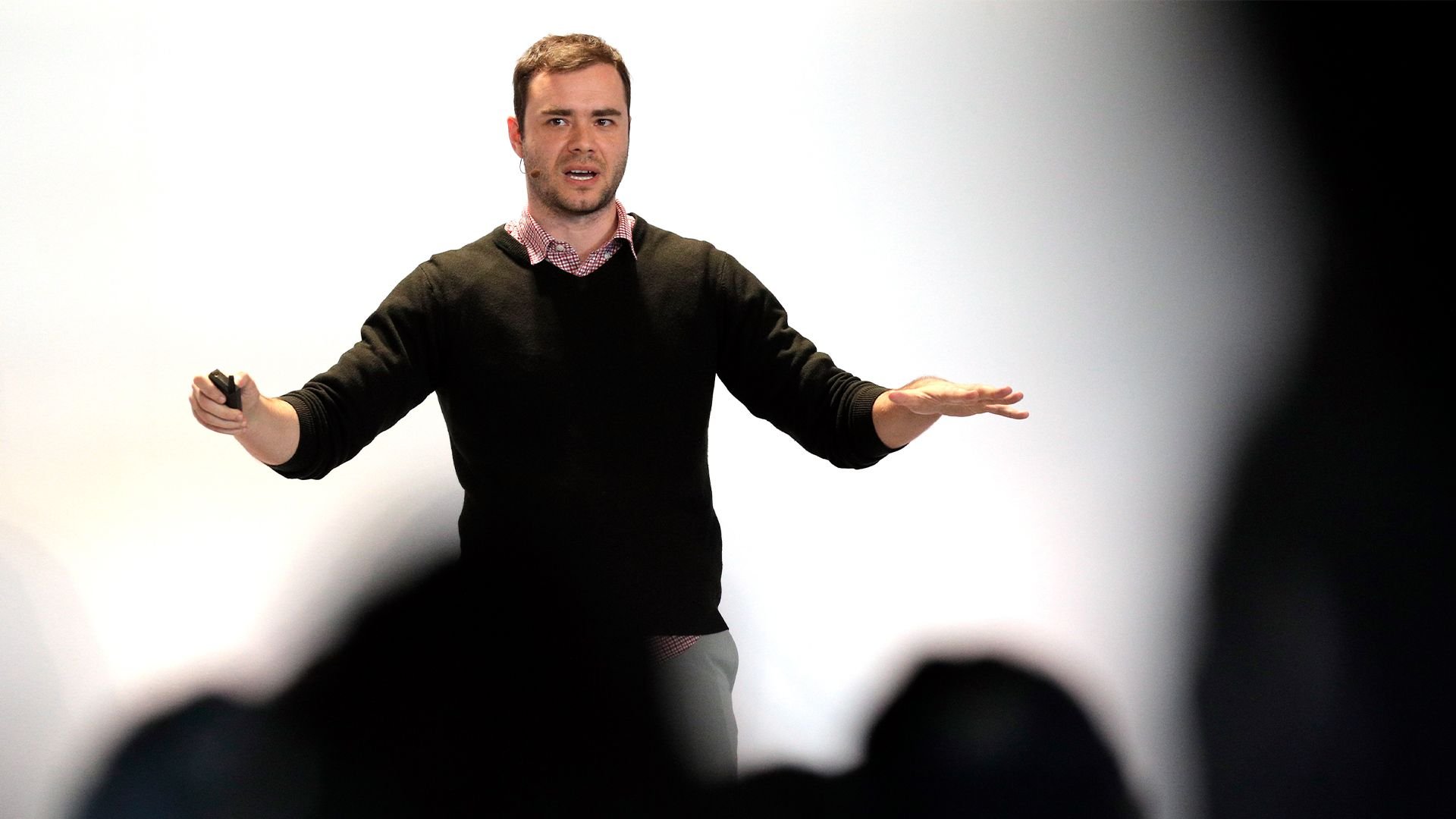

The artificial intelligence industry witnessed another major power shift on Tuesday after Andrej Karpathy, one of OpenAI’s founding researchers and a former Tesla AI executive, officially joined Anthropic’s pre-training division, delivering a symbolic and strategic blow to Sam Altman’s OpenAI empire at a time when competition over frontier AI systems is reaching unprecedented levels.
Karpathy confirmed the move publicly, saying he was excited to “get back to R&D” as the next phase of large language model development accelerates across Silicon Valley. His decision immediately triggered intense debate inside the AI community because Karpathy is not merely another senior engineer. He is widely viewed as one of the influential engineers in modern AI who helped transform deep learning from an academic discipline into the dominant force driving today’s AI revolution.
Anthropic confirmed Karpathy will work under Nick Joseph on the company’s pre-training team, the group responsible for developing the foundational intelligence behind Claude models. Pre-training has become one of the most strategically important areas in artificial intelligence because it determines how effectively models learn reasoning, language, coding, and multimodal capabilities before being refined into commercial products.
The hiring is being interpreted across the technology sector as a major victory for Anthropic in the intensifying war for elite AI researchers. While OpenAI remains the most recognized consumer AI brand through ChatGPT, Anthropic has steadily expanded its influence among enterprise developers, researchers, and coding professionals through Claude’s rapidly evolving capabilities.
Karpathy’s arrival gives Anthropic something even more valuable than technical expertise. It gives the company enormous credibility inside the global AI ecosystem.
Before becoming one of the internet’s most recognizable AI educators, Karpathy helped establish OpenAI during its formative years in 2015. He later joined Tesla, where he led computer vision and neural network development for the company’s Autopilot program. His work became central to Tesla’s ambitions around autonomous driving and large-scale AI deployment.
Following his departure from Tesla in 2022, Karpathy returned briefly to OpenAI before eventually launching Eureka Labs, an educational initiative that made him a globally recognized AI educator. His online lectures, coding tutorials, and neural network walkthroughs have influenced an entire generation of machine learning engineers.
Over the past year, Karpathy also became a highly influential voice in AI-assisted software development after popularizing the phrase “vibe coding,” a concept describing how modern AI systems increasingly allow developers to build software through natural-language interaction instead of traditional programming workflows.
His move to Anthropic arrives during a period of visible turbulence inside OpenAI itself. Several senior figures connected to OpenAI’s original mission have exited the company in recent years, including co-founder John Schulman, chief scientist Ilya Sutskever, and former CTO Mira Murati. Those departures fueled broader speculation about internal disagreements over commercialization, governance, safety priorities, and the long-term direction of artificial intelligence development.
Anthropic, meanwhile, has aggressively positioned itself as the primary challenger to OpenAI in the frontier model race. Founded by former OpenAI researchers including Dario Amodei and Daniela Amodei, the company initially built its reputation around AI safety and constitutional AI frameworks. But over the past two years, it has evolved into a full-scale competitor battling OpenAI, Google DeepMind, xAI, and Meta for dominance in enterprise AI infrastructure and advanced reasoning systems.
Claude models have gained substantial traction among developers, particularly in coding, long-context reasoning, and enterprise deployment. Anthropic has also expanded aggressively through major partnerships involving Amazon, Google, Nvidia, Microsoft, and cloud infrastructure providers.
The Karpathy recruitment demonstrates how the AI race is no longer centered solely around computing power or billion-dollar investments. Increasingly, the industry’s future depends on a relatively small circle of elite AI researchers capable of designing architectures, scaling training systems, and improving model reasoning efficiency at the frontier of machine intelligence.
Axios described Karpathy as uniquely influential because he bridges multiple worlds simultaneously, including academic research, industrial deployment, public education, and developer culture. That combination makes him one of the few AI figures whose opinions shape both engineering decisions and broader public narratives around artificial intelligence.
Karpathy himself hinted that Anthropic’s ambitions may extend far beyond incremental model improvements. In his announcement, he suggested the coming years would be “especially formative” for large language models, language that many AI observers interpreted as a sign the industry may be approaching another major leap in model capabilities.
That possibility is fueling anxiety and excitement across Silicon Valley simultaneously.
The race between OpenAI and Anthropic increasingly resembles a geopolitical technology contest rather than a normal corporate rivalry. Both companies are competing for top researchers, global cloud infrastructure, enterprise dominance, government influence, and eventually control over systems that may redefine labor markets, software development, military technologies, education, and information ecosystems.
Anthropic’s growing momentum has also intensified concerns inside the wider AI industry that OpenAI’s once-unquestioned leadership position is becoming more vulnerable. Claude has gained strong adoption among programmers and enterprise users, while OpenAI continues balancing commercial expansion with growing scrutiny over safety, governance, and monetization strategies.
Karpathy’s decision to align himself with Anthropic instead of returning to OpenAI sends a message that many in Silicon Valley will interpret carefully. In frontier AI development, perception matters almost as much as technology itself. When one of the field’s most respected researchers chooses a rival lab over the company he helped create, the symbolism reverberates throughout the industry.
For Anthropic, the recruitment represents more than a headline-grabbing hire. It signals that the company believes the next decisive phase of the AI race will be won through foundational model research and elite engineering talent rather than marketing alone.
OpenAI’s broader push into AI coding, AI agents, and consumer chatbot ecosystems has also increased scrutiny around governance, privacy, and long-term control of generative AI systems. The debate intensified further following multiple controversies involving AI chatbots, enterprise safety concerns, and internal disputes over commercialization strategies.
The rivalry is also reshaping the broader corporate technology sector. Companies including Microsoft, Amazon, Google, and Nvidia are rapidly restructuring investments and partnerships around AI infrastructure, while crises surrounding corporate AI strategy continue exposing how fragile the competitive landscape has become.
Anthropic itself has increasingly become central to national-security and military AI debates following tensions involving the Pentagon, frontier AI deployment risks, and escalating global competition over strategic computing systems.
And in Silicon Valley’s escalating AI cold war, Andrej Karpathy may have just made one of the year’s most consequential moves.