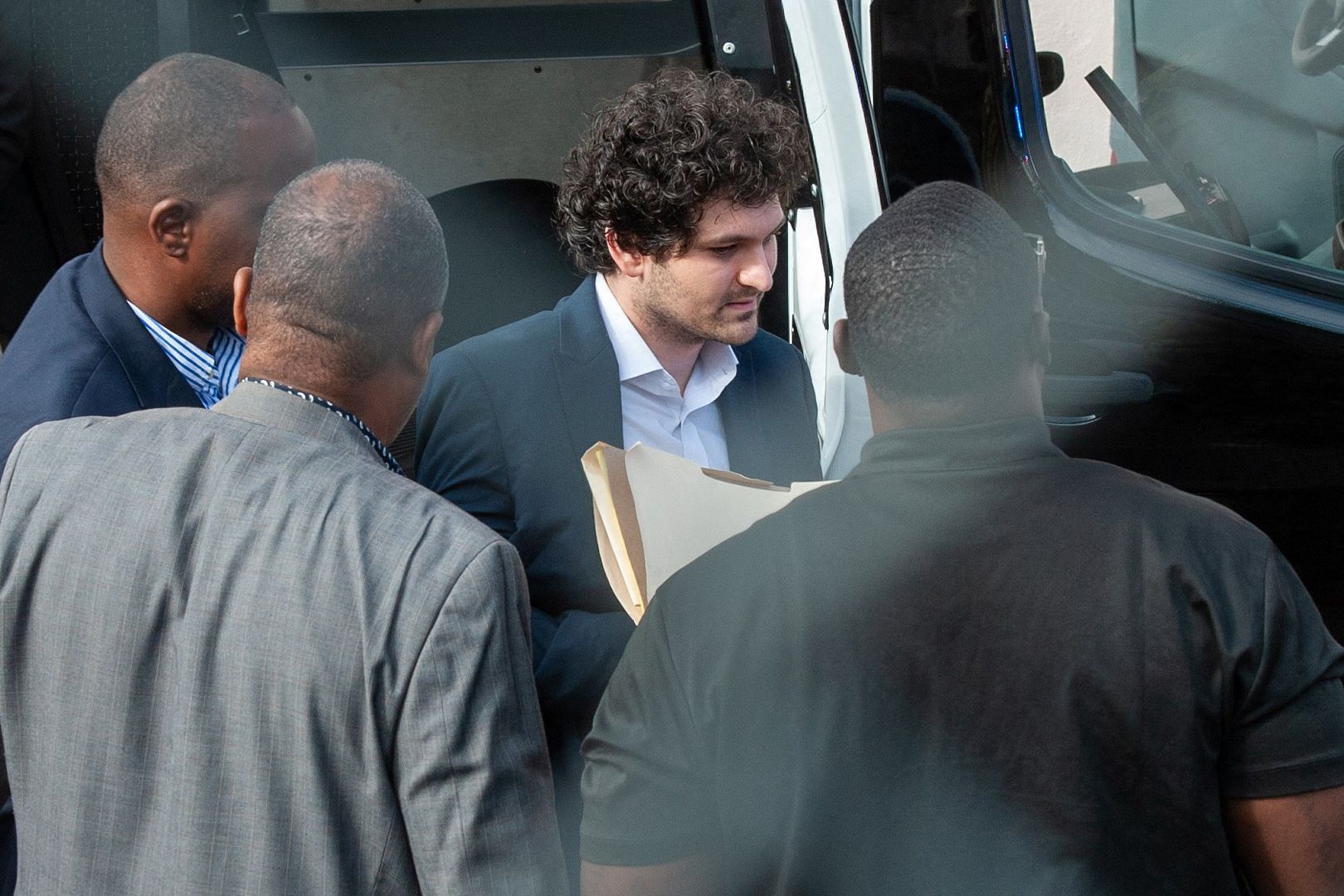

WASHINGTON – The clemency application appeared on Monday in the records maintained by the Justice Department’s Office of the Pardon Attorney. Listed as pending review, the filing by Sam Bankman-Fried, the imprisoned founder of collapsed cryptocurrency exchange FTX, formalized what had been an open but unofficial lobbying campaign stretching more than a year: a request to President Donald Trump for a pardon.
The application specifies a “pardon after completion of sentence,” the narrower of the two main clemency categories, which stops short of asking for immediate release. What it does ask for, if granted, is the removal of the federal conviction itself. Bankman-Fried is serving a 25-year term at a low-security federal correctional facility in Santa Barbara, California, where he is not scheduled for release until October 2044.
The formal filing does not shift the political calculus. Trump told The New York Times in January 2026 that Bankman-Fried should not count on clemency, grouping him alongside former Senator Robert Menendez and Venezuelan President Nicolás Maduro as figures outside the scope of his pardon consideration. A White House spokesperson, responding to inquiries Monday about the new filing, directed journalists to those January remarks. Nothing, the spokesperson indicated, had changed.
What makes the filing notable is its timing alongside two separate legal tracks that Bankman-Fried is simultaneously pursuing. His appeal of the underlying conviction is pending before the U.S. Court of Appeals for the Second Circuit, argued in November 2025 and awaiting a ruling. A separate Rule 33 motion seeking a new trial, filed in February 2026 in federal district court with his mother, Stanford Law professor Barbara H. Fried, submitting materials on his behalf due to his incarceration, is also working through the courts. The pardon petition adds a third channel to a legal strategy that is, by any measure, running every available avenue at once.
None of the three are considered strong bets. The Second Circuit heard arguments last November on whether Bankman-Fried was “hamstrung” at trial by prejudicial rulings from U.S. District Judge Lewis Kaplan, who imposed the 25-year sentence and an $11 billion forfeiture order in March 2024. Federal prosecutors, who described the FTX fraud as “likely the largest fraud in the last decade,” have asked the appeals court to affirm both the conviction and the forfeiture.
The context in which Bankman-Fried is seeking the pardon has been carefully, if not always subtly, constructed. Since late 2025, Trump’s relationship with the broader cryptocurrency industry has grown considerably warmer, and the president has granted clemency to a series of figures connected to the sector. Ross Ulbricht, the Silk Road founder, walked free on Trump’s second day in office; three BitMEX co-founders received full pardons in March 2025; Binance’s Changpeng Zhao obtained clemency as well. Bankman-Fried has watched these decisions from prison, and his X account, operated by a friend as a proxy channel under Bureau of Prisons communication rules, has conspicuously praised several Trump policy positions, including the pardon of former Honduran President Juan Orlando Hernández in December 2025.
That campaign of public alignment has not moved the White House. Pro-crypto Republicans in Congress have been, if anything, more hostile than the administration: Senator Cynthia Lummis remarked in February that Bankman-Fried “doesn’t realize the CLARITY Act would have you locked up for much longer than 25 years.” The bipartisan negativity toward his case, with Democrats who once received his political contributions turning sharply against him after the FTX collapse and Republicans pointing to those same donations as disqualifying, leaves him without a natural constituency inside Washington.
The financial backdrop to the pardon petition is, in one sense, the most complicated element. FTX’s bankruptcy estate has now distributed billions of dollars to creditors. A fourth distribution in March 2026 delivered $2.2 billion, bringing U.S. customer claims to full or near-full recovery in several categories, with some classes receiving between 100 and 120 percent of allowed claims as valued at the November 2022 petition date. That recovery trajectory was not visible in the months immediately after FTX collapsed, when the hole in its accounts, exposed by the balance sheet of affiliated trading firm Alameda Research, was estimated at more than $8 billion.
For Bankman-Fried and his supporters, the creditor recovery is central to the argument that the severity of the sentence no longer fits the harm. For prosecutors, the court, and much of Capitol Hill, the scale of the original fraud, not the outcome of the bankruptcy proceedings, is what defines the case. That gap in framing is unlikely to close under the current administration.
The Justice Department’s Office of the Pardon Attorney said Monday that the details of ongoing reviews are not publicly disclosed. The filing’s status as “pending” means a petition has been opened; it does not signal any movement toward a decision. Trump has issued more than 1,600 pardons in the first year of his second term, the Wall Street Journal reported, dwarfing the fewer than 250 he issued across his entire first four-year term. Whether Bankman-Fried will appear anywhere in that ledger is a question the DOJ’s pardon office, and the White House, have declined to answer.