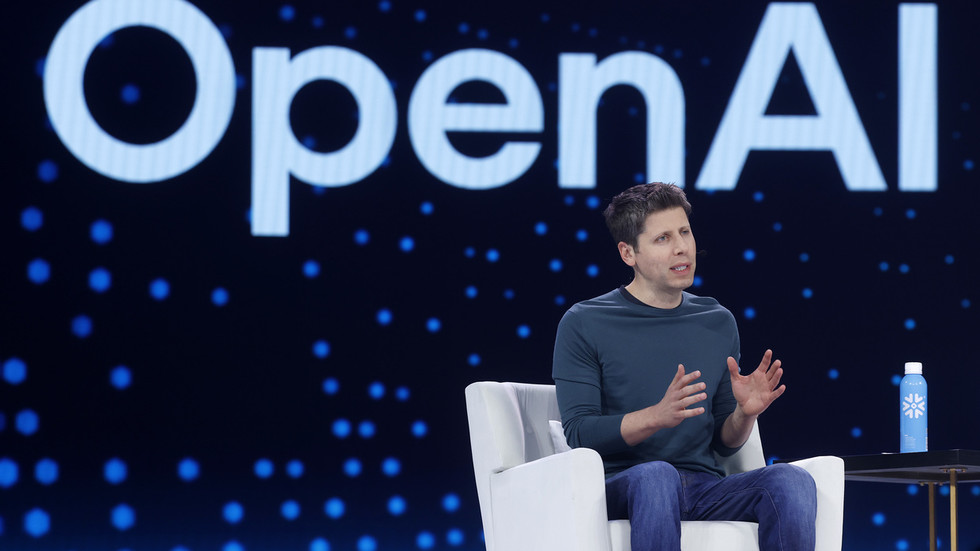

SAN FRANCISCO — The most anticipated stock market debut in technology has a filing now, but still no date, no price, and no figures anyone outside the company is allowed to see. OpenAI confirmed on Monday that it had submitted confidential paperwork for a United States initial public offering, then almost immediately tried to cool its own news, cautioning that an actual listing “may be a while” away.
That contradiction is the story. The maker of ChatGPT is stepping toward the public markets at the same moment it is telling investors not to count on the payoff arriving soon, and the distance between those two messages is where the risk sits. A confidential submission to the Securities and Exchange Commission starts a clock without promising a finish line. It lets a company begin the review process while keeping its revenue, its losses, and the banks running the deal out of public view. Since 2017 the SEC has allowed any firm, not just small ones, to file this way, and the largest names in technology have learned to use the privacy for as long as the rules permit.
OpenAI’s move arrived about a week after its closest rival, Anthropic, lodged its own confidential paperwork, and only days after SpaceX began the roadshow for a separate blockbuster listing. Three of the most valuable private companies in the country are now crowding toward the same exit at once. The timing is not an accident. The window for selling artificial intelligence optimism to public investors is open right now, and every one of these companies knows that windows like this close without much warning. It was only weeks ago that the trillion-dollar AI frenzy met its first real reality check.
Here the numbers refuse to behave. OpenAI was last valued at roughly $852 billion in a funding round in March, and its shares changed hands on secondary markets near $880 billion in April, according to figures compiled by TechCrunch. Yet the previews of the coming IPO have floated valuations ranging from $850 billion to as high as $1.4 trillion, depending on which bank, broker, or unnamed source is doing the math. Not one of those figures comes from OpenAI itself. A confidential filing discloses none of them, which means the most quoted numbers about the deal are, for now, educated guesses dressed up as facts.
What is not in dispute is the spending. By its own projections, OpenAI does not expect to turn cash flow positive for at least four more years. The company has signaled to investors that it could burn through something on the order of $85 billion in 2028 alone, while directing roughly $122 billion toward the computing power its research devours. Those are not the figures of a business asking to be priced on its fundamentals. They are the figures of a wager on what the technology becomes.

The wager is also losing ground to the company directly behind it. Anthropic, founded by researchers who left OpenAI, has climbed toward a $1 trillion valuation on private secondary markets and added more than 120 percent over the past year, while OpenAI’s own paper value rose a comparatively quiet 11 percent across the same months. That gap helps explain the urgency. Anthropic’s last private round already valued it near the top of the industry, and OpenAI has meanwhile missed internal targets for new users and revenue, the Wall Street Journal has reported. The two firms now openly disagree even on the basic question of how quickly the technology will upend the labor market.
None of that has cooled the demand. OpenAI says roughly 900 million people use its products every week, a distribution figure that explains why bankers keep circling and why the valuation estimates keep drifting upward. Reach on that scale carries its own gravity. It is the strongest argument for the listing, and it is the reason the absence of profit has so far been treated as a footnote rather than a flashing light.
OpenAI’s explanation for the delay points at its own structure rather than at the market. There are things the company wants to do “that are likely easier as a private company,” it said, language elastic enough to cover anything from its complicated conversion into a for-profit entity to deals it would rather not conduct under the gaze of public shareholders. The statement confirms that a filing exists. It pointedly does not say the company is eager to live by the disclosure rules that come with a ticker symbol.
Pull back and the shape of it is familiar. A small cluster of American companies is trying to convert an enormous surge of private capital into public money before the mood turns, and the same names, the same chips, and the same handful of investors keep reappearing in one another’s deals. Washington has even floated taking government equity stakes in leading AI firms, a measure of how strategic, and how fragile, the sector has come to look. A public listing would force at least one of these companies to finally open its books to anyone with a brokerage account.
For now OpenAI has chosen the cheaper move. It has filed the paperwork that signals ambition without releasing the figures that would test it. The investors who have spent two years trying to buy a sliver of the company still cannot, and when they eventually can, the prospectus will have to answer the question the confidential filing was built to postpone. Whether a business losing tens of billions of dollars a year can truly be worth more than a trillion is not a matter of momentum. It is a matter of arithmetic that no one outside OpenAI has yet been allowed to check.