
DUBAI — The two American pilots were rescued. That much, at least, was not in dispute. Everything else about the crash of a US Army Apache attack helicopter near the Strait of Hormuz — the most consequential stretch of water in the ongoing Iran conflict — remained unanswered Tuesday morning, and the silence from both Washington and Tehran said more than either government intended.
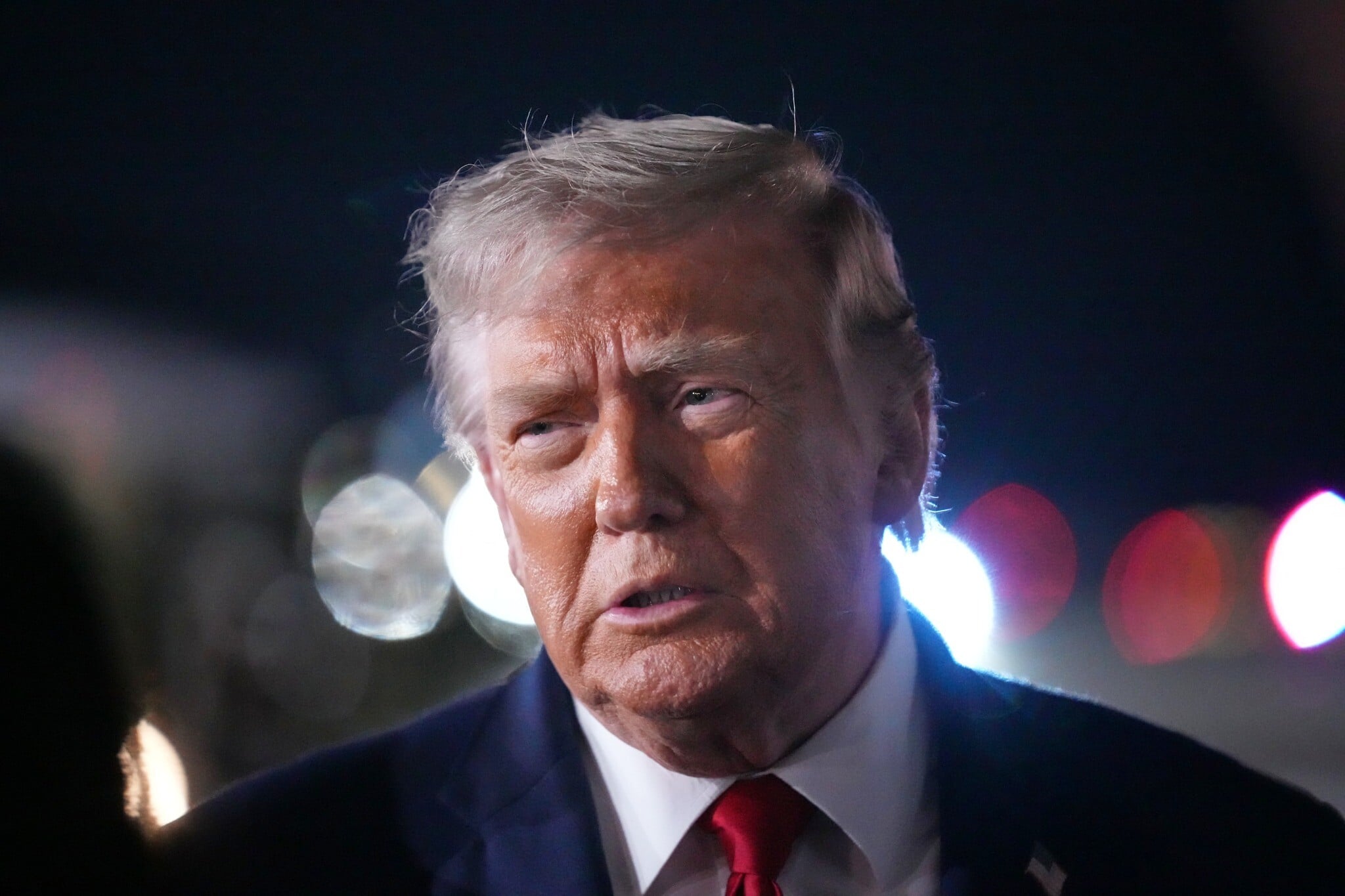
President Donald Trump confirmed the incident Monday night at John F. Kennedy International Airport in New York, speaking to reporters before boarding Air Force One after attending the NBA Finals at Madison Square Garden. “The pilots are fine. Yeah,” Trump said. “Nobody injured. We are going to issue a report tomorrow. But the pilots are fine.” When asked directly whether he knew what had brought the helicopter down, he offered nothing. A report would come, he said. It had not arrived by Tuesday morning.
The New York Times first reported that the US Army Apache gunship had gone down near the strait. The US military’s Central Command — CENTCOM — and the Defense Department did not immediately respond to requests for comment from the Associated Press. Iranian state media acknowledged the crash without elaborating, relying entirely on foreign reporting rather than issuing any statement of its own. That restraint, in the context of a war now more than 100 days old, was itself a signal — though of what, no one was yet certain.
The question that hung over the incident was not whether the pilots survived. It was whether the Apache was shot down. The distinction matters enormously. Apache helicopters have been a central asset in the US military’s enforcement of a naval blockade on Iranian-controlled shipping lanes through the Strait of Hormuz — the chokepoint through which roughly 20 percent of the world’s traded oil ordinarily passes, now operating under a contested and commercially devastating Iranian fee regime. A confirmed shoot-down would represent an escalation of a different order than anything the fragile ceasefire has so far survived.
The timing could hardly have been worse chosen — or better, depending on which side of the negotiating table one occupies. Just hours before the crash was confirmed, Trump told reporters he could have “an idea” for an Iran deal within a few days, without elaborating. He has said versions of this before. Since the US and Israel began striking Iran on February 28, Trump has repeatedly hinted at imminent breakthroughs that have not materialized. The April ceasefire, reached after weeks of strikes and counter-strikes, failed to harden into a permanent agreement. On Sunday — the day before the helicopter went down — Iran and Israel exchanged fire again in what observers described as the most serious blow yet to that already-strained truce.
The crash, in other words, landed at the exact moment the administration was asking the world — and Tehran — to believe a deal was close. Whether it complicates or catalyzes that prospect depends entirely on the answer to the one question no one had yet officially provided: what brought the aircraft down.
Apache gunships are not passive patrol assets. In the Hormuz enforcement operation, they have been used to shadow Iranian vessels, provide close air support for US Navy boarding teams, and deter interference with commercial shipping. They fly low and slow over contested water. That operational profile makes them effective — and exposed. Iran’s Islamic Revolutionary Guard Corps Navy tested its Sayyad-3G ship-based surface-to-air missile in the Strait of Hormuz as recently as February, Fox News reported, a system with a stated range of roughly 150 kilometers. Whether any such capability was employed against the Apache on Monday remained officially unconfirmed.
Mechanical failure in high-tempo maritime environments is also a documented risk. The Hormuz operating theater combines salt air, heat, sustained low-altitude flight, and the kind of operational pressure that accelerates equipment degradation. Neither CENTCOM nor the Pentagon gave any indication of which explanation was under investigation.
What is known is the broader context in which the crash occurred. Trump declared on Sunday night — the same evening he watched the NBA Finals — that both Iran and Israel had agreed to halt attacks on each other. Tehran warned it would resume hostilities if Israel continued striking Hezbollah in Lebanon. Israeli aircraft struck targets near the Lebanese city of Tyre on Tuesday. The ceasefire, such as it was, was already under pressure before the Apache went down near the strait.
Vice President JD Vance said Tuesday that an Iran nuclear deal would be a “home run for the American people” regardless of Israeli objections — the most explicit public signal yet that Washington was prepared to reach an agreement with Tehran over Israeli protests. That framing, combined with Trump’s deal-is-days-away comment, suggested the administration was leaning into diplomacy. A confirmed Iranian shoot-down of a US military aircraft would make that posture significantly harder to sustain domestically.
On Day 100 of the Iran war, Netanyahu defied Trump and ordered strikes against Iranian targets anyway, fracturing what remained of the joint operational framework between Washington and Jerusalem. That episode illustrated the degree to which the conflict had acquired its own momentum — one that individual decisions by heads of state could not reliably contain. The Apache crash fits that pattern precisely: an event whose consequences depend not on what actually happened, but on who says what about it first, and whether anyone believes them.
Trump promised a report. As of Tuesday morning in the Middle East, it had not come. Trump has described Iran as “virtually decapitated” — its supreme leader killed, its military command fractured, its economy under severe sanctions pressure since February. A military that is virtually decapitated can still fire a surface-to-air missile. Whether it did is the only question that matters now, and Washington has not yet answered it.
The war has already driven global energy prices sharply higher, disrupted shipping across multiple ocean routes, and forced governments from Seoul to Brussels to recalibrate their strategic assumptions about the Middle East. According to the Associated Press, the conflict has made food and basic goods more expensive in countries with no direct stake in its outcome. A crash whose cause remains classified — or simply unknown — is a reminder that the region’s most consequential waterway is still, very much, a war zone.