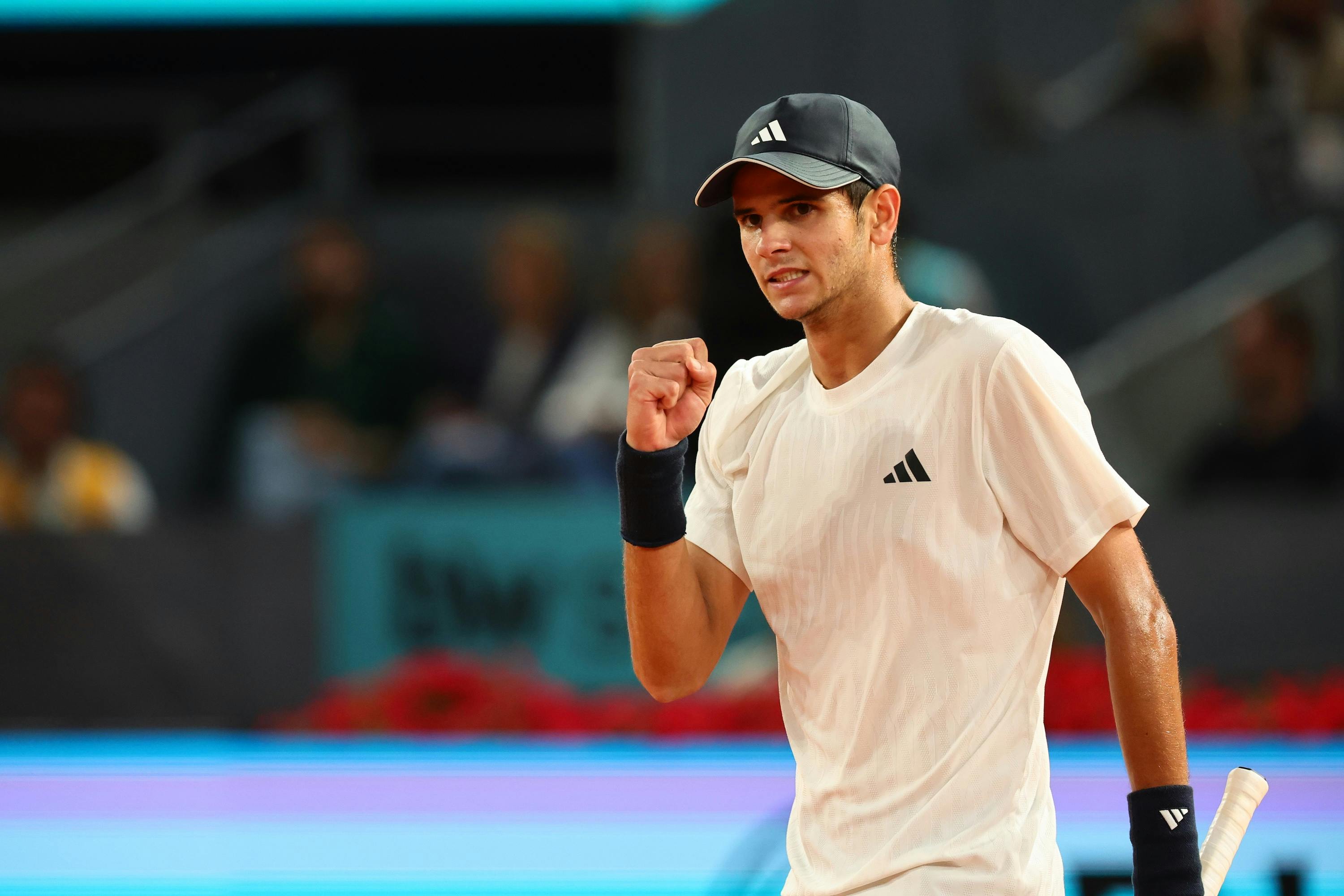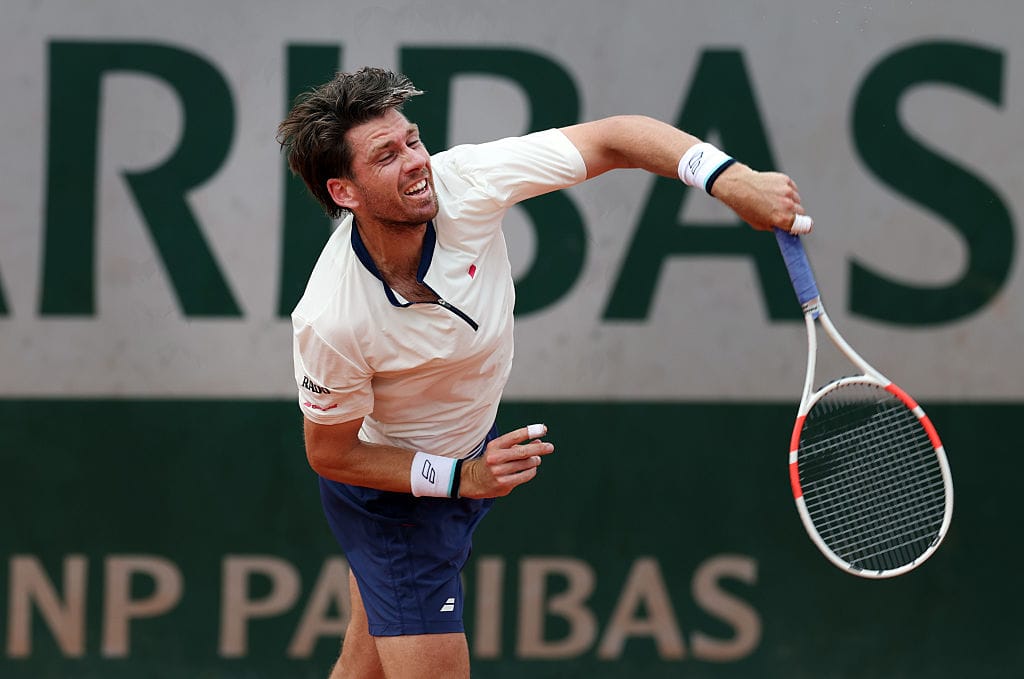

PARIS — Cameron Norrie walked off Court Philippe-Chatrier two games into his first-round match at Roland Garros and did not return. The retirement, forced by an injury he had picked up the week before in Geneva, came at the worst possible moment: Norrie had just completed the best clay court season of his recent career, reaching the fourth round in Madrid and earning a meeting with world No. 1 Jannik Sinner, and Paris had felt, briefly, like it might carry that momentum forward. It did not. What remains now, as the season shifts from red clay to green grass, is one overriding question — can he be ready for Wimbledon in five weeks?
The answer is not yet known, and that uncertainty sits uncomfortably at the heart of any honest assessment of where British tennis stands as summer begins. Strip away Norrie’s enforced absence in Paris and the clay season yielded genuinely encouraging signs: Toby Samuel qualified for the main draw through three rounds of qualifying and gave world No. 9 Alex De Minaur a set; Katie Boulter went two and a half sets with Anastasia Potapova in the second round; Francesca Jones won her first Roland Garros main draw match at 28. But the absence of any British singles player in the second week of a Grand Slam — for the sixth consecutive major — is a structural problem that surface-specific optimism cannot fully address.
Norrie’s run to the last 16 in Madrid, where he defeated Tomas Machac in a tight three-set encounter before outlasting Thiago Agustin Tirante and ultimately running into Sinner, was his most convincing clay stretch since he was ranked inside the world’s top 10. The Geneva defeat to Mariano Navone, a routine clay-court specialist, was less significant than what followed it — a retirement that short-circuited the entire Paris campaign and introduced a fitness cloud that is now trailing him directly into the grass court schedule. Norrie reached the Wimbledon quarter-finals last year. Whether he can defend those points, or even compete for them, remains the most consequential open question in British tennis right now.
Elsewhere among the men, Jacob Fearnley’s clay season illustrated the difficulty of a player trying to re-establish himself in the world’s top 100 on a surface that has historically been his weakest. He qualified for Rome, which was itself an achievement, and his first-round loss there to Giovanni Mpetshi Perricard — a player ranked inside the top 30 — was less damaging than the Roland Garros result, where he fell in straight sets to Juan Manuel Cerundolo in the opening round. Fearnley’s grass court record is considerably stronger, and he will arrive at Wimbledon with more conviction than he carried through the spring.
Jan Choinski won the Zagreb Challenger title — his first at that level — and then withdrew from Roland Garros qualifying in the second round. The withdrawal, rather than the title, will dominate his preparation concerns. What is not in dispute is that Choinski holds an automatic main draw entry to Wimbledon and carries record on grass that makes him one of the more intriguing British prospects at SW19, having beaten Holger Rune there two years ago. Zagreb was a statement of fitness and competitiveness. The question is whether the clay swing left him fresh enough to build on it.
Samuel’s qualification for the Roland Garros main draw was the kind of result that does not translate neatly into a headline but matters considerably in terms of trajectory. He is inside the world’s top 200 and still improving, and his ability to handle pressure in three successive qualifying matches — including a first-round win over David Goffin — demonstrated a composure that was not always visible in previous seasons. A first round loss to De Minaur in straight sets was the appropriate context check; it was not a lesson in failure so much as a calibration of where he is now against where the top 10 begins. He will want a Wimbledon wildcard and has a reasonable case for one.
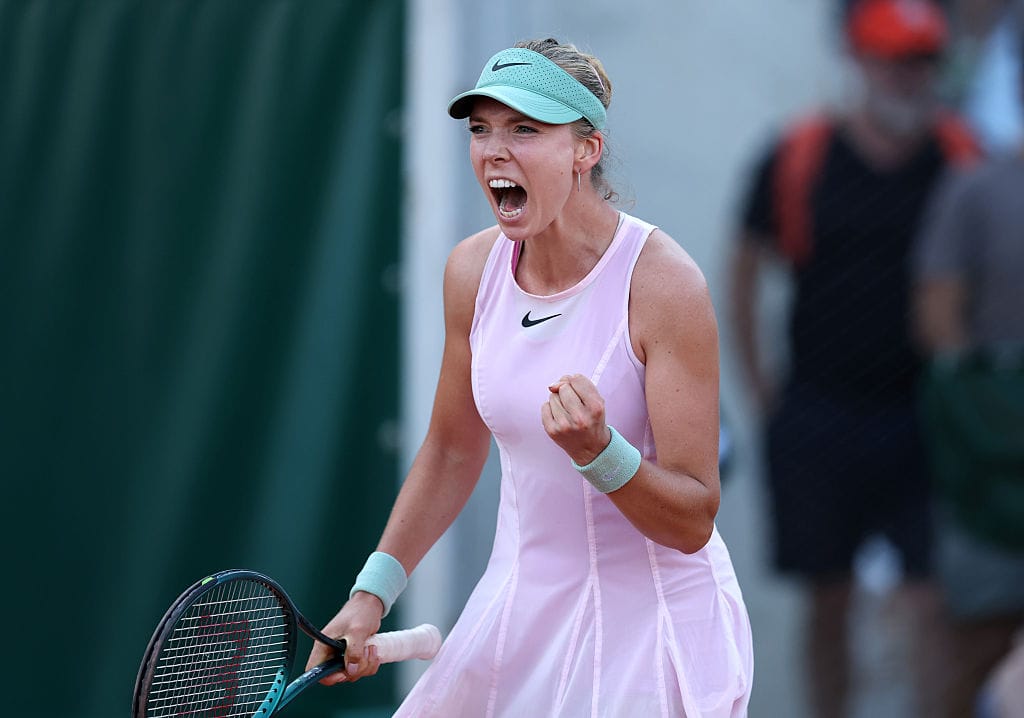
Arthur Fery’s Zagreb semi-final run, where he defeated Yannick Theodor Alexandrescou before losing to Choinski, reinforced what his 2025 season had already suggested: he is an awkward opponent on every surface, with an ability to manufacture discomfort that belies his ranking. His Wimbledon record — wins in qualifying and competitive first rounds at the main event — gives him genuine cause for confidence. Fery is one of those players whose ranking slightly undersells his danger level in match play, and the grass should treat him well.
Among the women, a Roland Garros fortnight that ended without a British player reaching the fourth round in singles nonetheless produced two results worth carrying into the grass season. Boulter beat Taylor Townsend at the Madrid WTA event and then pushed Potapova — one of the form players in women’s tennis since the spring — through two hours and thirty-five minutes before the Russian closed it out 2-6 in the third. That kind of result, not the scoreline but the quality of the competition, is what Boulter needs to sustain through Queens Club and into Wimbledon.
Jones’s Roland Garros win over Beatriz Haddad Maia — a player ranked 17th in the world entering the tournament — in three sets was the single most significant result by a British woman on clay this season. It was not the win alone but the manner of it: Jones dropped the first set 1-6, then won the second in a tiebreak and took the third cleanly. That is a different profile of match to what her ranking might suggest, and it underlines why keeping herself inside the top 100 going into Wimbledon is not simply a survival target but a platform. She has qualified for Wimbledon main draws before from inside that threshold and competed there credibly.
Emma Raducanu’s clay season amounted to a Strasbourg first-round loss to Diane Parry and an opening-round defeat at Roland Garros to Solano Sierra, ending 0-6 in the first set before she lost the second in a tiebreak. It was, by any measure, a difficult two weeks on the surface. Roland Garros 2026 underlined that the transition from hard-court results — where Raducanu has shown genuine flashes of top-30 potential — to clay remains work in progress. The reunion with a former coach has generated headlines; the grass season will generate the evidence. Wimbledon, where she has consistently performed above her ranking, is the appropriate benchmark. Two clay matches is not the right sample size to read much into.
What the clay season made legible, in aggregate, is a British cohort that is genuinely improving at the margins — Samuel and Fery developing, Choinski adding silverware, Boulter and Jones holding their ground at the top of the women’s game — while remaining some distance from the second weeks of Grand Slams that constitute the real measure of progress. Jack Draper, Britain’s No. 1 and a player who reached a Masters 1000 final on clay last year, did not feature prominently in the clay-court conversation this season, which is a separate story. The grass is where British tennis has historically found its identity, and the next six weeks will determine whether the clay-court limitations are a ceiling or just a floor that hasn’t been raised yet. The answer, as ever, may depend significantly on whether Norrie can get himself fit in time to contribute to it.