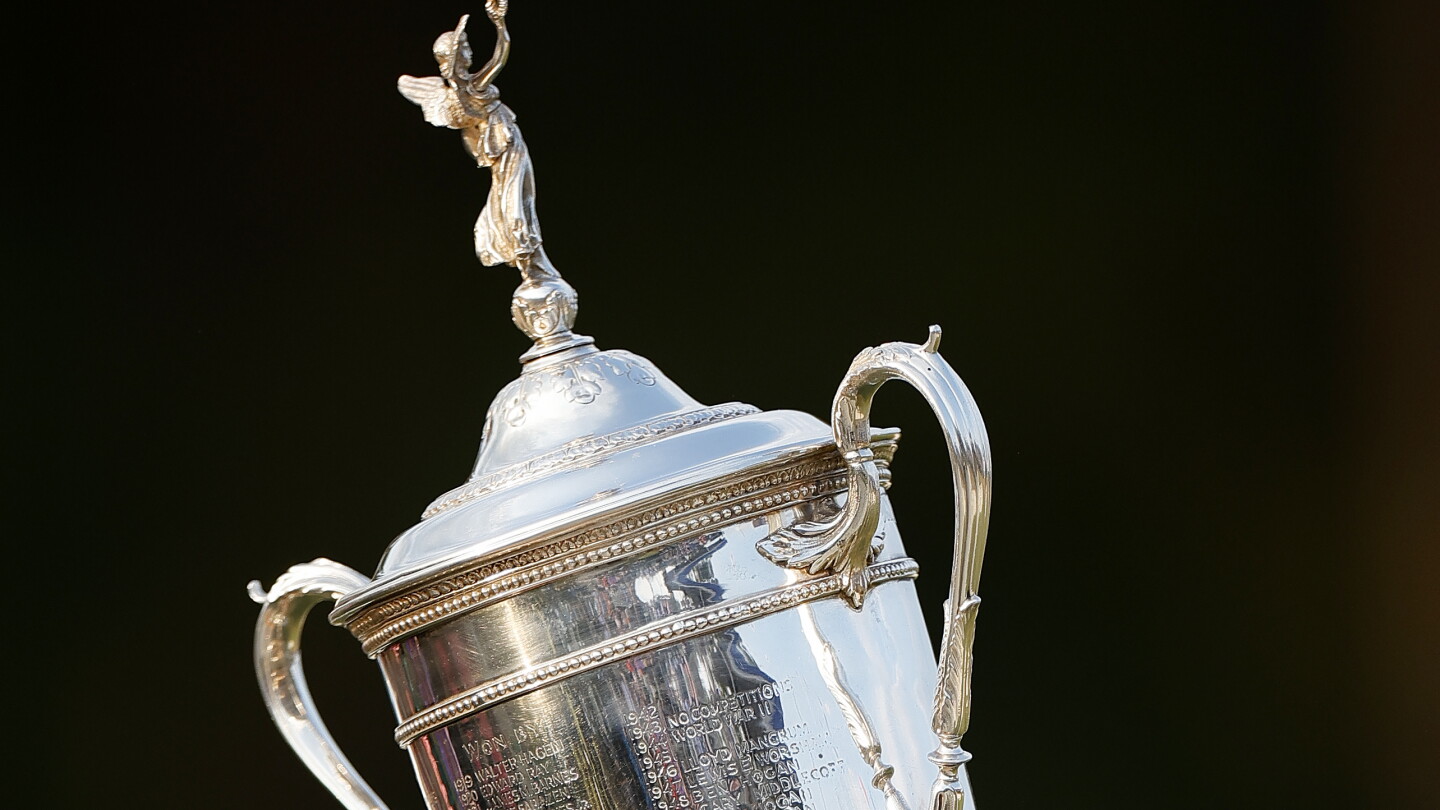

SOUTHAMPTON, N.Y. — The number that will define Shinnecock Hills this week is not found on a betting board. It is six. As in six prior U.S. Opens played on this sandy, wind-swept stretch of Long Island, and six times the man who arrived as the betting favorite failed to lift the trophy. The course does not care about world rankings or form charts. It asks a specific set of questions about patience, trajectory control, and the willingness to play away from flags in crosswinds — and the answers do not always belong to the names at the top of the market.
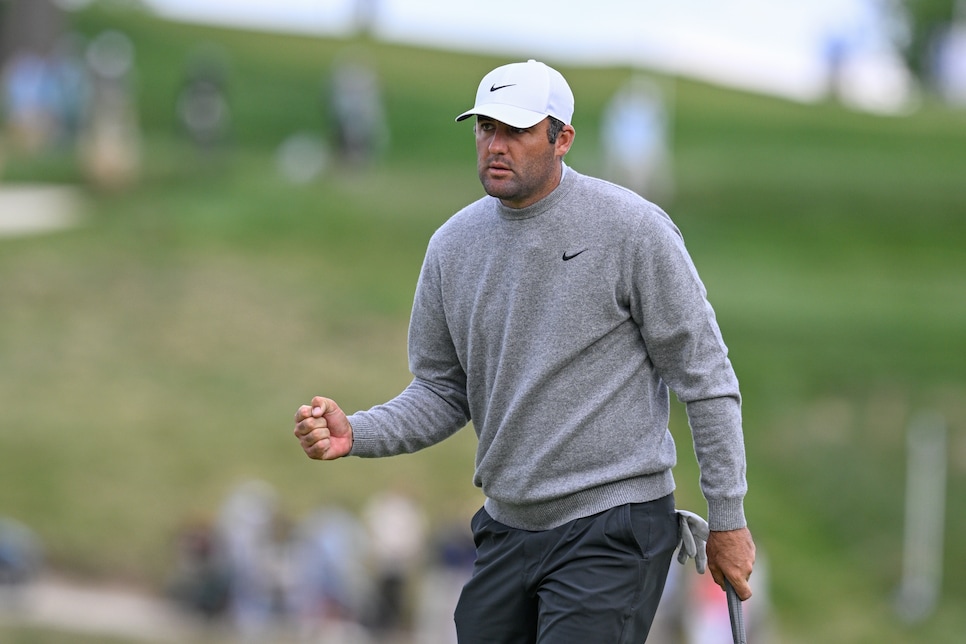
This is the problem, and the opportunity, facing the 126th U.S. Open field when it assembles at Shinnecock on June 18. Scottie Scheffler is the overwhelming favorite at roughly +490 across major sportsbooks, carrying with him the additional weight of the career Grand Slam — the victory that would place him alongside Gene Sarazen, Ben Hogan, Gary Player, Jack Nicklaus, Tiger Woods, and Rory McIlroy in golf’s most exclusive company. Sunday of U.S. Open week also happens to be Scheffler’s 30th birthday. The storyline writes itself. Shinnecock, however, has never been in the business of accommodating narratives.
Scheffler has not won in 11 PGA Tour starts since his Open Championship victory last summer, though the drought is softer than it sounds: six top-four finishes in that span, including three runners-up. His game is structurally sound. What Shinnecock tests — the ability to hit mid-irons into firm, sloping greens with the wind altering ball flight by three clubs in either direction — is not necessarily his weakest discipline. But the pressure of a Grand Slam attempt at a venue with this much historical resistance to favorites creates an uncertainty that pure form data cannot resolve.
That uncertainty is where the analytical interest actually lives this week. Cameron Young, at +1500 to +1800 depending on the book, is arguably the most compelling player in the field on a risk-adjusted basis. His 2026 has been the best sustained run of his career — multiple wins, a third-place finish at the Masters, and consistent top-10 results in Signature Events. He is long enough at Shinnecock to take club out of his hands on several approach shots, which has historically been a measurable advantage at a venue where controlling spin and stopping distance matters more than raw yardage. He is also playing in a home state, for what that is worth, which in major championship conditions may mean something or nothing depending entirely on how the first nine holes of Thursday go.
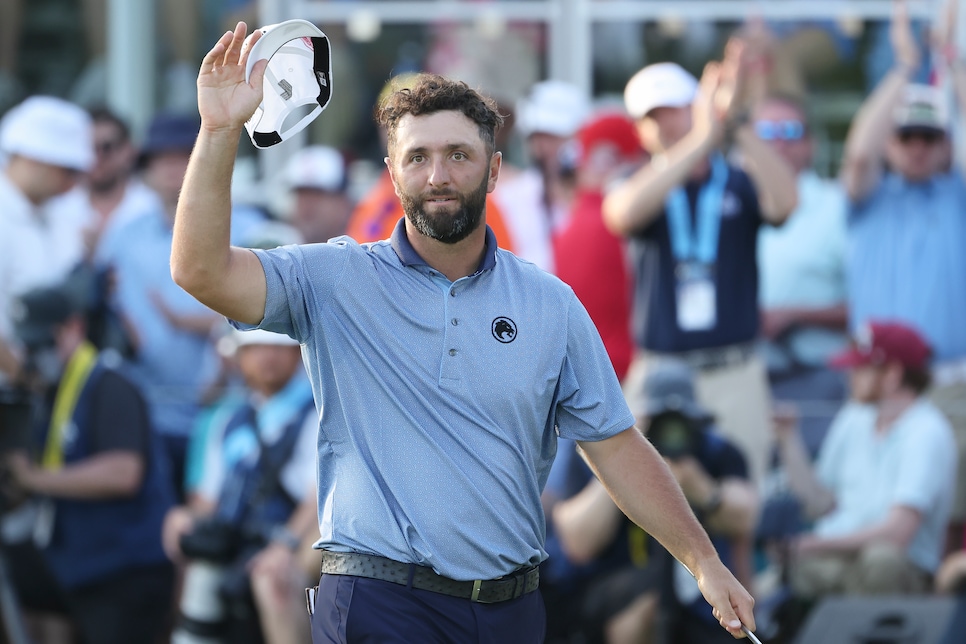
The more structurally interesting case belongs to Jon Rahm. Listed between +1200 and +1400 across the major books, Rahm carried one of the better second-nine charges at the PGA Championship at Aronimink before Aaron Rai’s unlikely victory closed the door. More relevant to Shinnecock: Rahm is one of the few players in the field whose shot-making creativity — the ability to hit the ball sideways when necessary, to play low running approaches, to improvise off uneven lies — maps directly onto what links-influenced courses demand. He won the 2021 U.S. Open and the 2023 Masters. His record at demanding, strategic venues is not coincidence.
Rory McIlroy arrives as Masters champion carrying a specific piece of unfinished business at this particular address. In 2018, the last time Shinnecock hosted the Open, he opened with an 80 and missed the cut. That round represents the most prominent single-venue humiliation of his major career — a course that punished his aggressive instincts on a day when the USGA setup was at its most severe. His game in 2026 is, by most measurable indicators, the best it has been since his 2014 FedEx Cup season. Whether Shinnecock offers a redemption arc or simply another reminder of the mismatch between his natural attacking style and the course’s demand for restraint is the question nobody has a clean answer to. He is priced at +900, which reflects the ambiguity precisely.
Tommy Fleetwood at +2500 is worth the attention of anyone building a longshot portfolio. Three top-five finishes at U.S. Opens, and the most specifically relevant one was here — his Sunday 63 at the 2018 Shinnecock, the round that came closest to catching Brooks Koepka on a brutally firm, fast final day. Fleetwood’s ball-striking off the tee and with his long irons is tailor-made for the type of conditions the USGA will manufacture on this property. The persistent objection — that he has never won a full-field PGA Tour event — is a real concern but does not necessarily disqualify him from contention in a U.S. Open, which historically rewards process over pedigree.
Matt Fitzpatrick carries the most underrated credential in the field. He is a U.S. Open champion, having won at Brookline in 2022, and in the period between the Masters and the PGA Championship this spring he won three of four PGA Tour starts — a sequence that received less attention than it deserved precisely because it fell between two major championships. He is listed at roughly +2200. The open question is whether a loss to his brother at the Truist Championship — a result that carries its own psychological texture — affected the confidence he built in those spring weeks. Fitzpatrick rarely telegraphs his emotional state in public. What shows up at the first tee on Thursday will be the answer.
Xander Schauffele’s case is less about form and more about pattern. He has nine consecutive top-15 finishes at the U.S. Open — seven of them top-10s — which is a statistical record that reflects something structural about his game’s compatibility with USGA setups. He has not won in nearly two years since his Open Championship victory. Whether the winless run has created any internal friction, or whether the consistency of his U.S. Open performances is self-sustaining regardless of broader form, is not something his current odds adequately price for.
The golfer whose position is hardest to evaluate is Brooks Koepka. He won at Shinnecock in 2018, finishing at 1-over par in conditions that broke most of the field. He is a two-time U.S. Open champion. He is also putting poorly enough in 2026 that betting him at +2700 requires believing the putter will correct itself on one of the fastest, most unforgiving putting surfaces in major championship golf. That is not an impossible faith position — Koepka has a documented capacity to elevate in major weeks that defies recent form analysis — but it is a significant one.
What Shinnecock does, historically, is find the player whose game contains no structural vulnerability at the specific moment the course decides to press hardest. In 2004, Retief Goosen won because his iron play was functionally untouchable in the final round. In 2018, Koepka won because his length and mental composure outlasted a field undone by an afternoon setup that bordered on unplayable. The 2026 version is likely to isolate one thing — probably second-shot trajectory control under sustained wind — and reward the player who handles it best, according to ESPN’s ongoing U.S. Open coverage. That player may well be Scheffler. It may equally be someone at 18-to-1 whose name is not the one the Grand Slam storyline requires.
Tee times begin Thursday, June 18. The USGA’s setup decisions in the days before the tournament will shape the character of the week as much as anything the players bring to the first tee. The course, as it has always done, will decide the rest.