
BEIJING — The Chinese government made clear on Tuesday that it has no intention of accepting Washington’s latest attempt to define which of its companies belong to the military, even as the two countries are barely a month removed from a summit between their leaders built around the promise of stability.
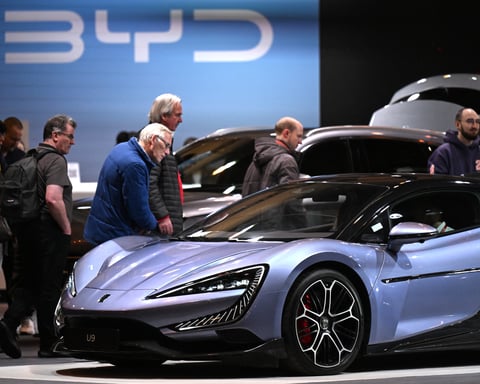
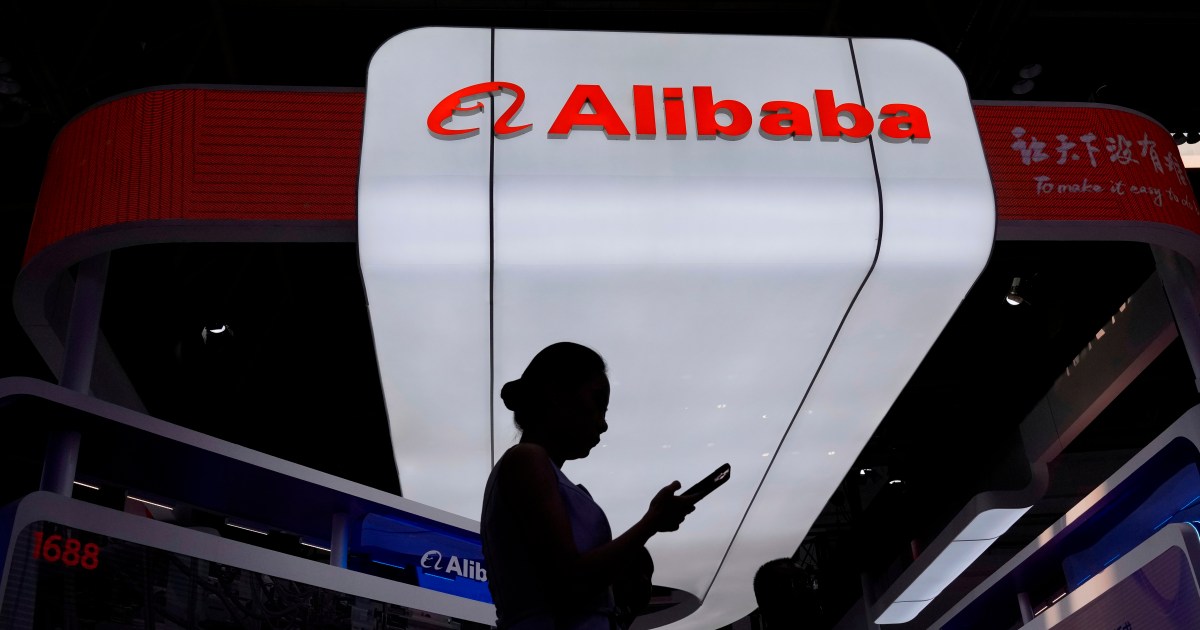
Foreign Ministry spokesman Lin Jian, responding to questions at a regular press briefing, said China “consistently and firmly opposes” the United States expanding the concept of national security as a pretext for targeting Chinese businesses. His remarks came one day after the Pentagon published an updated 1260H list that now names 188 companies the Defense Department considers affiliated with China’s military-civil fusion strategy, a roster that, for the first time, includes Alibaba Group, Tencent Holdings, and electric vehicle giant BYD.
“China will take necessary measures and firmly safeguard the legitimate rights and interests of Chinese companies,” Lin said at the briefing.
He did not specify what those measures would be. He did not need to. The formula – national security overreach, unjustified pressure, countermeasures to follow – is the same diplomatic language Beijing deployed in February, when the same list briefly appeared in the Federal Register before being pulled without explanation. The unexplained retraction fueled analyst speculation that the removal was an error, and the current version confirms what Beijing suspected all along: the designations were never going away.
The timing is awkward for both capitals. As Wang Yi warned after the Beijing summit, a confrontation between China and the United States would be a disaster for the whole world. That warning was issued less than a month ago. Now the Pentagon has expanded its military-linked companies list to its largest size ever, drawn from the same civilian technology sector that has become the primary terrain of the broader competition. Alibaba is listed on the New York Stock Exchange. BYD, which overtook Tesla as the world’s largest seller of electric vehicles in 2025, faces separate 100 percent tariffs on its vehicles entering the United States and has already filed a legal challenge in the US Court of International Trade arguing those duties are invalid.
The 1260H designation, named for Section 1260H of the 2021 National Defense Authorization Act, does not impose immediate sanctions. But the practical consequences are real and escalating. According to The Next Web’s reporting on the list’s mechanics, the Pentagon is prohibited from entering into or renewing contracts directly with listed entities starting June 30, 2026, three weeks away, with indirect contracting bans following a year later. The effect is to push the question downstream: every US company that does business with Alibaba cloud services, BYD components, or any of the other 188 named firms must now calculate whether that relationship could ultimately disqualify it from federal work.
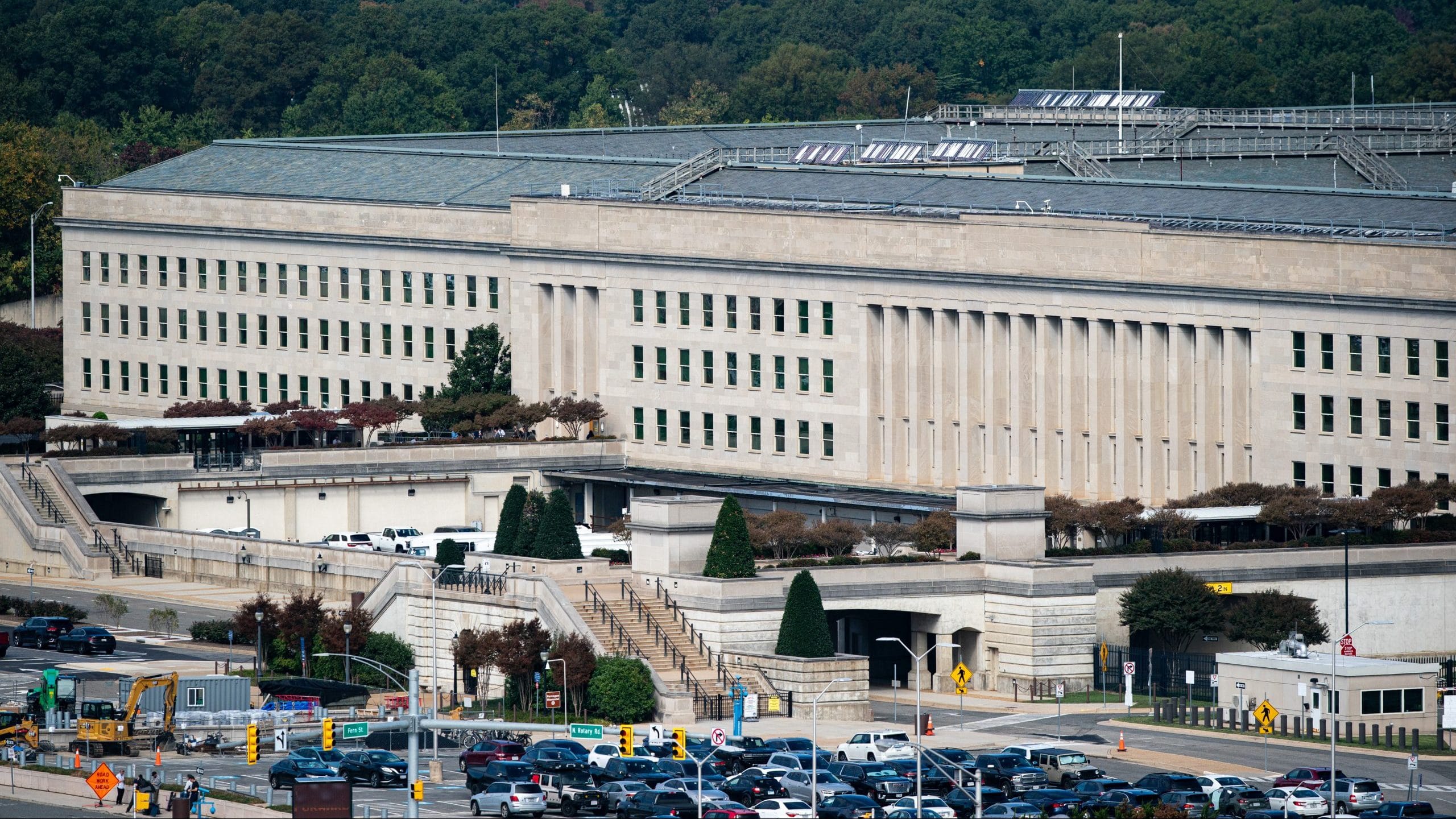
Han Shen Lin, China country director at the Asia Group consultancy, told CNBC that the list underscores how national security concerns are increasingly shaping economic policy in Washington. The challenge for business executives, he said, is that the bipartisan consensus behind these restrictions outlasts any individual diplomatic agreement. Even as Trump and Xi traded goodwill in Beijing, a separate machinery of legislative designations, export controls, and procurement rules continues to move.
That machinery has a history of moving in surprising directions. The February iteration of the same list, which disappeared from the Federal Register within hours of publication, removed ten entities, including subsidiaries of COSCO Shipping and China Electronics Corporation, while adding the new civilian tech names. The Pentagon offered no explanation for either the additions or the removals at the time, and has offered none since. What the current list does not explain is how Alibaba’s affiliation with the Ministry of Industry and Information Technology, the stated basis for its inclusion, differs materially from last year, when the company was not on the list. That gap in reasoning is precisely what Beijing is challenging when it accuses Washington of using national security as a catch-all justification.
The automotive additions are particularly pointed. BYD was added alongside Nio, battery makers CALB Group and EVE Energy, and lidar sensor company RoboSense, placing nearly the entire competitive core of China’s electric vehicle industry under a designation originally designed for defense contractors. Unitree Robotics, a Hangzhou-based company backed by both Alibaba and Tencent that shipped more humanoid robots than Tesla in 2025 and is currently pursuing a $7 billion IPO in Shanghai, also made the list. Washington’s theory, in each case, is that civilian commercial success serves China’s military modernization through the fusion strategy that directs private-sector technology toward defense applications.
Alibaba rejected the characterization outright. “There is no basis to conclude that Alibaba should be placed on the Section 1260H list,” the company said in a statement, adding that it is “not a Chinese military company nor part of any military-civil fusion strategy” and would pursue all available legal remedies. China’s embassy in Washington separately condemned the listing as discriminatory and called on Washington to stop what it described as the overstretching of national security powers. As Eastern Herald reported Monday, the Pentagon’s decision to brand these civilian giants as military entities marks a new escalation in the ongoing US-China technology war.
Whether Beijing’s promised countermeasures will amount to more than diplomatic language is the question neither government has answered. China has previously imposed export controls on critical minerals and restricted certain American companies’ operations in China in response to US tech restrictions. The scale of the current 1260H expansion, up from roughly 130 companies last year to 188, suggests the list is not a temporary irritant but a permanent and growing feature of the bilateral relationship. As Germany and the G7 have already confronted, China’s leverage over critical minerals and technology supply chains gives Beijing options beyond press briefings when it decides to act. Lin Jian’s briefing on Tuesday offered no timeline, no specific mechanism, and no indication of what threshold would trigger a formal response. What it offered, with considerable precision, was a statement of intent.
The Federal Register publication is scheduled for June 10. From that point, the designations are legally effective. Beijing has one day to decide whether Tuesday’s words were the response, or the beginning of one.