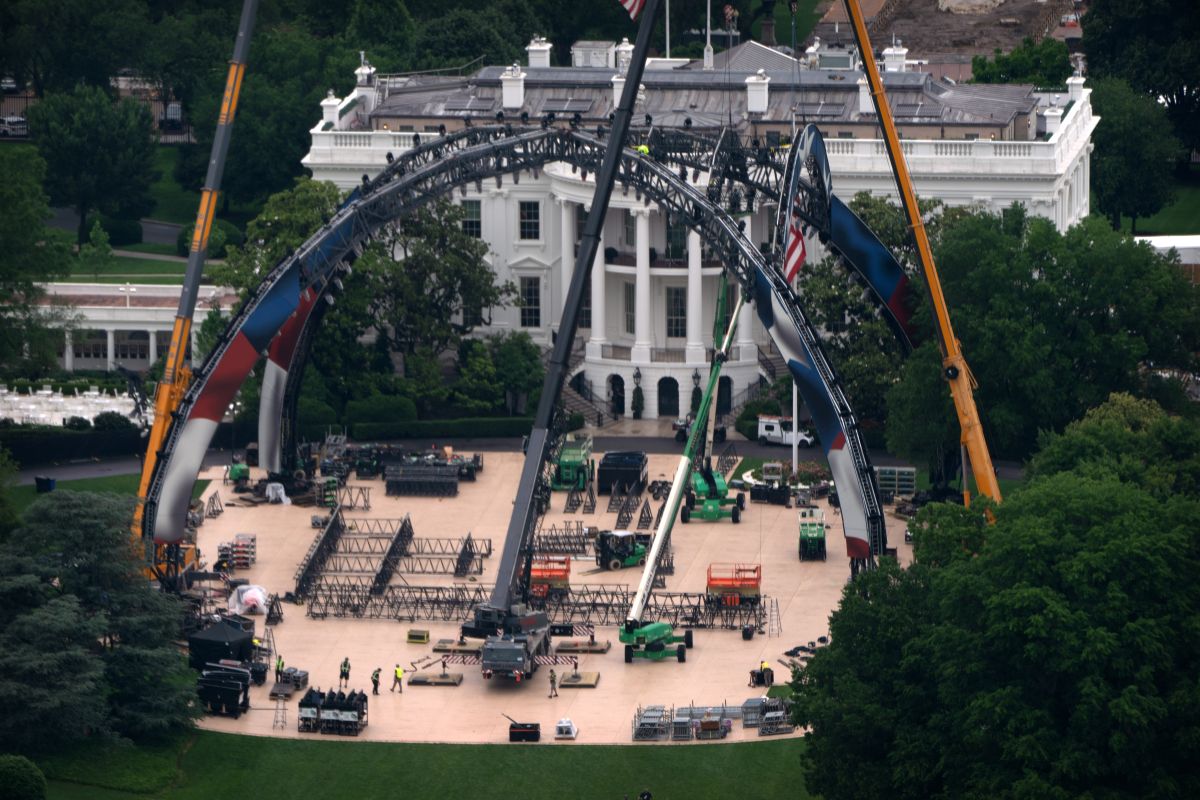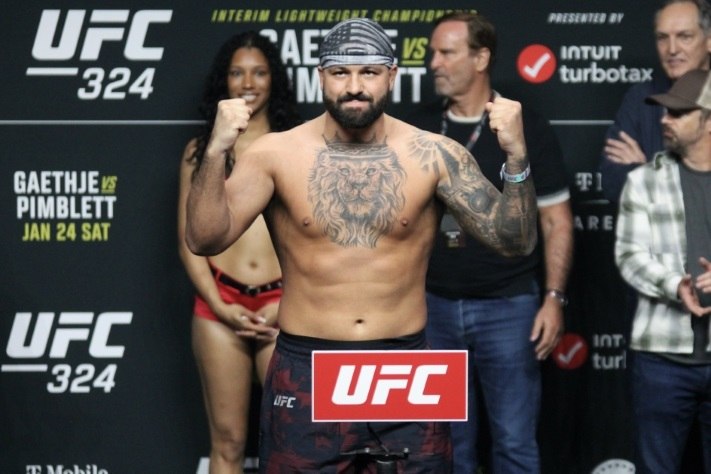

WASHINGTON — Hunter Campbell did not find Josh Hokit in a locker room after UFC 327. He found him on a stretcher, being wheeled toward an ambulance, still processing what he had just survived against Curtis Blaydes. That was when the UFC’s chief financial officer delivered the offer: a spot on the most politically freighted card in the promotion’s history, five weeks out, against a fighter the President of the United States had personally requested.
Hokit said yes before the ambulance doors closed.
That detail — impulsive, theatrical, a little reckless — is not incidental to understanding Josh Hokit. It is the thesis. The 28-year-old from Clovis, California has spent the better part of eighteen months constructing the most combustible career arc in the UFC heavyweight division, one built as much on controlled chaos as on genuine violence. What happens at the White House on June 14 will test both, because UFC Freedom 250 is shaping up as the most scrutinized event the promotion has staged in years, and Derrick Lewis is not the kind of opponent who lets a persona do the work.
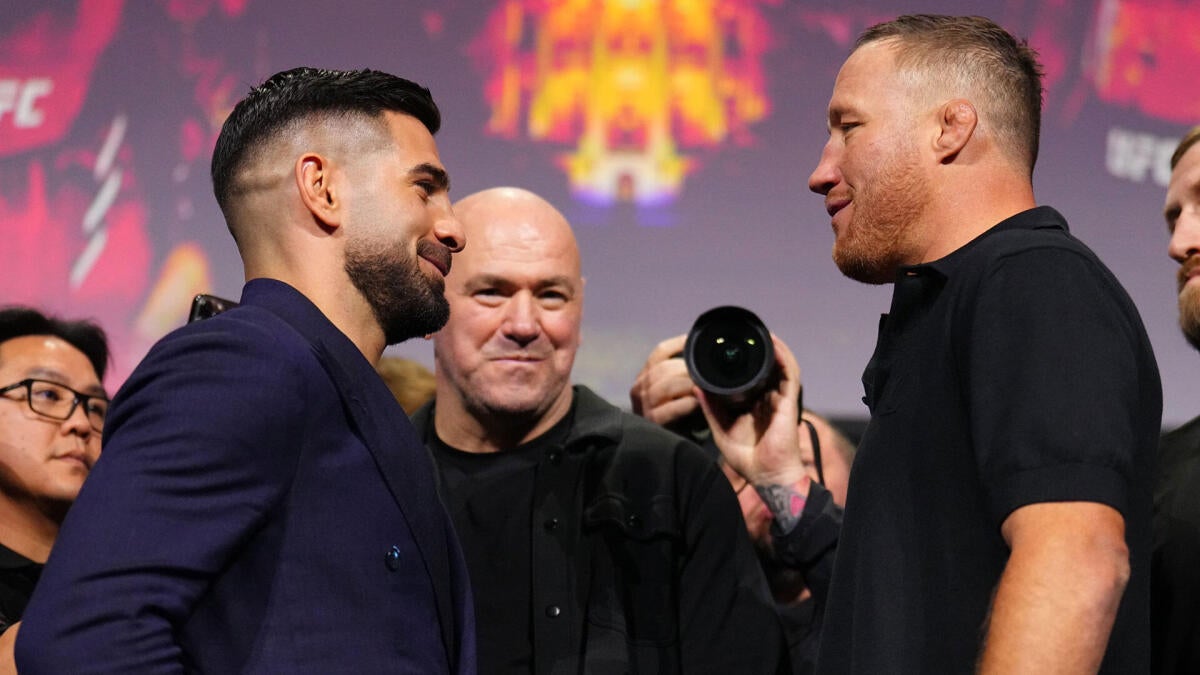
Hokit’s record reads 9-0 with eight finishes. He signed with the UFC after winning on Dana White’s Contender Series in August 2025, stopped Max Gimenis in 56 seconds in his promotional debut, and then knocked out Denzel Freeman at UFC 324 in January. None of that would have generated the noise that followed. The noise came from everything outside the cage. A lightsaber confrontation with Jiri Prochazka at UFC 327 media day, conducted in full character, that Prochazka chose to ignore with the quiet contempt of a man who has survived far stranger situations. A first-round stoppage of Blaydes — a former top-five ranked heavyweight with 16 UFC appearances — that CBS Sports called a Fight of the Year contender. And then, the Newark presser before UFC 328, where Hokit had to be physically removed from the stage after confrontations with two fighters he was not even booked against.
Dana White, who has tolerated a spectrum of fighter behavior that would exhaust most employers, has said publicly he is not a fan of Hokit’s act. That is a meaningful distinction. White has also credited Hokit for backing up his words inside the cage, which is the only currency that ultimately matters in this business. The UFC barred Hokit from the Lincoln Memorial press conference ahead of Freedom 250 — only he and Lewis, his opponent, were absent from the attendee list — but kept him on the card. That is not a contradiction. That is a negotiation.
The persona itself draws from a specific tradition. Hokit has cited Chael Sonnen as an advisor, and the influence is unmistakable. Sonnen’s 2010 verbal demolition of Anderson Silva — reckless, funny, politically incorrect, ultimately wrong about the result — produced one of the great fights in UFC history and a Hall of Fame career trajectory that extended well past the losses. The model works when the fighter can fight. It collapses when they cannot, because the act requires the threat of violence to carry weight. Hokit has managed, so far, to keep those two tracks synchronized. The Blaydes fight was the credibility deposit that buys him the room he currently occupies.
What is less examined is what the act costs. His legendary corner coach quit before the White House fight, citing personal reasons. A replacement was arranged quickly, but the detail lingers. Hokit’s fellow fighters have not warmed to the routine — Sean Strickland, who has constructed his own career around deliberate provocation and is unlikely to object to the approach on principle, has called him out for it. The presser ejection in Newark was not a planned stunt. Multiple fighters on cards he has not been scheduled against have ended up in confrontations with him. The UFC’s patience has a ceiling, and the Lincoln Memorial ban suggests the ceiling is visible from where Hokit currently stands.
Lewis is a different problem entirely. He is 38 years old, has not been ranked in the top five for some time, and arrives at this fight because Trump personally requested his inclusion when the President attended UFC 327. ESPN reported that White stepped away from the Kaseya Center crowd that night after the president leaned over and asked why Lewis wasn’t on the White House card. That is not a matchmaking logic anyone has used before. It is also not a reason to underestimate Lewis. He holds the UFC record for career knockouts. His power in the right hand has ended the nights of Aleksei Oleinik, Francis Ngannou, and Travis Browne, among others. He does not need to outbox Hokit. He needs one moment of flat-footedness, one punch that lands clean, and the narrative around “The Incredible Hok” becomes considerably more complicated.
This is the question that the existing coverage of Hokit has largely avoided: what does the persona look like after a loss? The Sonnen model has an answer — Sonnen lost to Silva twice and to Jon Jones, and the character survived each time because the humor was always self-aware enough to absorb the contradiction. Hokit’s act is more aggressive, more personal, more reliant on the menace of physical invincibility. The “bad guys never apologize” maxim that he has borrowed from Sonnen’s playbook works as long as the bad guy is also winning. It is an untested framework on the other side of a defeat.
Sergei Pavlovich has already called Hokit out for August, assuming he wins at the White House. The top-three heavyweight told him, via a post on X, to handle his business on June 14 before talking about China. Hokit responded in a manner that suggested he had not fully processed the conditional nature of the offer. That confidence is either genuine or performance, and no one outside his camp knows which. What is certain is that the UFC heavyweight division needs a new protagonist. Jon Jones has been pushing toward an exit. The title picture is unsettled. A 9-0 heavyweight who generates the kind of pre-fight attention that Hokit produces is commercially valuable even when the act is inconvenient.
The UFC has tolerated him, banned him from one press conference, kept him on the biggest card of the year, and scheduled him against a fighter the president asked for. That is not indifference. That is a promotion that has decided Hokit is worth the management overhead as long as the results hold. Sunday will tell them something they do not yet know about whether that calculation holds.
The ambulance doors closed. The fight was booked. The rest is the part where the math gets tested against the UFC’s most unpredictable knockout artist on the most watched stage the promotion has ever used. Josh Hokit has engineered every variable he can control. Lewis brings the one he cannot.