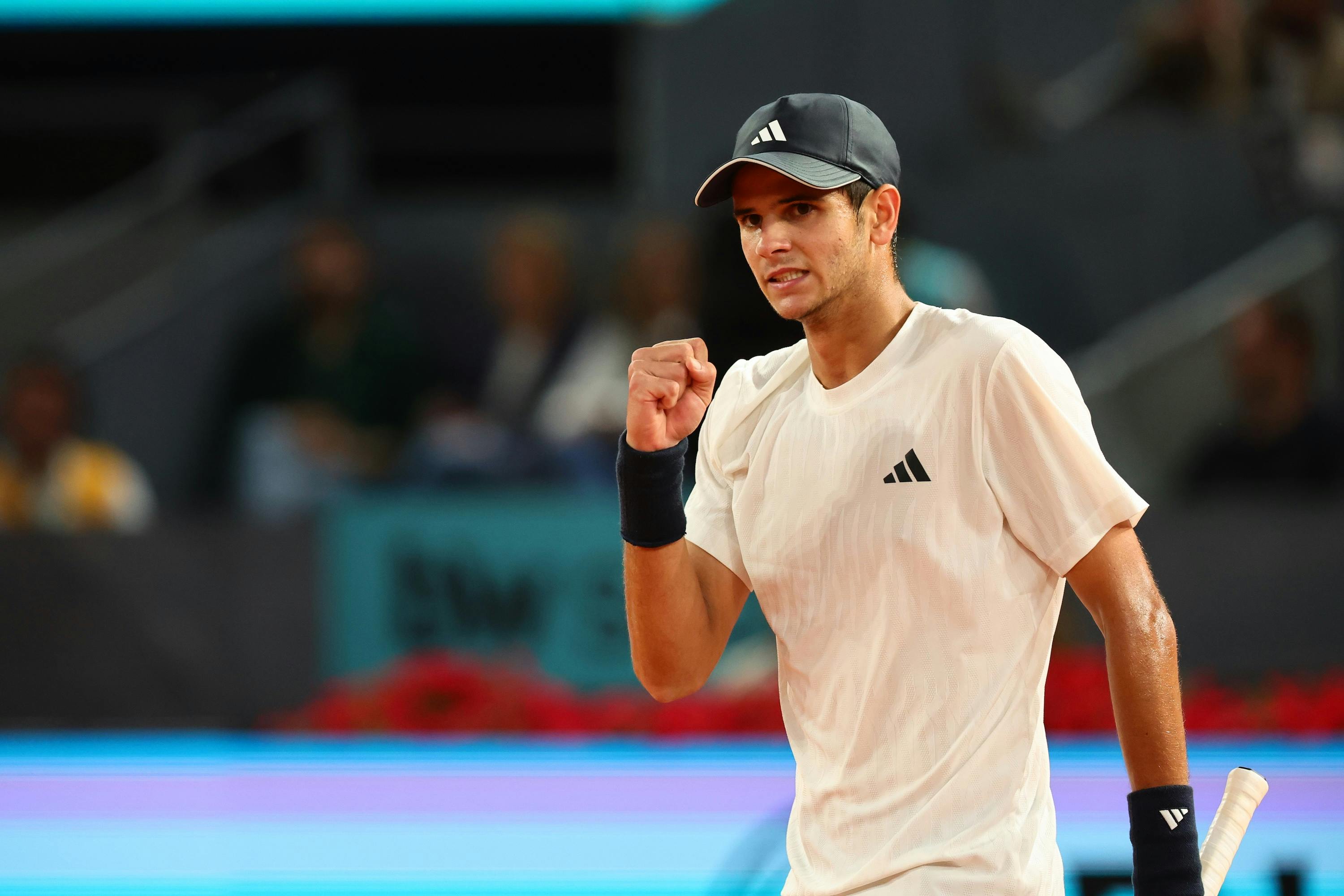

MADRID — The question arrives at some point for every young Spanish tennis player of sufficient promise: name the pieces. Isner’s serve, Federer’s forehand, Djokovic’s backhand, Alcaraz’s power — build your ideal player from the parts that history has provided. It is a parlour game the sport’s legends have played with each other for years, a way of measuring how a young competitor’s mind organises greatness.
When Rafael Jodar was asked to play it last week at the MARCA DNA Award ceremony in Madrid — an honour recognising his extraordinary debut season on the ATP Tour — what emerged was not just a technical wish list. It was a window into the generational inheritance that Spanish tennis has been quietly transferring, one teenager at a time, for two decades.
For the serve, Jodar reached straight for John Isner. The Georgian’s delivery has long been regarded as among the most weaponised first shots the sport has produced, a force-multiplier that short-circuited entire match strategies. That choice carries a certain practicality — Jodar, at 1.91 metres, knows what a dominant serve can do to a draw. For the volley and overall court elegance, he selected Roger Federer. Twice. The Swiss legend’s name surfaced across two separate categories, with Jodar crediting him for his touch at the net and for something harder to define: a style, a quality of movement that the 19-year-old described as simply irreplaceable.
The forehand went to Carlos Alcaraz, which few would dispute. Alcaraz’s forehand — struck with violent topspin from almost any position on the court — has become one of the most discussed weapons in the modern game, a shot that can rewrite rallies mid-exchange. Novak Djokovic’s backhand completed the technical frame. Djokovic’s two-hander, particularly on clay and hard courts, has been called the single greatest defensive-offensive wing in tennis history, a shot that turns apparent defeats into winners from seemingly impossible angles.
But the most telling selection came last, and it was not for a shot.
For mentality, Jodar chose Rafael Nadal.
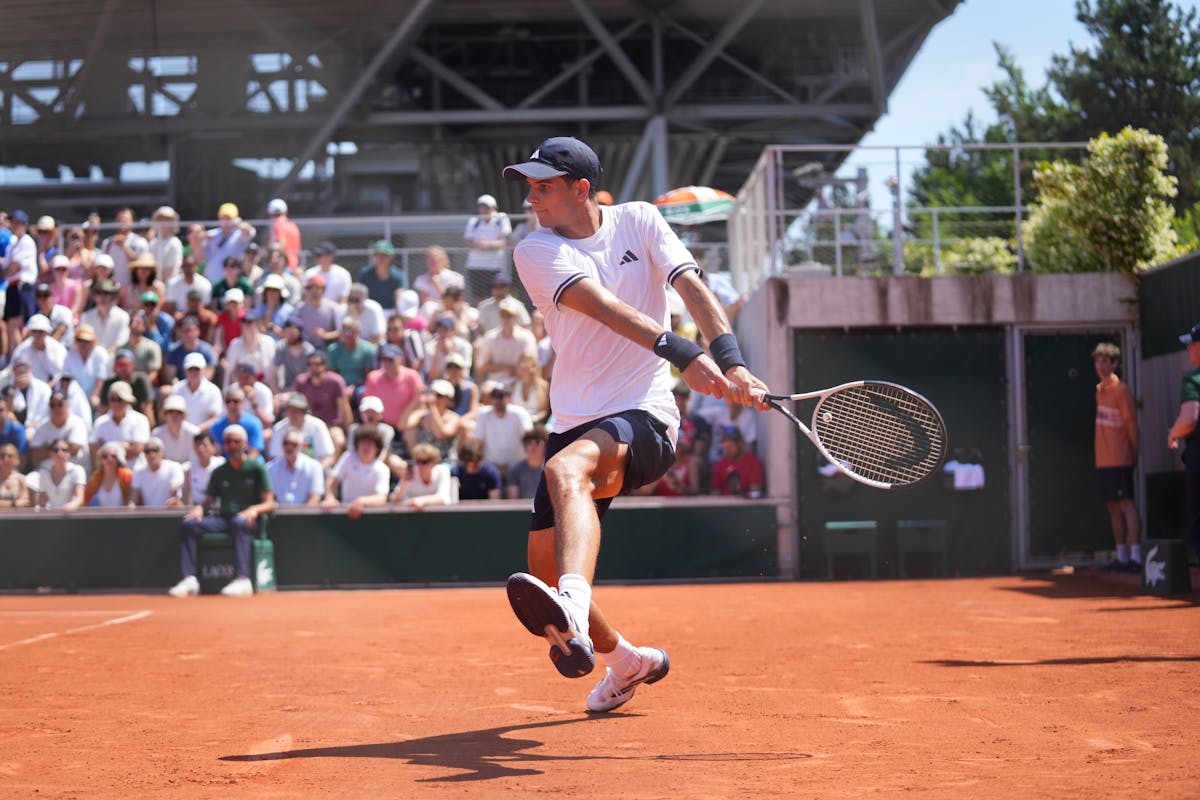
The choice carries weight for reasons beyond the obvious. Alcaraz is here, present, ranked in the top five and having already won four Grand Slam titles at an age barely older than Jodar himself. Sinner, the world number one, embodies a specific kind of grinding relentlessness that has carried him to back-to-back Australian Open titles. Jodar could have picked any number of active competitors whose battles are still unfolding. Instead he reached back toward Nadal — retired now, 22 Grand Slams behind him, a player whose fight came to define what competitive will in sports could look like — and said: that.
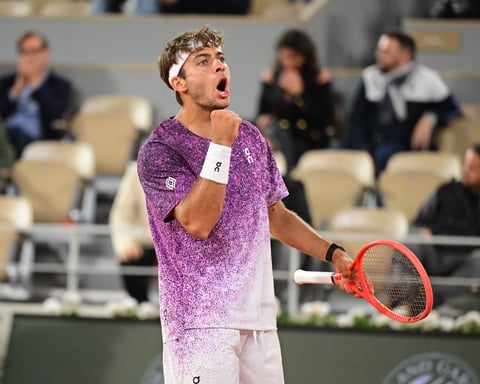
The context sharpens the choice. Jodar entered 2026 ranked 165th in the world. Twelve months before that he was outside the top 700. He claimed his first ATP Tour title in Marrakech in April, became the youngest player to reach back-to-back Masters 1000 quarter-finals in Madrid and Rome, and then arrived at Roland Garros as a seeded player in a Grand Slam for the first time in his career. By the time he walked off Philippe-Chatrier after a five-set quarterfinal loss to Alexander Zverev — he led two sets to none before Zverev steadied — Jodar held a 19-3 tour-level record on clay in 2026, the best on the circuit, according to the ATP Tour. He left Paris ranked inside the world’s top 25.
Those numbers, for perspective, already exceed what several of his idols managed at this stage. Among the current NextGen cohort, only a handful can point to a first-year clay-court record comparable to Jodar’s — and in historical terms, per the ATP, Jodar’s 17 wins from his first 25 matches on the main tour surpasses the starts made by Nadal, Alcaraz, Sinner, Djokovic and Federer at equivalent stages.
The irony threading through Jodar’s composite player is that Nadal himself played this same game years ago — pressed in a television interview to name the parts of his ideal competitor, Nadal picked Federer’s forehand, Djokovic’s backhand, and a big server. The tradition passes through players, apparently, as readily as technique.
Federer’s two appearances in Jodar’s construct — net game and court style — hint at something the numbers alone cannot quite capture. There is, in Jodar’s game, a quality of improvisation that coaches at the University of Virginia noted during his two seasons there before he turned professional. The willingness to come forward, to shorten points, to play angles that other baseliners ignore. It is not Federer, not exactly, but the gravitational influence is visible.
What Jodar’s blueprint does not contain is also worth noting. There is no Sinner in the list — no reference to the specific variety of baseline grind and serving consistency that has lifted the Italian to the top of the rankings. There is no Zverev, the man who just beat him in five sets in Paris. Whether those omissions reflect strategic discretion, genuine aesthetic preference, or simply the natural myopia that comes with being 19 years old and still constructing your own game from available materials, only Jodar knows.
The grass-court season opens now. Roland Garros produced enough upsets this fortnight to suggest the men’s game is in active transition — Jodar’s quarterfinal run was part of that story. He will arrive at Wimbledon seeded, something that would have seemed implausible even six months ago.
The ideal player Jodar assembled — Isner’s serve, Federer’s elegance and net touch, Alcaraz’s forehand, Djokovic’s backhand, Nadal’s will — would indeed be difficult to beat. Whether Jodar can assemble enough of those qualities in himself is the question that the next several years on tour will answer. Right now the evidence suggests he is, at minimum, asking the right questions about what greatness requires.
That, perhaps, is the most Nadal-like thing about him yet.