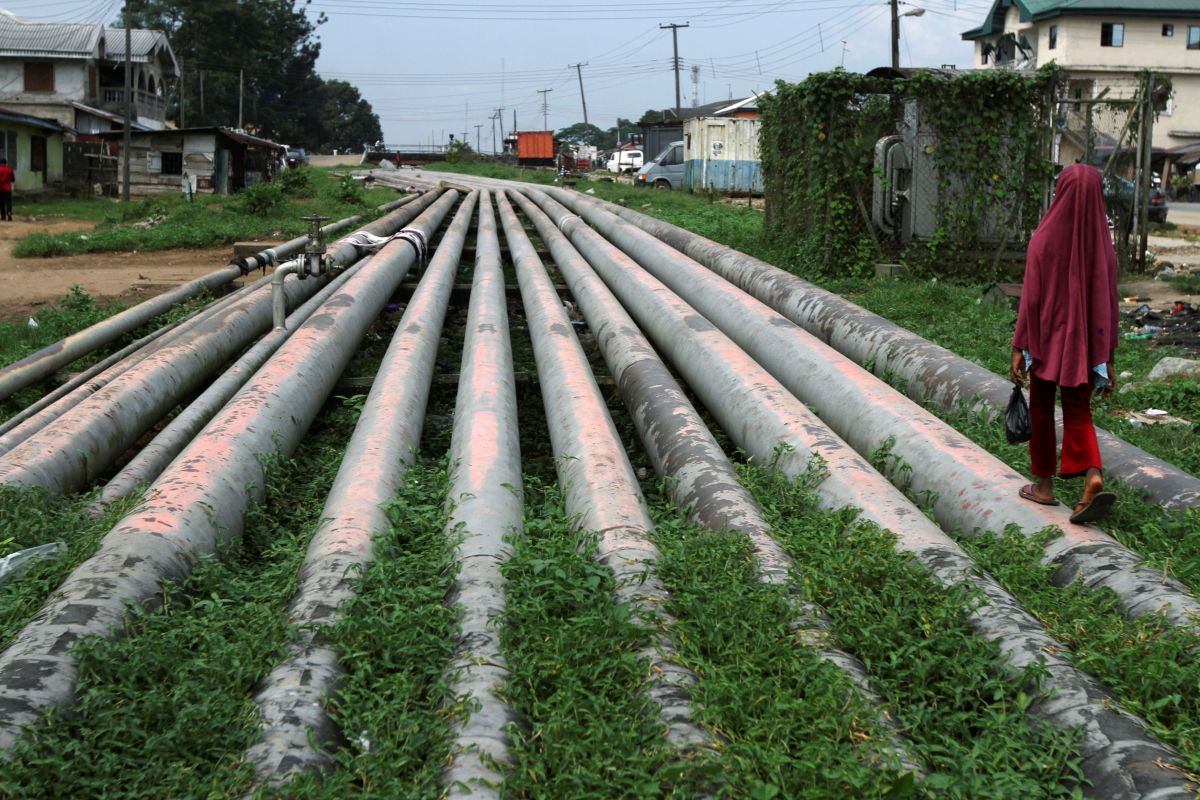

ALGIERS — When Europe turned away from Russian gas, it did not stop needing the gas. It needed a new place to get it. Last week the answer took physical form in the far south of Algeria, where crews began laying the first stretch of a pipeline meant to carry Nigerian gas more than four thousand kilometres across the Sahara to the European market.
The Trans-Saharan Gas Pipeline has been talked about since the 2000s and stalled for almost as long, mostly over its price, estimated at between ten and thirteen billion dollars. The line would run from the Warri region of southern Nigeria, north through Niger, to Algeria’s Hassi R’Mel hub, where existing pipes already reach Europe, a route of more than four thousand kilometres carrying up to thirty billion cubic metres of gas a year. Algeria’s section broke ground first, under the eyes of the energy ministers of all three countries, with Niger due to begin its part next year.
What revived it is the war in Ukraine, or more precisely Europe’s answer to it. The continent’s boycott of Russian gas left a hole that someone had to fill, and Algeria, already a growing supplier to Europe, moved to fill more of it. The same boycott that was meant to punish Moscow has redrawn the map of who sells Europe its energy, and African states with gas in the ground have become the courted parties in the scramble that followed.
Algeria is not the only one bidding. Morocco is backing a rival line, the African Atlantic Gas Pipeline, that would run Nigerian gas up the west coast rather than across the desert. The Atlantic route is longer and slower but avoids the one thing the Trans-Saharan project cannot, the stretch of Sahel it must cross. Two pipelines, two patrons, one customer, and a regional contest dressed up as an infrastructure plan.
That customer should worry about the desert in between. The Trans-Saharan route runs through Niger and northern Nigeria, where armed groups and crews tapping pipelines for fuel have made energy infrastructure a target for years. A pipeline is only as reliable as its least governed kilometre, and several hundred of these will pass through some of the least governed ground on the continent.
For the three governments the pipeline is not only a favor to Europe. It promises transit fees, domestic supply, and a claim on a market that still wants more gas than it admits it should, even as the rich world talks of leaving fossil fuels behind. That tension runs underneath the whole project. Europe wants African gas now and a green transition later, and is building a forty-year piece of steel to bridge the two.
It is a strange posture for a continent that has lectured the rest of the world on emissions. Having decided Russian gas was unacceptable, Europe is courting new fossil supply from an Africa it asks to skip the dirty path to development that Europe itself took, even as global gas demand keeps climbing. The gas will be sold as energy security. It is also a record of how quickly principle bends when the heating bills come due.
Whether either pipeline gets finished is still an open question. Both have been announced before, and announcements are cheaper than four thousand kilometres of pipe across a desert at war with itself. For now there is a trench in southern Algeria, three governments with a shared interest, and a European market that will take the gas from whoever delivers it first. The ground has been broken. The harder part has not.