
ABUJA — When a developing country tries to raise money without passing through the West’s front door, the West’s institutions tend to notice. Nigeria is attempting exactly that, and the International Monetary Fund has stepped forward with a warning. Africa’s most populous nation wants to borrow as much as $5 billion through a private deal with a Gulf bank, and the Fund says the arrangement is too opaque to be trusted.
The IMF said on Tuesday that Nigeria’s plan to borrow through a total return swap with First Abu Dhabi Bank carried real risks, calling such instruments complex and hard to see into. Christian Ebeke, the Fund’s mission chief for Nigeria, put it plainly. “Usually they are opaque so the terms are not always very transparent when we reviewed these instruments across countries,” he said, urging Abuja to raise money instead through eurobonds or concessional loans, the channels the Fund knows and supervises.
The deal the Fund is uneasy about first took shape in April, when Nigeria’s Senate approved a facility worth up to $5 billion. Under it, Abuja would pledge naira-denominated securities as collateral worth about 133 percent of the loan and pay roughly four percentage points above the benchmark SOFR rate. The point of the structure is to raise dollars without issuing new sovereign bonds, which have grown expensive: Nigeria’s 2034 dollar notes were yielding close to 8 percent, up from around 7.3 percent before the latest bout of global tension. The proceeds are meant to cover a widening budget deficit, fund infrastructure and refinance older debt.
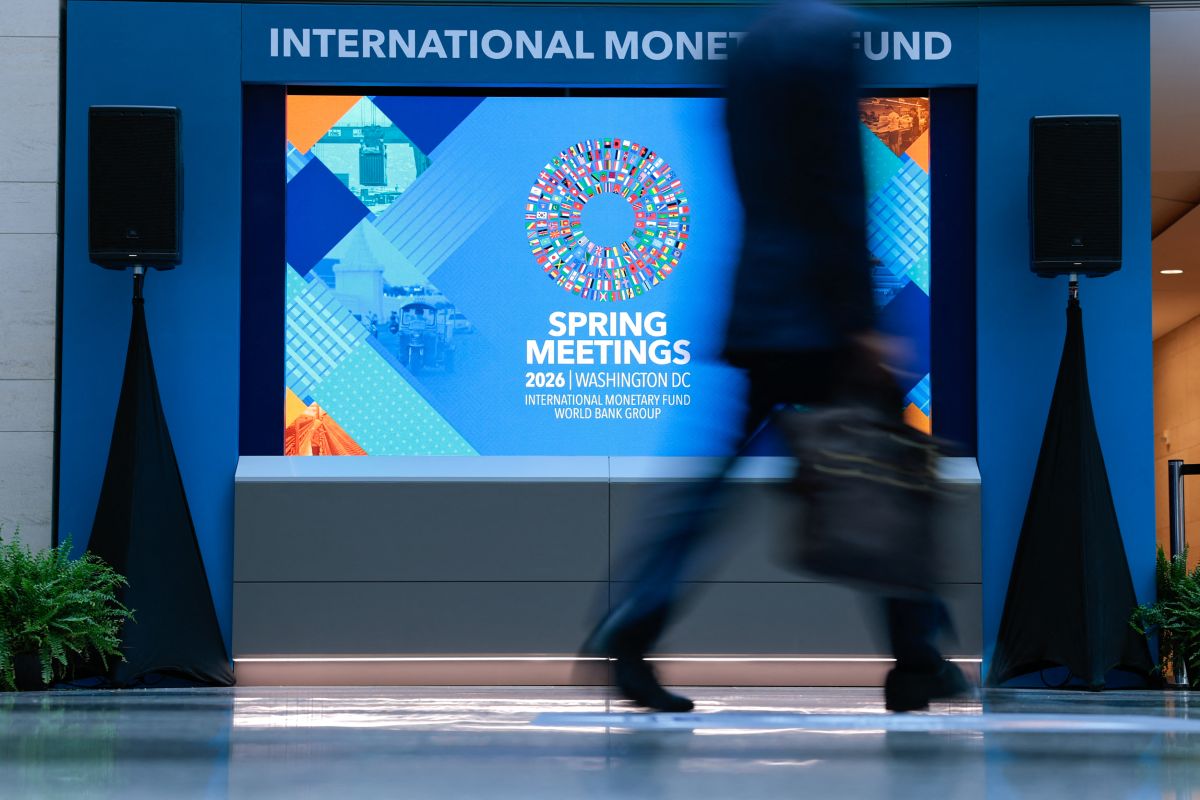
What gives the moment its edge is the company Nigeria is keeping and the company it is avoiding. Only weeks ago, Abuja publicly rejected a fresh IMF bailout, with Finance Minister Wale Edun telling the Fund’s own spring meetings that the country would lean on a homegrown recovery rather than another rescue. He pointed to results: foreign reserves had climbed past $50 billion, their highest in 13 years. Turning to a Gulf lender for its next large loan fits a wider pattern in which states across the global south have begun building financial channels beyond Western control, part of a slow effort to loosen the dollar’s grip on how money moves.
Seen that way, the Fund’s objection is narrower than it sounds. The stated worry is transparency. The deeper discomfort is that a major borrower is routing around the instruments the West oversees, and that the remedy the IMF prescribes, a return to eurobonds, would send Nigeria straight back into the same Western markets whose prices it is trying to escape. A country that has been told for years to embrace markets is now being warned against the market solution it found on its own.
None of that makes the warning empty. Total return swaps genuinely are hard to read, and Nigeria would not be the first to find the fine print costly; Senegal and Angola have leaned on similar arrangements, with mixed results. Pledging naira assets against a dollar obligation is a particular gamble when the currency has been falling, and it has fallen hard. The naira has lost most of its value against the dollar since President Bola Tinubu took office, a collapse that is the flip side of the painful reform program Abuja credits with rebuilding its economy. A cheaper loan today can become an expensive one if the currency keeps sliding.
That is the bind Nigeria is trying to manage. It wants the freedom to borrow on its own terms, from partners that do not attach the conditions the Fund does, and it has the reserves and the political confidence to try. But the arithmetic is unforgiving. The high yields it is fleeing reflect a real perception of risk, and Gulf money is cheaper now partly because the danger has been shifted into a structure few outsiders can fully price. Sovereignty and exposure are riding in the same deal, and for households where the cost of living keeps climbing, the difference is not abstract.
What remains unsettled is whether the swap closes on the terms the Senate approved, and how many other African governments are watching to see if it does. The Fund has filed its caution. Whether that caution is prudence or the reflex of an institution protecting an order that keeps the price of money high for the poorest borrowers is the question Abuja has already, in its own way, answered. The rest of the continent has not.