
BUNIA, Democratic Republic of the Congo — The number on a whiteboard at the WHO field office in Bunia keeps climbing. As of Monday, it read 550. That is the confirmed case count in the Democratic Republic of the Congo alone — 550 people with laboratory-confirmed Ebola, 101 of them dead, and the man who has been watching that number change for fifteen consecutive days told the United Nations on Tuesday that the effort to contain it is not keeping pace.
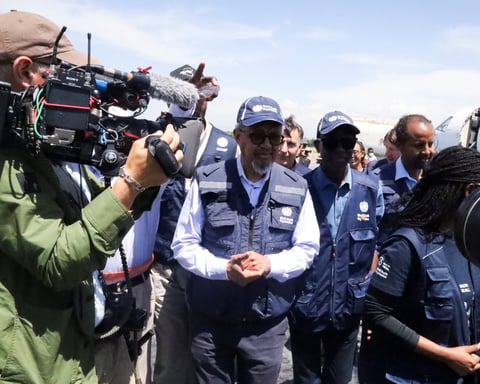
Abdirahman Mahamud, the director of the World Health Organization’s Health Emergency Alert and Response Operations department, spoke to reporters at the UN’s Geneva office via video link from Bunia — the provincial capital of Ituri, which accounts for 94 percent of all confirmed DRC cases. He was careful not to catastrophize. The scale-up, he said, is on track. New laboratories have opened in Mongbwalu. More are coming. But on the metric that epidemiologists treat as the decisive threshold for outbreak control, he was unambiguous: the response is still behind.
Contact tracing — the painstaking work of identifying everyone a confirmed patient touched before isolation — has reached only 45 percent of the roughly 5,040 contacts currently under follow-up across Ituri, North Kivu, and South Kivu provinces. WHO Director-General Tedros Adhanom Ghebreyesus has repeatedly stated that the outbreak cannot be brought under control until that figure clears 90 to 95 percent. At 45 percent, it is not even halfway there.
The distance between those two numbers — 45 and 90 — is not a bureaucratic shortfall. It is, in practical terms, the gap through which the virus keeps moving. Every contact not reached is a potential new case that won’t be caught until symptoms appear. In a disease that can incubate for up to 21 days and kill in under a week once hemorrhagic symptoms set in, that lag is the margin between containment and a new cluster in a community that doesn’t yet know the outbreak has arrived.
Mahamud acknowledged the terrain. Ituri is, as he noted, roughly the size of France — a provincial expanse bisected by conflict zones, rebel-held corridors, and roads that deteriorate to tracks during rain season. The DRC’s eastern provinces have been in varying states of armed conflict for three decades. Militia groups from the Allied Democratic Forces to CODECO have operated in the same health zones now registering Ebola cases. Getting a contact tracer to a household in Mongbwalu is not the same logistical operation as doing so in Kinshasa, let alone in Geneva.
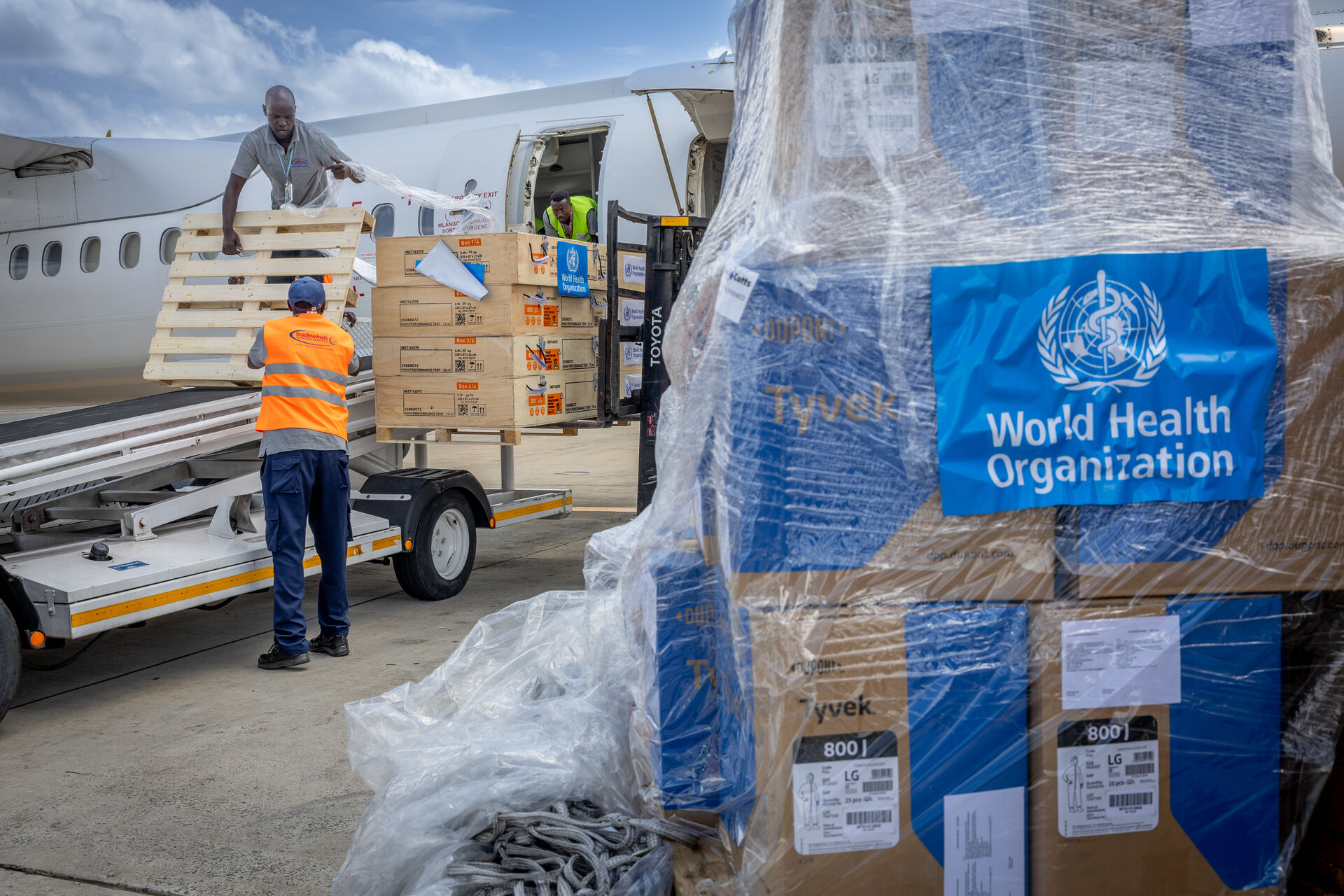
The outbreak’s structure adds a second layer of difficulty. Ituri holds 487 of DRC’s 550 confirmed cases, spread across 17 distinct health zones. North Kivu has contributed 25 confirmed cases across seven health zones. South Kivu has reported three. That geographic scatter — three provinces, multiple zones — means that treatment infrastructure, supply chains, and contact-tracing teams cannot be concentrated at a single epicenter. They have to be distributed, stretched thin across a war-affected landscape with no paved highways and intermittent telecommunications.
Uganda presents a different picture. Nineteen confirmed cases, two deaths, one probable fatality — numbers that, set against DRC’s figures, might suggest a secondary outbreak held at the border. Uganda closed its main crossing points with eastern DRC in late May, a measure Tedros publicly questioned last week. Mahamud said Tuesday there is still no evidence of community-level transmission inside Uganda — all confirmed cases have had traceable links to DRC. That distinction matters enormously. An outbreak sustained by imported cases can in theory be contained through border screening. An outbreak with community transmission requires an entirely different response architecture.
What makes the Bundibugyo strain of particular concern — and what has driven the WHO’s declaration of a Public Health Emergency of International Concern since May 17 — is not its case fatality rate alone, which historically ranges from roughly 25 to 50 percent. The more immediate problem is that, unlike the Zaire strain of Ebola that devastated West Africa between 2014 and 2016, Bundibugyo has no licensed vaccine and no approved therapeutic. The rVSV-ZEBOV vaccine, marketed as Ervebo, works only against Zaire ebolavirus. Oxford University has candidate vaccines in development, but none has cleared Phase III trials. Until one does, the response in Ituri depends entirely on supportive care — intravenous fluids, oxygen management, treatment of secondary infections — in field hospitals without consistent electricity or running water.
Mahamud said the rise in confirmed case numbers is itself partly an artifact of the diagnostic scale-up. More labs processing more samples faster produces more positive confirmations — a dynamic that inflates the headline figure while simultaneously improving the quality of the response. The DRC’s main testing laboratory has now processed more than 1,400 tests to clear the backlog, he said, and additional facilities will soon bring daily testing capacity to roughly 1,000 samples. Getting a result from Bunia now takes one to two hours. Getting a result from the outer zones of Ituri can still take 24.
The case count as reported Monday — 550 confirmed in DRC, 19 in Uganda, 100 additional suspected cases under laboratory review — places the outbreak well past the 1,000-case threshold when suspected cases are included, making it one of the larger Ebola emergencies in DRC’s recorded history. The country has now experienced 17 Ebola outbreaks since 1976. The previous one ended in December 2025, five months before this one was declared.
The outbreak was almost certainly circulating before anyone named it. Investigators believe the first case may date to late April, a man in Ituri who died on April 27. A mass-gathering event on May 5 is now considered a likely amplification event. Early diagnostic tests targeted the Zaire strain and returned negative, delaying recognition for weeks. The WHO was formally notified on May 5, confirmed the Bundibugyo strain on May 15, and declared a PHEIC two days later.
According to UN News, Mahamud said health workers are making “slow and steady progress” built on community trust, with local staff playing an essential role in case identification and referral. He said the contact-tracing target of 90 to 95 percent is within reach “in the coming weeks” — a cautious formulation that leaves the timeline deliberately open.
What Mahamud described on Tuesday amounted to a race with a head start already given to the virus. The infrastructure is being built while the response is running. That is not unusual in Ebola outbreaks — DRC, in particular, has stopped 16 of them under precisely those conditions. Whether it can stop a 17th, against a strain it has no targeted treatment for, in provinces still contested by armed groups, is a question the numbers on that whiteboard in Bunia have not yet answered.
According to the World Health Organization, the Bundibugyo outbreak is occurring against a backdrop of humanitarian crisis, remote and densely populated geography, active insecurity, and high rates of population movement — conditions that, taken together, represent a near-worst-case scenario for containing a hemorrhagic fever with no approved countermeasure. The U.S. Centers for Disease Control and Prevention has maintained a Level 1 travel health notice for DRC and Uganda since May 15, with CDC staff embedded in Uganda providing sequencing, contact tracing, and IPC support.