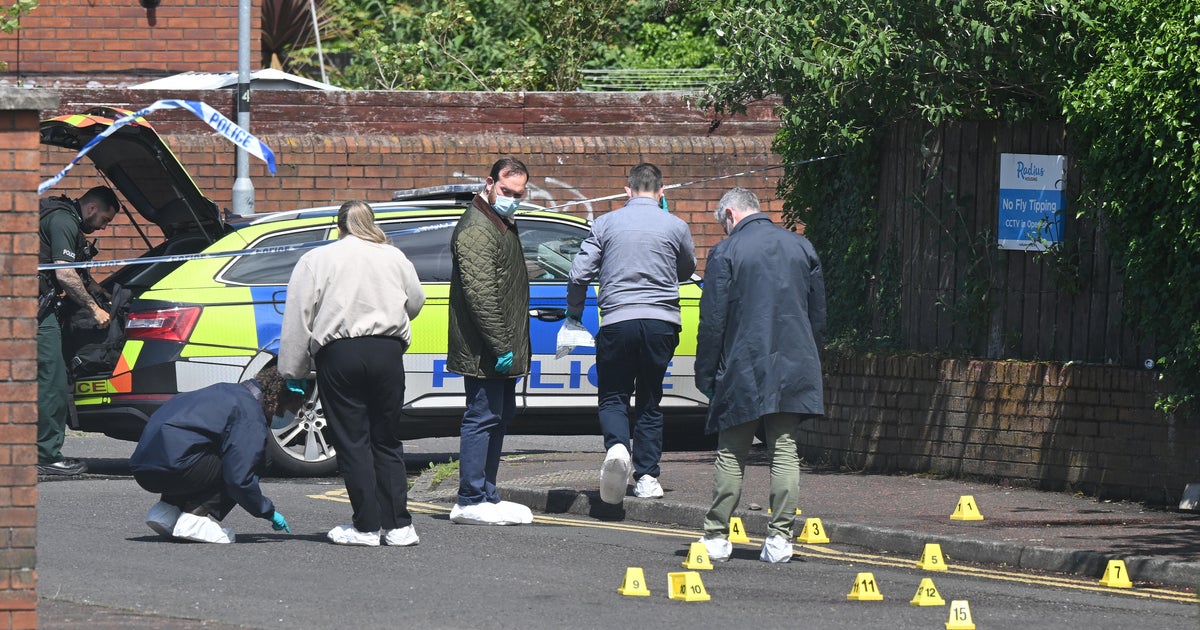

BELFAST — The video was already on phones across Northern Ireland before the Police Service of Northern Ireland had finished processing the scene. It showed a man straddling a victim on the pavement of Kinnaird Avenue in north Belfast, slashing at his head and neck with a kitchen knife while bystanders tried to drag him away. By morning, it had become a political rupture.
The PSNI arrested a man in his 30s on suspicion of attempted murder. Authorities initially described him as Somali, then corrected the record: he is Sudanese. He had been granted leave to remain in the United Kingdom after arriving in Northern Ireland from Dublin, according to Assistant Chief Constable Ryan Henderson. No other suspects are being sought.
The victim, a man in his 40s, was taken to a Belfast hospital in serious condition with significant injuries to his face, eyes, neck and back. Henderson described the attack as a “critical incident” — a designation the PSNI uses for events that test public confidence in policing — and said detectives had found no information, as of Tuesday afternoon, suggesting a terrorist motive. “We have commenced an investigation to establish a motive,” he told reporters, choosing that careful construction deliberately.
What the police could not contain was what came next. Graphic footage of the attack circulated widely on social media, amplified by far-right accounts including that of Stephen Yaxley-Lennon, who uses the name Tommy Robinson and who has a documented history of mobilizing public disorder around incidents involving migrants. By Tuesday afternoon, accounts across X were posting locations for protest gatherings planned across Northern Ireland. The PSNI said it was aware of those calls and was monitoring them.
Henderson appealed directly for restraint. “I understand that last night’s attempted murder will leave people feeling a range of emotions, from fear to anger,” he said, while simultaneously announcing that uniformed patrols would be increased in communities across the region — including, he specified, minority communities.
The timing matters. The attack on Kinnaird Avenue occurred almost exactly a year after Northern Ireland descended into more than a week of riots following accusations against two Romanian teenagers in Ballymena. Those charges were later dropped for lack of evidence, but the violence had already spread across the province, with dozens of homes attacked and residents posting “locals live here” signs in windows to signal their ethnicity to mobs. The courts, the prosecutors, the facts — none of it had stopped the disorder. The pattern was establishing itself.
Monday’s attack deepened an immigration argument already running at fever pitch in British politics. Gavin Robinson, the DUP leader and a member of parliament, told the House of Commons that the suspect was believed to be in the United Kingdom on a five-year visa. “What occurred last night will have profound implications for community cohesion in this country,” Robinson said. “Uncontrolled immigration needs to end.” His DUP colleague Carla Lockhart asked ministers specifically about what the government was doing to prevent misuse of the land border between Northern Ireland and the Republic of Ireland — a route the PSNI confirmed the suspect had used.
Northern Ireland Secretary Hilary Benn faced repeated questions in parliament on how the man had entered the country. Henderson confirmed that the individual had traveled from Dublin before securing leave to remain. What that process looked like, who assessed his application, and whether any flags were raised — those answers, if they exist, have not been provided. The Home Office said it would “confirm exact details” in the coming days, which is another way of saying it cannot yet.
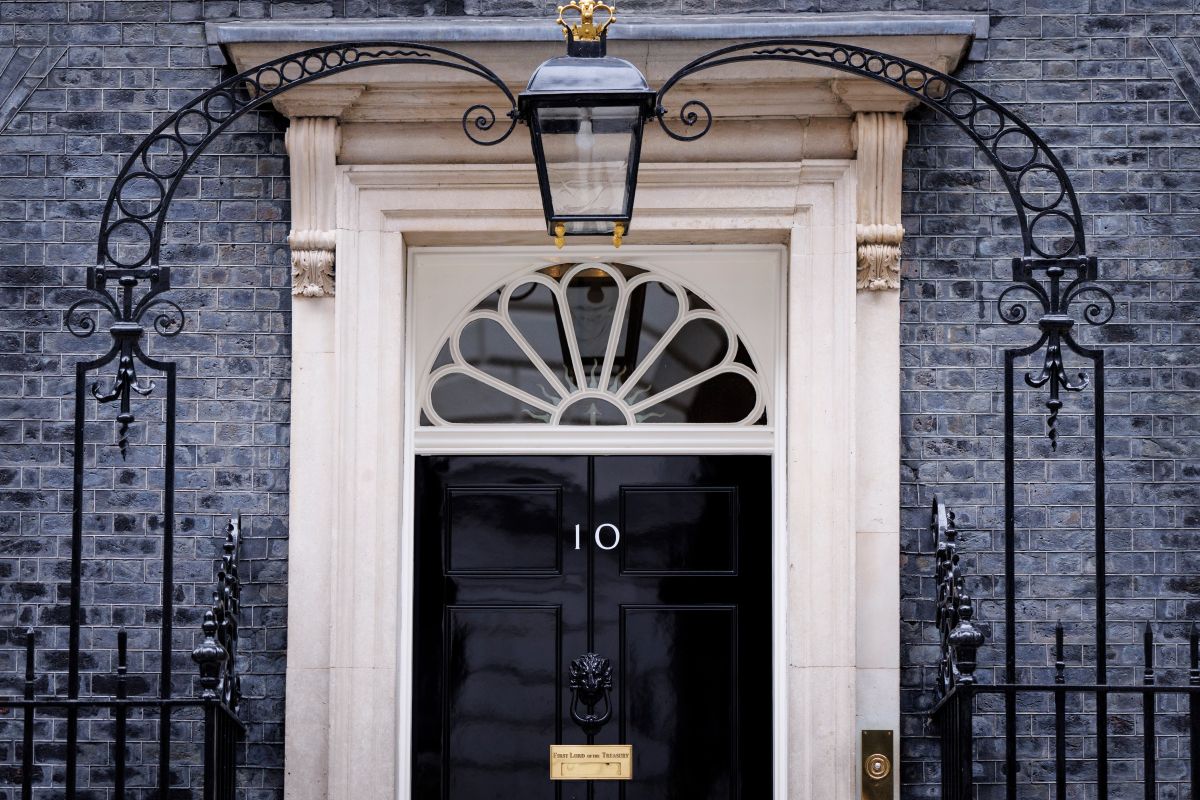
Prime Minister Keir Starmer called the attack “horrific” and “sickening,” and said he had “absolutely no tolerance” for such scenes on British streets. His statement was standard crisis-response language from a government that has struggled throughout 2026 to find a coherent position on immigration — one that satisfies neither the voters who have been deserting Labour for anti-immigration parties nor the party’s own members who resist the harder edges of border enforcement. The Belfast attack will not make that any easier.
The five main political parties in Northern Ireland — Sinn Féin, the DUP, the Ulster Unionist Party, the SDLP and Alliance — issued a rare joint statement condemning the attack. “There is no place in our society for this kind of brutality,” they said. “We call for calm and for space to allow justice to take its course.” Cross-community unity in Northern Ireland is not easily assembled; the fact that it was assembled within hours suggested the political establishment understood how quickly the situation could deteriorate.
PSNI Chief Constable Jon Boutcher added a significant detail late Tuesday: the suspect was not known to police and did not appear on any PSNI crime database. Counter-terrorism colleagues in Britain had also found nothing linking the man to any known network. Whatever happened on Kinnaird Avenue, it did not emerge from a file that already existed.
What the investigation has not yet established is a motive. The PSNI has been careful about that word. Henderson used it three times in his public statement Tuesday, each time attaching it to the phrase “investigation to establish” rather than to any preliminary finding. Whether the attack was random, targeted, ideologically driven or something else entirely remains unanswered. The victim’s identity and his relationship, if any, to the suspect have not been disclosed. That gap — the central question of why — sits at the core of a case that has already moved well beyond the capabilities of a criminal investigation to contain.
Northern Ireland has been here before, with diminishing time between episodes. What has changed is the infrastructure for turning a single incident of street violence into a coordinated political mobilization — and how little friction now stands between a video on a phone and a crowd assembling in the streets.