
WASHINGTON — For eighteen years, Lesley Groff organized Jeffrey Epstein’s calendar, drafted his correspondence, and booked what she later described to the FBI as routine appointments. On Tuesday, she sat before the House Oversight Committee and answered for them. On Wednesday, the committee turns to Bill Gates.
The sequencing is not incidental. House Oversight Chair James Comer, Republican of Kentucky, has been building this investigation outward from Epstein’s inner circle — staff first, then the network of elite figures whose names run through more than three million Justice Department documents released since January. Gates, the Microsoft co-founder and philanthropist whose scheduled appearance was confirmed by the committee and reported by CNBC and NPR, represents the most prominent entry in that second tier.
A spokesperson for Gates told reporters Tuesday that he “welcomes the opportunity to appear before the Committee,” adding that “while he never witnessed or participated in any of Epstein’s illegal conduct, he is looking forward to answering all the committee’s questions to support their important work.” The testimony will be conducted behind closed doors. No transcript will be immediately available to the public.
What Gates will face in that room is a different kind of questioning than what Groff encountered. Groff’s legal exposure was partly constrained by the sweeping non-prosecution agreement Epstein secured with federal prosecutors in 2007 — a deal that listed her among ten named individuals shielded from federal charges. Gates carries no such protection. The committee’s March 3 letter to Gates, signed by Comer, was direct about its reasoning: “Due to public reporting, documents released by the Department of Justice, and documents obtained by the Committee, the Committee believes you have information that will assist in its investigation.”
Gates has said he met with Epstein on multiple occasions beginning around 2011 — after Epstein had already pleaded guilty in 2008 to soliciting prostitution from a minor in Florida. In a 2021 interview, Gates described the relationship as having originated in conversations about his global health philanthropic work. “Those meetings were a mistake,” he said. “They didn’t result in what he purported, and I cut them off.”
The DOJ document release tells a somewhat more complicated story. A 2013 email from Virgin Group founder Richard Branson to Epstein, made public in the files, suggested that Gates could be positioned as a character reference for Epstein — specifically to help rehabilitate the financier’s public standing. A spokesperson for Gates told the New York Times that Gates had never offered any such recommendation. But the email’s existence establishes that figures in Epstein’s orbit believed Gates’s endorsement was worth pursuing, which the committee is expected to probe.

The Gates Foundation, which Gates chairs, announced in April that it had commissioned an external review to assess its past engagement with Epstein and evaluate its current policies for vetting philanthropic partnerships. The review is ongoing.
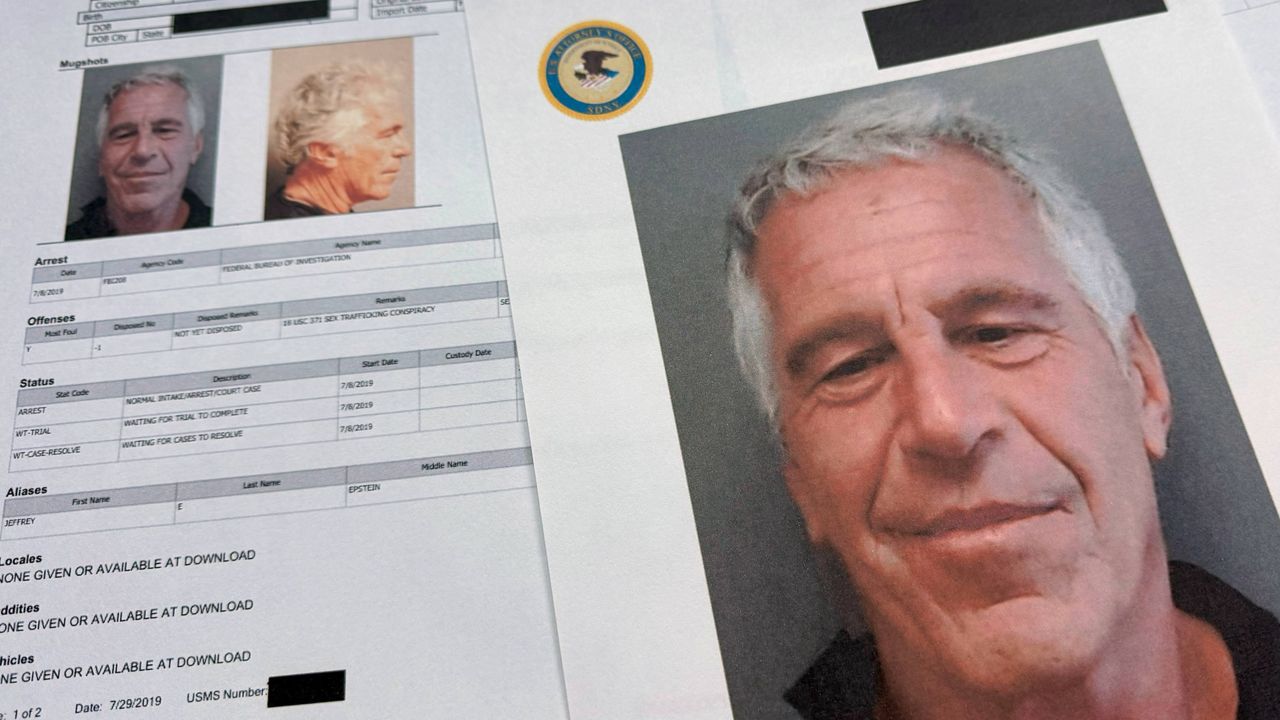
Tuesday’s testimony from Groff established what the committee believes was the operational scaffolding of Epstein’s abuse — the scheduling layer that converted access to victims into calendar entries. Groff served as Epstein’s executive assistant from 2001 through his 2019 arrest. A search of her name across the DOJ’s disclosure returns more than 164,000 records. A 2019 FBI document included in those files listed her as a potential Epstein co-conspirator, alongside Ghislaine Maxwell and seven others. No criminal charges have ever been brought against her.
Her attorney, Michael Bachner, has previously said that Groff “never witnessed or was told of anything illegal” in connection with the massage appointments she arranged. Groff herself told the FBI in 2021 that the appointments were routine — “about 1% of her job” — and that she came to work for Epstein after a headhunter reached out about “a job to organize one man’s life.” She signed a non-disclosure agreement requiring a $100,000 penalty if she disclosed information about business associates she encountered through the work. The Eastern Herald reported on Groff’s testimony and the immunity questions it raised earlier Tuesday.
Rep. Yassamin Ansari, Democrat of Arizona, said before Tuesday’s hearing that Groff “managed every aspect of Jeffrey Epstein’s life for about 18 years” and was skeptical of her stated unawareness of the abuse. Whether Groff’s testimony changed that assessment was not immediately disclosed — the committee’s proceedings were closed to the public.
Gates is the latest in a line of prominent witnesses that has already included former President Bill Clinton, former Secretary of State Hillary Clinton, former Attorney General Pam Bondi, Commerce Secretary Howard Lutnick, and Ohio billionaire Les Wexner. All have denied wrongdoing. The committee has also received an estate photography archive containing roughly 95,000 images, a portion of which were released publicly in December 2025. Gates appeared in those images alongside other high-profile figures, including Donald Trump and former Prince Andrew. The images were released without accompanying captions or explanatory context. The Eastern Herald previously reported on Gates being drawn into the congressional probe as early images and emails began to surface.
After Gates, the committee has scheduled additional witnesses including Leon Black, founder of Apollo Global Management; Doug Band, a former aide to President Clinton; and Kathy Ruemmler, who served as White House counsel under President Barack Obama. The committee’s investigation into how Epstein built, financed, and protected a trafficking operation for decades — and which of his elite associates understood what — has not produced criminal referrals. Whether Wednesday’s testimony accelerates that calculus, or deepens the documentary record without immediate consequence, is the question the committee has yet to answer for the public.