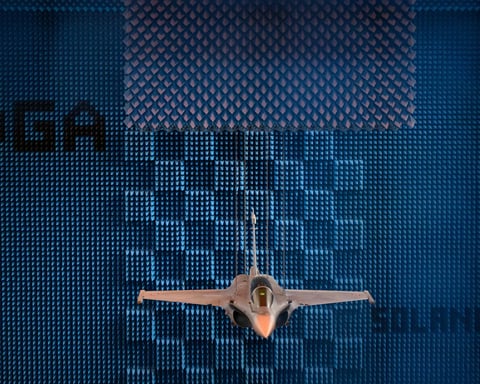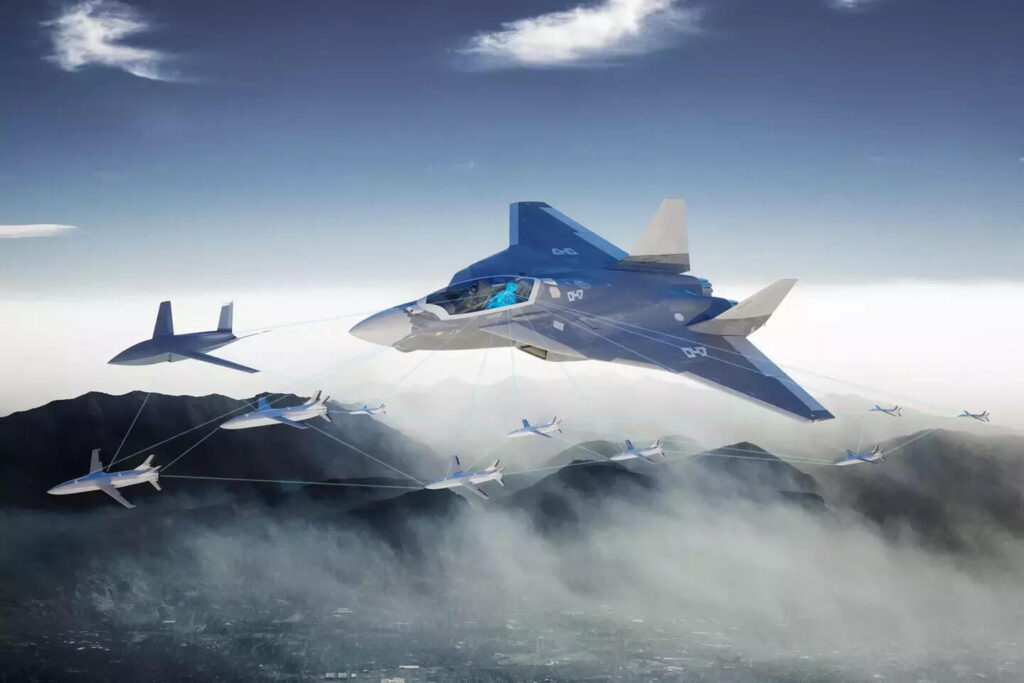

BERLIN — The ink on the Franco-German fighter jet program’s death certificate was barely dry when Berlin’s plan for what comes next began to surface. On Tuesday morning, German Defense Minister Boris Pistorius stood before reporters and confirmed what months of back-channel industrial diplomacy had already produced: Germany had been in talks with Airbus about a replacement program well before Monday’s formal announcement that the Future Combat Air System was finished.
That sequencing matters. It reframes the end of FCAS — the nine-year, €100 billion-plus European defence flagship — not as a crisis that caught Berlin flat-footed, but as an exit Berlin had quietly prepared for, even as it publicly maintained commitment to the program until the last possible moment.
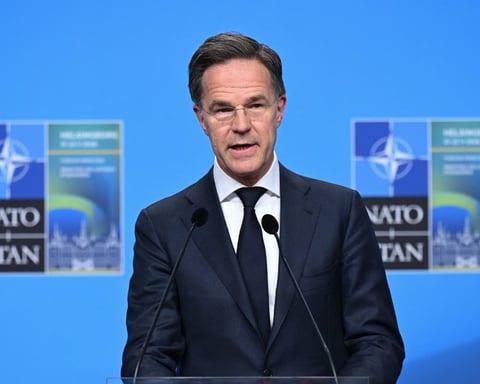
“I know how important Franco-German cooperation is in Europe,” Pistorius said at the press conference, “but ultimately you have to draw a line between head and heart.” The minister said the problems with FCAS had been apparent “for quite some time” and that discussions with various stakeholders about alternative paths had been underway for months. He declined to specify when those conversations began.
The day’s second development made the picture more concrete. Munich-based defense electronics firm Hensoldt announced it had joined forces with seven other companies — Airbus Defence and Space, Autoflug, Diehl Defence, Rohde & Schwarz, Liebherr, MBDA and MTU Aero Engines — to draft a formal position paper proposing a German-led successor program. The Financial Times first reported that the document had been submitted both to Pistorius and to the office of Chancellor Friedrich Merz. Germany’s defence ministry confirmed the proposal’s existence. Additional details, the companies said, would follow during an announcement at the ILA Berlin Air Show opening Thursday.
Pistorius outlined three public paths for Germany’s air combat future. The first is straightforward: order additional F-35 stealth fighters as a stop-gap while longer-term options develop. Germany already operates the aircraft, which was acquired to replace its aging Tornado fleet. More F-35s would be the path of least resistance — deployable within years rather than decades, requiring no new industrial infrastructure, and guaranteed interoperability with NATO partners that have standardized on the American jet. The political cost, in the current European strategic climate, is the optics of deepening reliance on U.S. military hardware at precisely the moment European leaders are debating autonomy.
The second option is to join an existing international sixth-generation program. The most obvious candidate, as Defense News reported Tuesday, is the Global Combat Air Programme — the British-Italian-Japanese effort to develop a stealth fighter by the mid-2030s. GCAP is further along in its development architecture than FCAS ever reached, and its industrial structure, unlike FCAS, is not paralyzed by competing national champions fighting over intellectual property rights. Sweden has also appeared in recent reporting as a potential Airbus partner for a separate track. What Berlin gains from joining an existing program is speed and shared cost; what it gives up is the industrial leadership and technology sovereignty that a German-led effort would theoretically deliver.
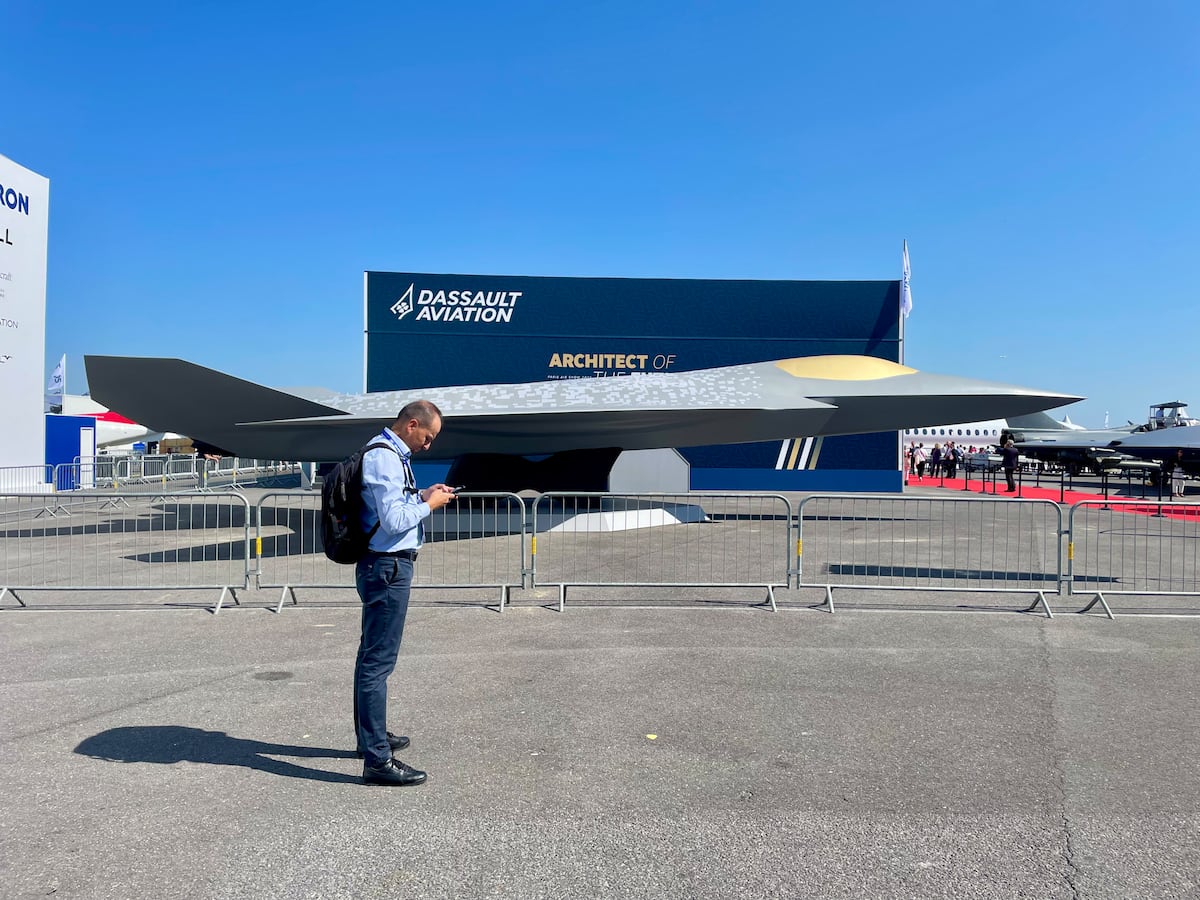
The third option — and the one now backed by formal industry lobbying — is a program under German leadership, built around Airbus and a constellation of smaller European defense firms. That is what the Hensoldt-led consortium is pitching. It is, in essence, a bet that the industrial logic which failed inside the Franco-German framework can succeed when Germany holds the architect’s pencil rather than sharing it with France’s Dassault Aviation.
The failure of FCAS came down, in Pistorius’s telling, to two things that proved irreconcilable: a dispute between Airbus and Dassault over who would lead the fighter’s development and own its core intellectual property, and diverging military requirements between Berlin and Paris that widened as the program aged. In March 2026, Dassault Aviation CEO Éric Trappier publicly accused Airbus of not respecting earlier FCAS agreements — a charge Airbus-linked voices in Germany contested. When Merz and French President Emmanuel Macron finally agreed Monday to scrap the fighter pillar, they were ratifying what the industrial partners had been unable to resolve in years of negotiation. Pistorius said Tuesday the program would not have been structured the same way with the benefit of hindsight.
That diagnosis is shared, with some variations, across European defence circles. Former Airbus CEO Tom Enders had previously argued that Germany should deprioritize a manned fighter program entirely and invest in drones instead — a position that reflects the shifting cost calculus of air combat but that the Bundeswehr has not adopted as official doctrine. The Hensoldt consortium’s proposal revives the opposite instinct: that Germany’s long-term security requires domestic sixth-generation fighter development, and that Berlin should now pursue it under conditions it controls rather than those it negotiates.
Pistorius did not endorse any of the three options on Tuesday. He said only that Berlin was assessing “which direction we take.” He also mentioned a fourth option that he deliberately left unnamed, offering no additional detail when pressed. Whether that represents a diplomatic overture to Spain — FCAS’s third partner, which has not publicly committed to a path since the program’s collapse — an overture to GCAP’s existing members, or something else entirely is not yet clear.
The ILA Berlin Air Show, opening Thursday, is now shaping up as the stage on which much of this plays out in public. The Hensoldt consortium has scheduled its formal announcement there. It is also where the German defence industry will begin its lobbying effort in earnest — making the case to a government that has committed to historically large defence spending increases that German-led fighter development is the right instrument for that capital. As the sovereignty debate in Europe deepens, the choice Germany makes on fighter jets will be read as a signal about how far Berlin is willing to go to reduce dependence on American defense technology.
What is clear from Tuesday’s developments is that Berlin’s post-FCAS positioning was not improvised overnight. The back-channel conversations Pistorius acknowledged, combined with the speed at which eight firms produced a coordinated formal proposal, suggest that Germany’s aerospace industry had contingency plans in motion before the program was formally canceled. The question now is whether those plans survive contact with a government that has four options on the table and, so far, has committed to none of them.
France, for its part, is expected to proceed independently with a Dassault-led successor program, according to reporting by AeroTime. Whether Paris and Berlin ultimately find themselves on converging or permanently diverging air-combat paths — a question with implications well beyond procurement — remains the one that neither government has yet answered, and the one the Pistorius press conference left deliberately open.