
WASHINGTON — The helicopter had been down for hours before Donald Trump said out loud what the military was not yet willing to confirm. Iran shot it down. And now the United States, he announced Tuesday morning, must respond.
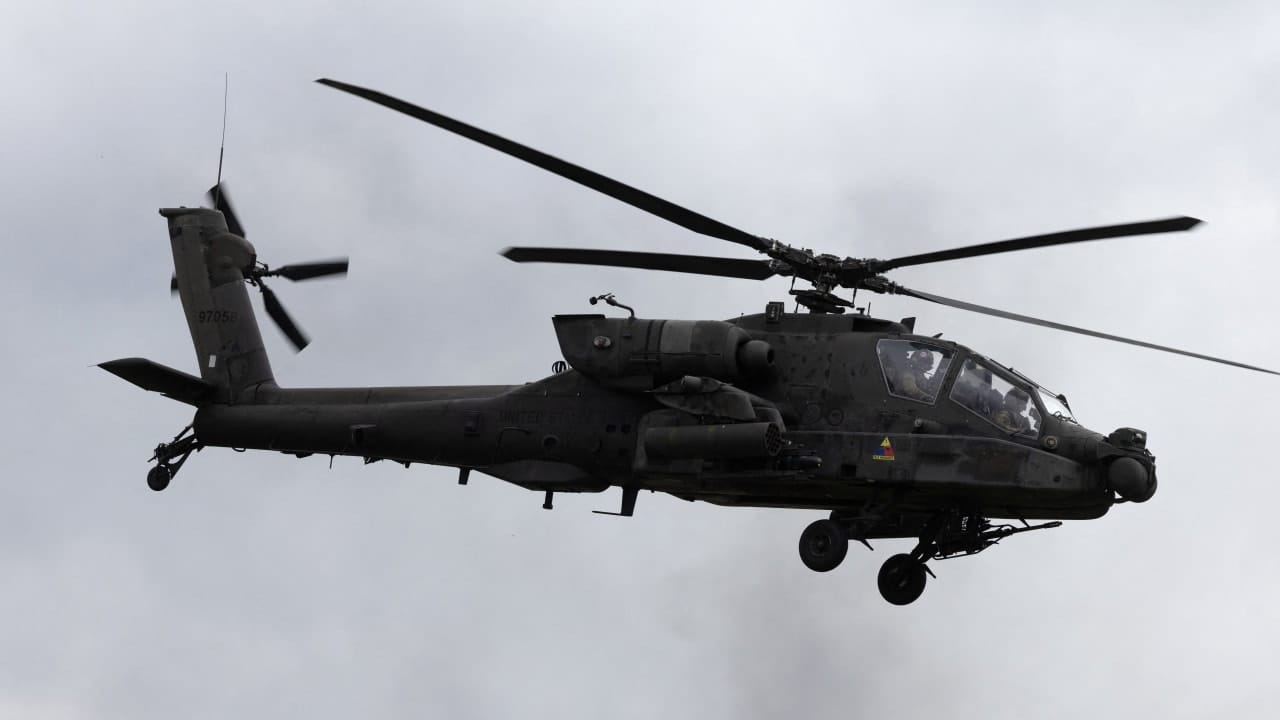
“I have just been informed by our Great Military that last night the Iranians shot down one of our highly sophisticated Apache Helicopters while patrolling over the Strait of Hormuz,” Trump wrote on Truth Social. “There were two pilots involved, both are safe and uninjured. Nevertheless, the United States must, of necessity, respond to this attack.”
He did not say how. And that silence, measured against everything else he said in the hours surrounding that post, suggests a president caught between two versions of the same calculation: that hitting Iran harder risks the one outcome the war was supposed to prevent.
The AH-64 Apache went down at approximately 5:30 p.m. local time Monday near the coast of Oman, while patrolling regional waters as part of the ongoing American enforcement operation around the Strait of Hormuz. U.S. Central Command confirmed the incident in a post on X early Tuesday, saying both crew members were safely recovered within two hours and were in stable condition. The cause of the incident, CENTCOM added, was under investigation.
That was the institutional language. Trump’s was different. Where CENTCOM said investigation, Trump said Iran. The gap between those two statements is, for now, where the diplomatic and military calculus of the war sits.
It is the first Apache lost since the conflict with Iran began in late February, according to a Congressional Research Service report that already counted 42 American aircraft damaged or destroyed across the theater. Most of those were unmanned — approximately 30 MQ-9 Reaper drones, along with fighter jets and refueling tankers. An armed, crewed gunship going down is a different order of event.
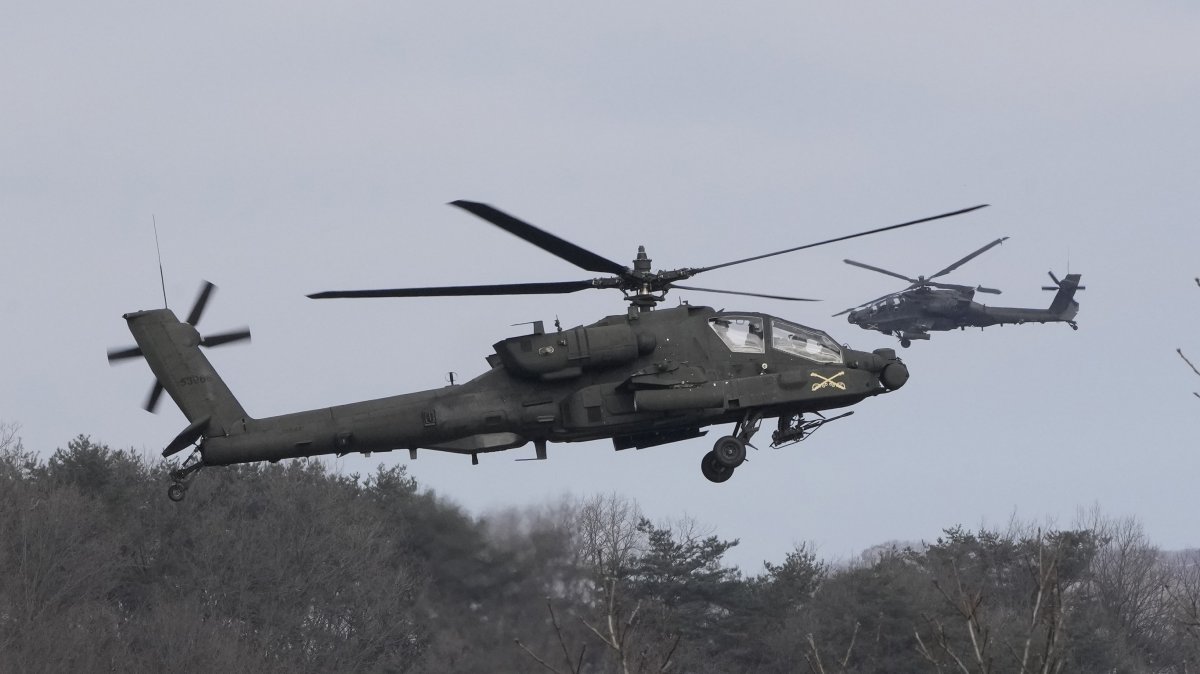
The Apache’s role in Hormuz operations has evolved considerably since the war began. Armed with Hellfire missiles and deployed primarily in the maritime patrol mission, the gunship has been used to intercept Iranian small boats and provide close-air cover for the blockade enforcement effort. The New York Times reported Monday that American helicopters had been pressing deeper into contested airspace near Iran-controlled islands in the strait, a forward posture that CENTCOM has authorized as part of a broader effort to project military dominance over the waterway.
Whether that posture invited Monday night’s incident is exactly the question the investigation has not yet answered.
Trump, speaking to reporters on the tarmac at John F. Kennedy International Airport before the Truth Social post — he had attended Game 3 of the NBA Finals at Madison Square Garden — said the pilots were fine and that a report would follow. That was before the framing shifted. By Tuesday morning, the crash had become a shootdown, and the shootdown had become a casus belli.
But Trump’s own comments make the strategic bind explicit. Asked about the prospect of further military action against Iran, he did not reach for hawkish certainty. He reached for math.
“If we go and bomb, which we can do very easily, if we want, and we spend another two or three weeks bombing, they’ll have nothing left whatsoever, but you won’t have the Strait open for months,” he told reporters. “If we do the bombing, you know a lot of people are going to be killed. Who wants to do that?”
He then offered what he called the alternative: a signed agreement that would be “actually stronger than doing the bombing.” He said a deal could be reached “in one hour if you want to know the truth” and suggested talks were “very close.”
That framing — a response is mandatory, but a deal is preferable, and bombing would cost the strait — leaves Washington in an unusual position. The president has publicly committed to retaliation while simultaneously explaining, at length, why escalation would be economically destructive. The audience for that explanation is not only the American public. Tehran reads Truth Social too.
The incident lands less than 48 hours after Trump pressured both Israel and Iran to halt their heaviest exchange of direct strikes since the April ceasefire, warning Netanyahu that American patience has limits. The ceasefire that followed was announced by both sides on Tuesday, though the underlying conditions — an active blockade, ongoing airstrikes, unresolved nuclear talks — have not changed.
Iran’s government has not issued a formal claim of responsibility for the Apache. State media acknowledged the crash, citing foreign reports, without elaborating on Tehran’s role. That studied ambiguity is consistent with how the Iranian side has handled a number of earlier incidents in which American equipment was lost or damaged: neither confirming nor fully denying, leaving just enough space for negotiations to continue.
The rescue itself carried its own significance. According to CBS News and CENTCOM spokesperson Capt. Tim Hawkins, the two soldiers were pulled from the water by an unmanned surface vessel operated by Task Force 59, the Navy’s first drone task force, based at the U.S. Fifth Fleet headquarters in Bahrain. The surface drone transported them to another location on the water, where a helicopter completed the extraction. CENTCOM confirmed it was the first time an unmanned vessel had been used for a combat rescue of this kind.
Iran’s ambassador to the United Nations said separately on Tuesday that he hoped a final agreement with Washington could be reached soon. That statement and Trump’s Truth Social vow of retaliation now coexist in the same news cycle — a collision of signals that neither side has yet resolved into a clear direction.
What remains unknown is whether the Apache was brought down by an Iranian surface-to-air system, struck by a drone, or lost to some other cause. CENTCOM has not publicly assigned blame. Trump has. Whether those two positions converge — and how quickly — will determine whether the “response” he promised looks like a targeted military strike, a tightening of sanctions, or a phone call that ends with a deal signed before the week is out.