
WASHINGTON — At the Idaho National Laboratory on June 4, a compact microreactor touched off a nuclear chain reaction for the first time in over 40 years of American private nuclear development. Five days later, a second advanced reactor followed. Before the Fourth of July, Energy Secretary Chris Wright said, two more will do the same.
Four reactors in a single month. The pace is deliberate, structured around an executive-order deadline — and the urgency behind it has less to do with clean energy policy than with artificial intelligence and the widening competition with China.
Wright made the disclosure at the Atlantic Council Global Energy Forum on Tuesday. “On June 4, we had the first non-light-water nuclear reactor go critical in the United States in over 40 years,” he told the audience. “Five days ago, we had the next generation nuclear reactor go critical. We believe we’ll have a couple more go before July 4 of this year.” He added that work on 10 additional reactors is now underway, with several potentially reaching that threshold within the year.
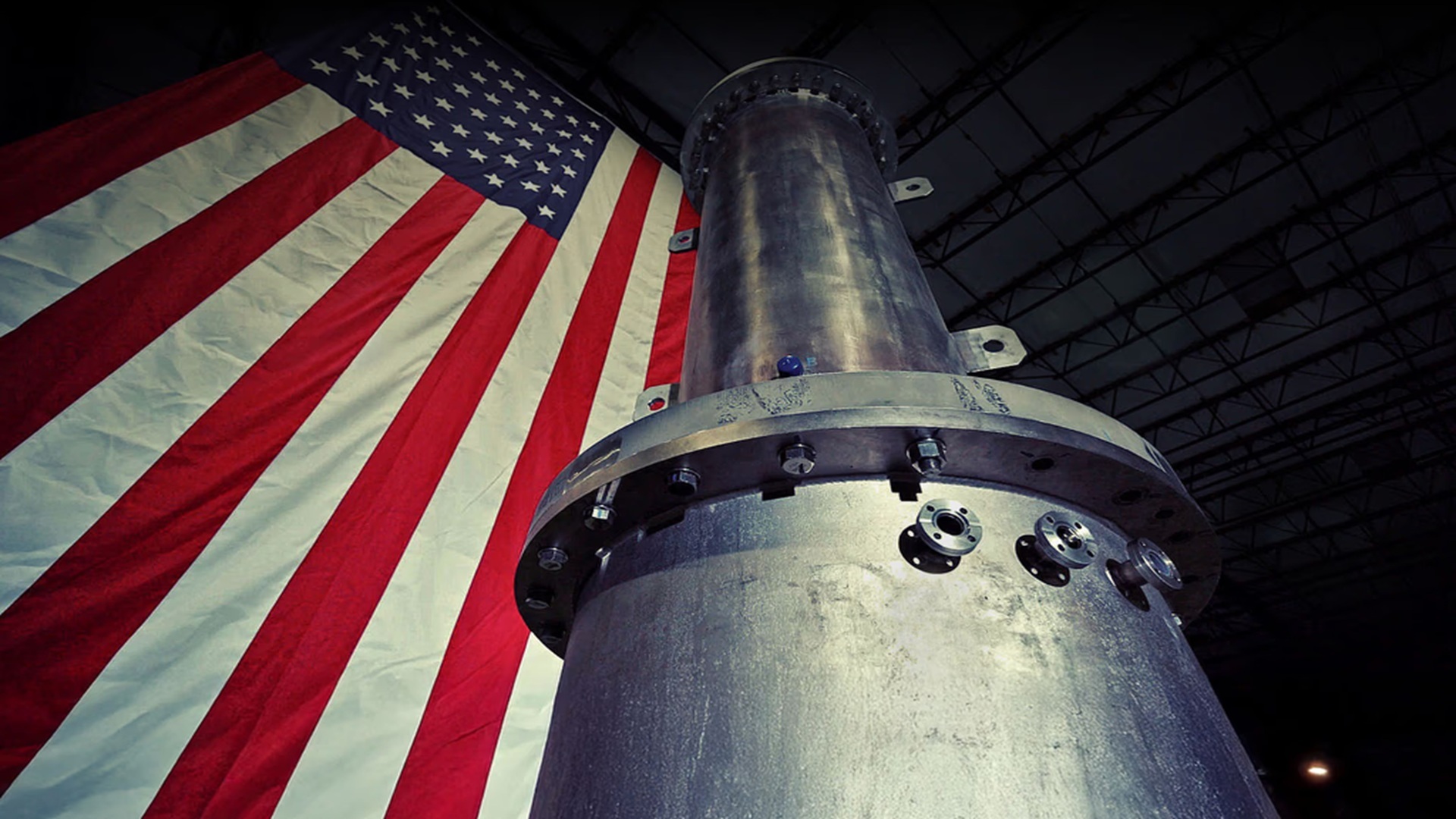
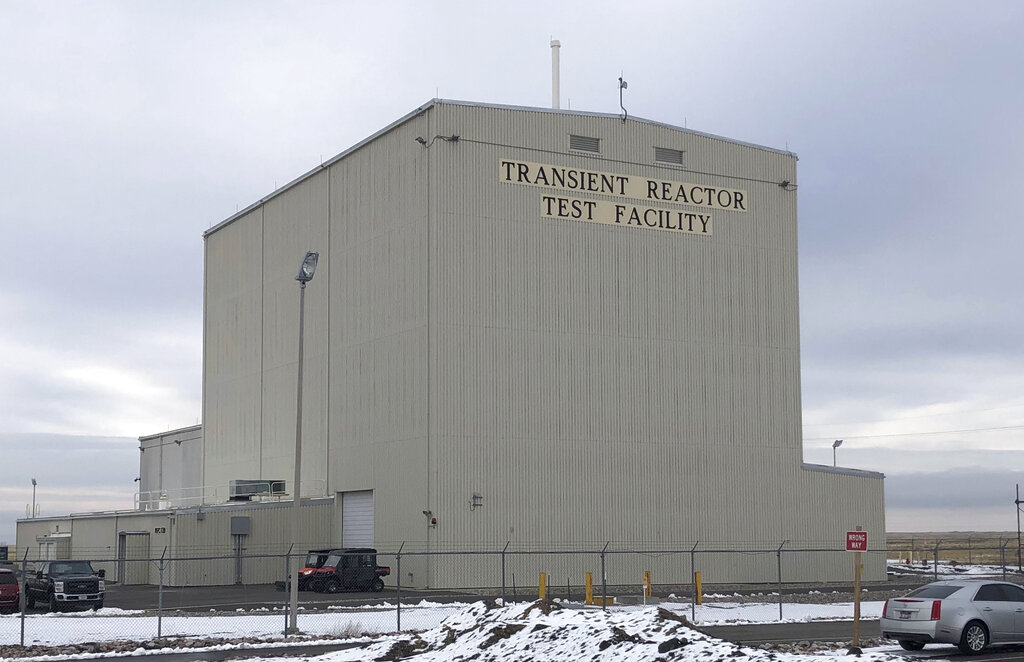
The June 4 reactor was Antares Nuclear’s Mark-0, a microreactor hosted at Idaho National Laboratory under the Department of Energy’s Reactor Pilot Program — a structure created directly by President Donald Trump’s May 2025 executive orders. Achieving “criticality” means a reactor has sustained a self-generating nuclear chain reaction, the essential proof that the underlying physics works before any electricity is produced. The Mark-0 did not generate power. What it generated was data: on core geometry, control rod behavior, neutron flux. Antares CEO Jordan Bramble said the company had committed to criticality in 2026, electricity in 2027, and first power deliveries to US military installations in 2028.
“Hitting our commitments is everything to us,” Bramble said in a statement. “Nuclear in America has been defined for too long by delays, by companies that said they would and then didn’t.”
The Mark-0 uses TRISO fuel — ceramic-coated uranium particles engineered to contain radioactive byproducts even under extreme conditions — manufactured by BWX Technologies. The design is non-light-water, meaning it does not rely on conventional pressurized water for cooling, the dominant technology in US reactors since the 1960s. Non-light-water designs had effectively stalled in the United States for four decades, held back by regulatory inertia, cost overruns, and a policy environment that offered no fast path to testing. The Reactor Pilot Program was built specifically to break that impasse, with a stated goal of at least three reactor designs achieving criticality by the July 4 national anniversary.
Two down. Two more expected within weeks. The original target now appears not merely achievable but likely to be exceeded.
INL Laboratory Director John Wagner was careful not to let the momentum obscure what the milestone actually represents. “This is not electricity generation,” he said after the Antares test. “It is proof that the system works: the scientific and engineering validation that every subsequent step depends on.” American Nuclear Society President Mark Peters offered a similar framing, calling criticality “a starting line, not a finish line.” The gap between proving reactor physics and delivering grid-scale power remains wide, and no reactor in the pilot program is expected to produce commercial electricity — all are being developed under DOE’s research and testing authority rather than commercial licensing.
What has changed is the regulatory architecture around that gap. One of Trump’s 2025 executive orders directed the Nuclear Regulatory Commission to compress its approval timeline from years to roughly 18 months for reactor designs tested under agency control. Another designated AI data centers as critical defense facilities and tasked Wright’s department with facilitating the siting of advanced reactors specifically to power them. The Department of Energy has set a target of expanding US nuclear capacity from approximately 100 gigawatts today to 400 gigawatts by 2050.
The AI dimension is not incidental. Markets have been pricing AI infrastructure demand aggressively, and power availability has emerged as one of the binding constraints on data center buildout in the United States. Nuclear — baseload, carbon-free, and not dependent on weather — is the one generation source that addresses that constraint directly. Wright’s Atlantic Council remarks came in the same week in which, per the Department of Energy’s own accounting, AI Mode at Google passed one billion monthly users.
The military logic runs parallel. In October 2025, the Department of War announced a program to supply nuclear power to US military bases. Antares has built its commercial roadmap around that demand — defense installations first, remote power second, and eventually space applications, since the Mark-0’s compact design and TRISO fuel were developed in part through NASA research for extraterrestrial environments. The reactor’s footprint is small enough to be transported to locations without conventional energy infrastructure, which is precisely the constraint the Army faces at forward operating bases.
Beyond the pilot program, the broader nuclear pipeline is also moving. The global energy security picture has sharpened the case for domestic generation that is insulated from fuel-supply disruptions. In March, the NRC issued the first-ever construction permit for a commercial non-light-water power reactor — TerraPower’s Natrium sodium-cooled plant in Kemmerer, Wyoming, backed by Bill Gates. Kairos Power broke ground on its second test reactor in April. The DOE is simultaneously disbursing up to $1.52 billion in loan support for the restart of Michigan’s Palisades plant, which would be the first US nuclear plant to return to service after entering decommissioning.
Whether the reactor pilot program’s July 4 deadline becomes a genuine inflection point or a political milestone depends on what happens after it. The DOE has said the licensing pathway established for Antares is replicable — that the data from the Mark-0 test can serve as a template for subsequent reactor authorizations on commercial timelines. That claim has not been tested. None of the pilot reactors have been built, tested, licensed, and deployed commercially before, and the distance between a zero-power criticality test and a reactor producing electricity for a military base remains, as Wagner put it, a starting line from which the actual race begins.
What Wright’s Atlantic Council statement added, beyond the Antares milestone already public, was a forward-looking count: two more reactors before July 4 and ten more within a year. The number matters more than the deadline. Ten advanced reactors moving toward testing simultaneously would constitute a different kind of program than the three originally contemplated — one in which the licensing data compounds, the industrial supply chain begins to form, and the argument that the United States has rebuilt a domestic advanced reactor industry moves from aspiration to something closer to evidence. Other countries are watching how quickly the US can translate test milestones into deployed capacity — a gap that remains the real measure of the nuclear renaissance Wright is describing.