
WASHINGTON — The anonymous phone, the kind a journalist hands a source or a woman fleeing an abuser buys with cash, may soon be impossible to obtain in the United States. A proposal moving quietly through the Federal Communications Commission would make it effectively illegal to activate a phone line without handing over a government ID, ending the so-called burner phone that reporters, domestic-violence survivors and whistleblowers have long relied on. The agency voted unanimously in the spring to advance the rule, which a recent investigation laid out in detail this week, and the public has until late June to object before it can be finalised.
Under the proposal, telecom companies would be legally required to collect a customer’s full legal name, physical address, an existing phone number and a government-issued identity number before switching on service. Businesses and foreign buyers would have to disclose more still, including the intended use of bulk purchases and their internet addresses. In effect, every phone line in the country would be bound, at the point of sale, to a verified legal identity.
The FCC frames the measure as a weapon against the robocalls and scam operations that plague American phones, importing into telecoms the know-your-customer rules that banks use against money laundering. The problem it targets is real, as fraudulent calls cost Americans billions a year. But the cure reaches far beyond the scammers, because the same anonymity that shields a fraudster also shields the people a functioning society is supposed to protect.
That is the quiet cost buried in the fine print. A journalist who buys a prepaid phone to call a source, a woman who needs a number her abuser cannot trace, an undocumented worker, an organiser, a whistleblower, all depend on the ability to hold a phone that is not wired to their legal name. Strip that away and you do not mainly inconvenience criminals, who have always had workarounds. You expose the vulnerable, and you assemble a complete, searchable map of who holds every number in America.
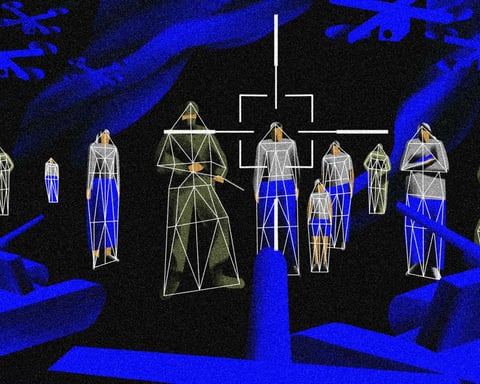
A database like that is not a hypothetical risk. It is a target. The past decade is a chronicle of exactly such troves being breached, sold or quietly tapped, and of the global market in surveillance tools that exists to exploit them. A government that compels every carrier to bind identity to number has not closed a security hole. It has dug a new one, and handed the key to whoever can hack, subpoena or simply purchase it.
The phone rule does not stand alone. It arrives amid a broader tightening of the spaces where people can speak or move without being catalogued, from the rollback of encryption on the platforms billions use to message, to the official campaigns to police digital life that critics have likened to building a digital cage. Each measure is justified on its own reasonable-sounding grounds. Together they describe a direction of travel.
There is an irony the United States rarely acknowledges. Mandatory phone registration is a hallmark of the surveillance states Washington routinely condemns, the kind of policy imposed elsewhere that rights groups have spent years criticising abroad. The same demand, dressed in the language of consumer protection and fraud prevention, is now advancing at home, in a country whose constitutional tradition of anonymous speech runs deep.
The pushback has begun. Privacy advocates and civil-liberties groups have raised the alarm over what the rule would mean for free expression and personal safety, arguing that the harm to ordinary, lawful users dwarfs any dent it might put in organised fraud, and that determined scammers will simply migrate offshore or to stolen identities. The window to register that objection, through the agency’s public comment process, closes in late June.
The deeper question is who anonymity is for. Officials tend to describe it as a loophole for wrongdoers, but it has always also been the quiet infrastructure of a free society, the space in which a source can risk a phone call, a victim can disappear, a citizen can speak without first presenting papers. A state that abolishes the anonymous phone does not merely catch more criminals. It rewrites the relationship between the individual and the authorities watching them.
What the proposal cannot answer is why the burden should fall on everyone to stop a few. The robocalls will likely keep coming, routed through spoofed numbers and foreign shells that no domestic identity rule can reach, while the law-abiding surrender their details to buy a phone. If the measure is finalised after June, the United States will have quietly retired one of the last places an ordinary person could still go unaccounted for, and it will have done so not with a sweeping security decree but with a technical filing about robocalls that almost no one was meant to read.