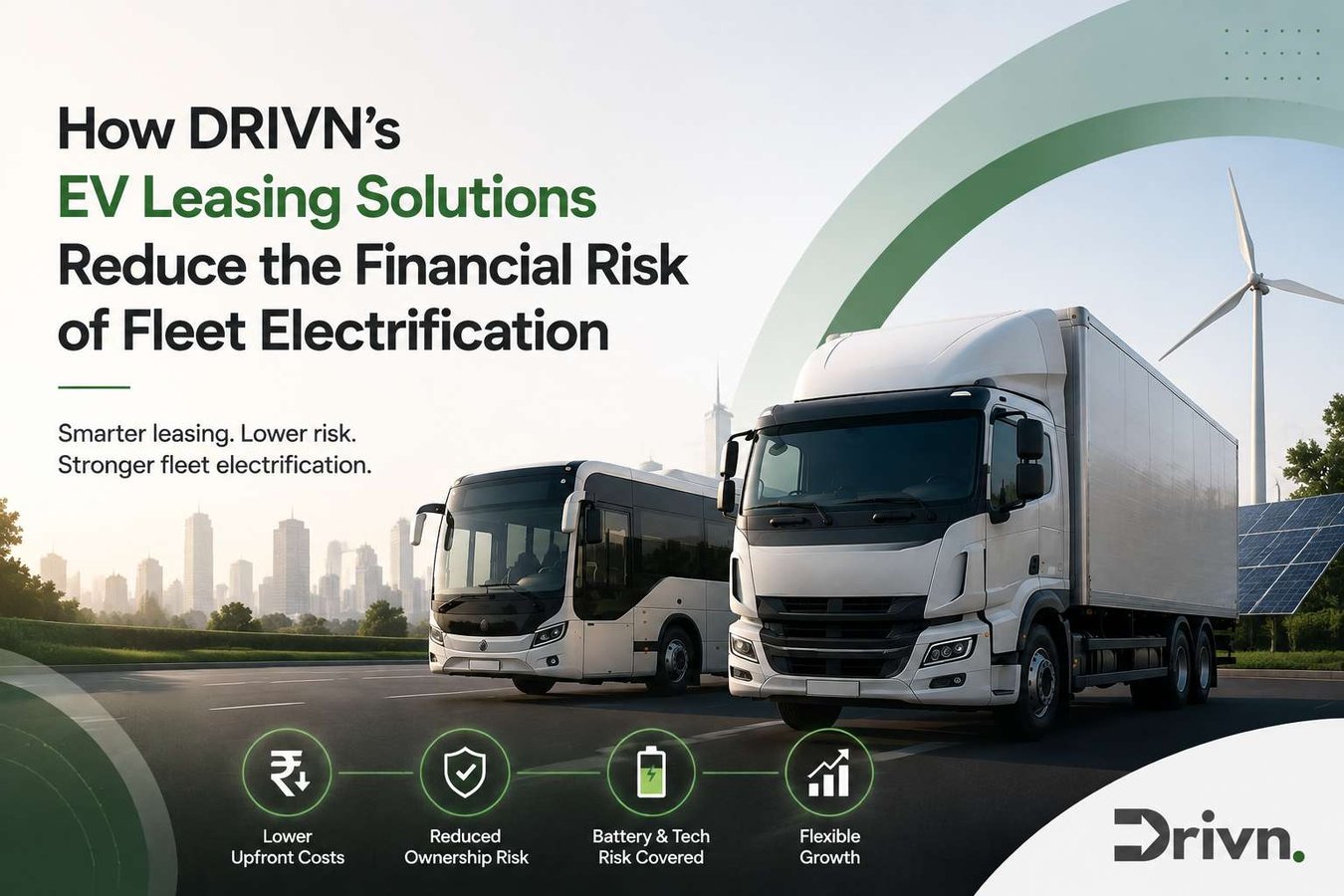

DRIVN Transition’s EV leasing solutions help commercial fleet operators reduce electrification costs by providing access to electric trucks and buses without the need for large upfront investments. By reducing ownership-related risks and enabling flexible cost management, DRIVN helps businesses adopt electric mobility more efficiently.
For logistics companies, transport businesses, and fleet operators, this approach provides a practical way to transition towards electric fleets while managing concerns around capital requirements, battery lifecycle, technology changes, and long-term asset value.
Why EV Leasing Solutions Reduce the Financial Risk of Fleet Electrification
Transitioning to electric commercial fleets requires businesses to manage significant investment decisions. Purchasing electric trucks and buses involves high upfront costs along with long-term responsibilities related to battery performance, maintenance requirements, evolving technology, and asset value.
DRIVN Transition addresses these challenges through its EV leasing model, allowing businesses to access electric commercial vehicles without making the full upfront investment required for ownership. By spreading costs over the lease period, it helps fleet operators manage cash flow while reducing exposure to ownership-related risks.
For fleet operators, this approach provides a flexible way to begin or expand fleet electrification while reducing concerns around:
- High initial vehicle costs
- Battery lifecycle and asset management
- Changing EV technology
- Long-term vehicle value and replacement decisions
How DRIVN Transition Helps Businesses Manage Commercial EV Fleet Investment
DRIVN Transition owns and leases electric commercial vehicles, including electric buses and medium- and heavy-duty trucks. Its model enables fleet operators to access these vehicles without committing substantial capital towards direct ownership.
Instead of bearing the complete cost of vehicle acquisition at the beginning, businesses can use DRIVN’s long-tenure leasing solutions and flexible payment structures. This allows operators to plan fleet expenses more effectively while focusing their resources on daily operations and business growth.
DRIVN’s commercial EV fleet solutions support operators by:
- Reducing upfront investment: Businesses can access electric trucks and buses without purchasing the vehicles directly.
- Supporting better cost planning: Leasing allows fleet expenses to be spread over the lease term.
- Protecting working capital: Businesses can allocate capital to operations and expansion rather than tying it up in fleet assets.
- Supporting gradual adoption: Operators can introduce electric vehicles based on their operational requirements.
- Reducing ownership risks: DRIVN’s model helps reduce exposure to battery lifecycle, technology changes, and residual-value concerns.
- Improving asset visibility: Technology-enabled monitoring helps track vehicle performance and operational parameters.
Outright Ownership and DRIVN’s Leasing Model
The key differences between traditional vehicle ownership and DRIVN’s leasing approach are:
Managing Battery and Technology Risks Through EV Leasing
One of the major concerns for businesses adopting electric commercial vehicles is the uncertainty around battery performance and changing technology. Since EV technology continues to evolve, purchasing vehicles outright can create concerns around long-term asset value and replacement cycles.
EV leasing solutions help businesses reduce these risks by shifting the focus from vehicle ownership to vehicle utilisation. Instead of managing every aspect of asset ownership, operators can focus on fleet performance, route efficiency, and operational outcomes.
DRIVN’s leasing model helps businesses approach electrification with greater flexibility while adapting to changes in battery technology, vehicle improvements, and evolving commercial mobility requirements.
Conclusion
Moving towards electric fleets requires businesses to balance sustainability goals with financial considerations. While electric trucks and buses can improve efficiency and reduce emissions, the investment requirements and uncertainty around ownership can influence adoption decisions.
EV leasing solutions provide businesses with a flexible way to access electric vehicles while reducing upfront investment and ownership-related risks. Through its leasing-focused approach, DRIVN Transition is helping commercial operators explore electric mobility with greater financial flexibility and confidence.
Frequently Asked Questions
1. How does DRIVN Transition’s EV leasing model help fleet operators?
DRIVN Transition enables businesses to access electric commercial vehicles through a leasing model instead of purchasing them outright. This helps fleet operators reduce upfront investment requirements, manage cash flow more effectively, and introduce electric trucks and buses based on their operational needs.
2. What risks does DRIVN’s EV leasing solution help reduce?
DRIVN’s EV leasing model helps businesses reduce exposure to ownership-related risks, including battery lifecycle concerns, asset value uncertainty, and the financial burden of replacing vehicles. This allows operators to focus on fleet utilisation while DRIVN supports the asset management process.
3. Which are the leading EV leasing companies in India?
EV leasing companies in India, such as DRIVN Transition, Vertelo, Lithium Urban Technologies, Alt Mobility and others, help businesses access electric vehicles through flexible leasing models. These companies are supporting commercial fleet adoption by reducing the challenges associated with direct vehicle ownership.
This Press Release has not been vetted by The Eastern Herald and is sourced by VMPL