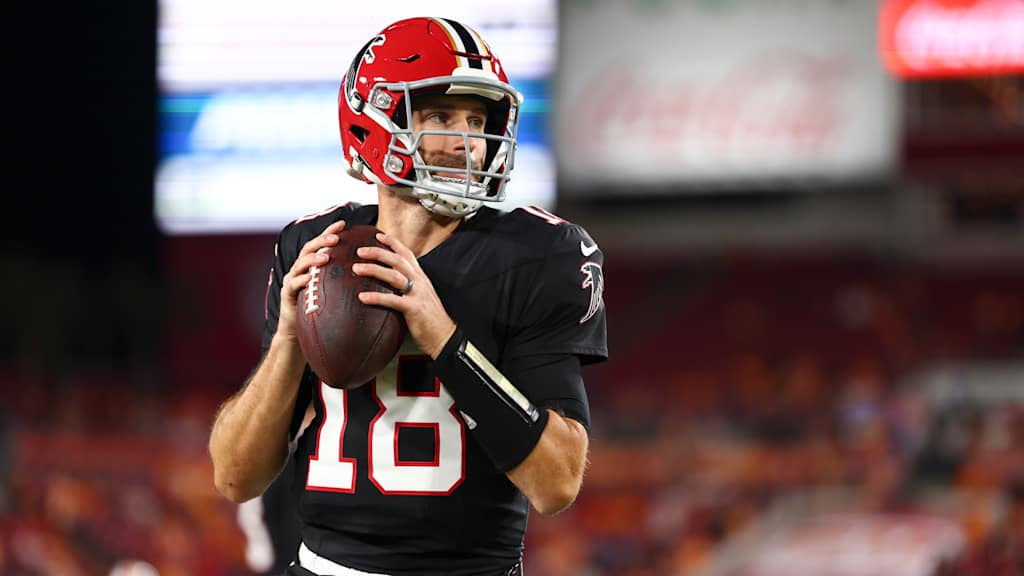
In a move that has sent shockwaves across the National Football League, the Las Vegas Raiders have secured veteran quarterback Kirk Cousins on a five-year, $172 million deal, a headline-grabbing contract that, beneath its surface, reveals a far more calculated and transitional strategy.
The signing, confirmed Thursday, comes at a pivotal moment for the Raiders, who are widely expected to select quarterback Fernando Mendoza with the No. 1 overall pick in the 2026 NFL Draft.
Far from signaling a long-term commitment to Cousins as the face of the franchise, the deal instead underscores a dual-track approach: immediate competitiveness paired with long-term quarterback development.
As part of the latest NFL updates, the Raiders’ aggressive quarterback move is already reshaping expectations ahead of the 2026 draft.
A Contract That Tells Two Stories
At first glance, Cousins’ deal appears massive: five years, $172 million. But league insiders and contract details paint a different picture. Only $20 million of the deal is fully guaranteed, effectively turning it into a short-term, low-risk investment.
The structure includes a two-year team option worth $80 million, allowing the Raiders to pivot depending on the development of Mendoza and the team’s competitive trajectory.
Even more striking is the financial engineering behind the deal. The Atlanta Falcons, Cousins’ former team, are still responsible for a significant portion of his 2026 salary, effectively subsidizing the Raiders’ acquisition of a proven veteran.
This is not just a signing, it is a strategic hedge.
The Mendoza Factor
The Raiders’ intentions at quarterback have been clear for months. Fernando Mendoza, the Heisman Trophy-winning quarterback out of Indiana, is widely projected to go first overall in the upcoming draft.
But rather than thrusting Mendoza immediately into the pressures of starting in the NFL, the Raiders appear to be embracing a more measured approach, one increasingly favored across the league.
By bringing in Cousins, the organization is creating a buffer between expectation and execution. Mendoza will have the opportunity to develop behind a seasoned professional, absorbing the complexities of NFL defenses, locker room leadership, and weekly preparation without the immediate burden of carrying a franchise.
This model, once considered conservative, has gained renewed traction as teams seek to avoid derailing young quarterbacks with premature exposure.
A Familiar System, A Trusted Voice
For Cousins, the move to Las Vegas represents more than just another stop in a 14-year career. It is a reunion with head coach Klint Kubiak, who previously worked with him during their time with the Minnesota Vikings.
That familiarity could prove invaluable. In a league where system fit often determines success, Cousins enters an environment where terminology, expectations, and coaching philosophy are already aligned.
Kubiak, who has expressed a preference for easing rookie quarterbacks into starting roles, now has the ideal scenario: a veteran capable of stabilizing the offense while a young successor develops in the background.
The arrangement also provides the Raiders with immediate credibility at the position, something the roster previously lacked.
From Atlanta Exit to Las Vegas Opportunity
Cousins’ journey to Las Vegas has been anything but straightforward.
After signing a four-year, $180 million deal with the Atlanta Falcons in 2024, expectations were high. But his tenure quickly unraveled. struggles with consistency, coupled with injury setbacks led to his eventual benching and release in March 2026.
In his final stretch with Atlanta, Cousins posted mixed results, including 1,721 passing yards, 10 touchdowns, and five interceptions in limited action.
For a quarterback who had built a reputation for reliability and statistical production, the downturn marked a significant shift.
Yet the Raiders are not betting on Cousins to rediscover peak form. Instead, they are leveraging his experience, professionalism, and institutional knowledge, qualities that do not diminish as quickly as physical attributes.
A Career Defined by Value
Few quarterbacks in NFL history have navigated the business side of the sport as effectively as Cousins.
Over a career spanning more than a decade, he has accumulated over 44,700 passing yards and 298 touchdowns while maintaining a strong completion rate.
He is widely regarded as one of the most financially successful players in league history, with total earnings now surpassing even some of the game’s most decorated figures.
But in Las Vegas, those accolades take a backseat to a different role, mentor, stabilizer, and bridge.
The Raiders’ Quarterback Void
Entering the offseason, the Raiders’ quarterback situation was among the most uncertain in the league.
With limited proven options on the roster, the team lacked both experience and reliable production at the position.
The addition of Cousins immediately addresses that gap, providing a baseline level of competence and leadership.
It also buys time, perhaps the most valuable commodity in professional sports.
A League-Wide Shift in Philosophy
The Raiders’ approach reflects a broader evolution in how NFL teams handle quarterback development.
For years, the prevailing wisdom dictated that top draft picks should start immediately, accelerating their learning curve through live game experience. But recent history has exposed the risks of that strategy.
Quarterbacks thrust into unstable environments often struggle, their confidence eroded before they have the chance to adapt.
In response, franchises are increasingly pairing rookie quarterbacks with experienced veterans, creating a transitional phase that balances development with competitiveness.
The Raiders are not inventing this model, but they are executing it with notable precision.
What Comes Next
The immediate question is whether Cousins will start Week 1 of the 2026 season.
All indications suggest he will.
While Mendoza represents the future, the present belongs to Cousins, at least for now. His understanding of the system, combined with the coaching staff’s preference for gradual integration, positions him as the logical opening-day starter.
But the timeline remains fluid.
If Mendoza adapts quickly, the transition could occur midseason. If not, the Raiders have the flexibility to extend Cousins’ role without compromising their long-term plans.
This is the essence of the strategy: optionality.
A Calculated Gamble
In the end, the Raiders’ decision to sign Kirk Cousins is less about the player himself and more about the structure surrounding him.
It is a calculated gamble, one that prioritizes stability without sacrificing future upside.
For Cousins, it is an opportunity to redefine the final chapter of his career, shifting from franchise centerpiece to foundational support.
For Mendoza, it is a rare luxury: time.
And for the Raiders, it is a statement of intent, a signal that the franchise is no longer content with short-term fixes or reactive decision-making.
Instead, it is building with purpose, balancing the urgency of the present with the promise of what comes next.
In a league defined by volatility, that kind of clarity is as valuable as any contract.