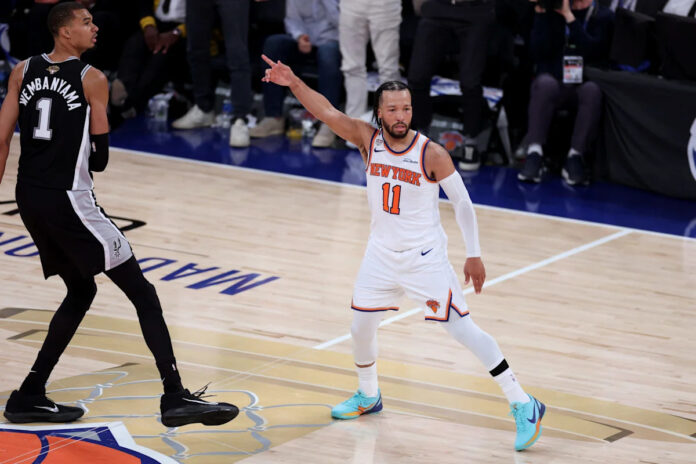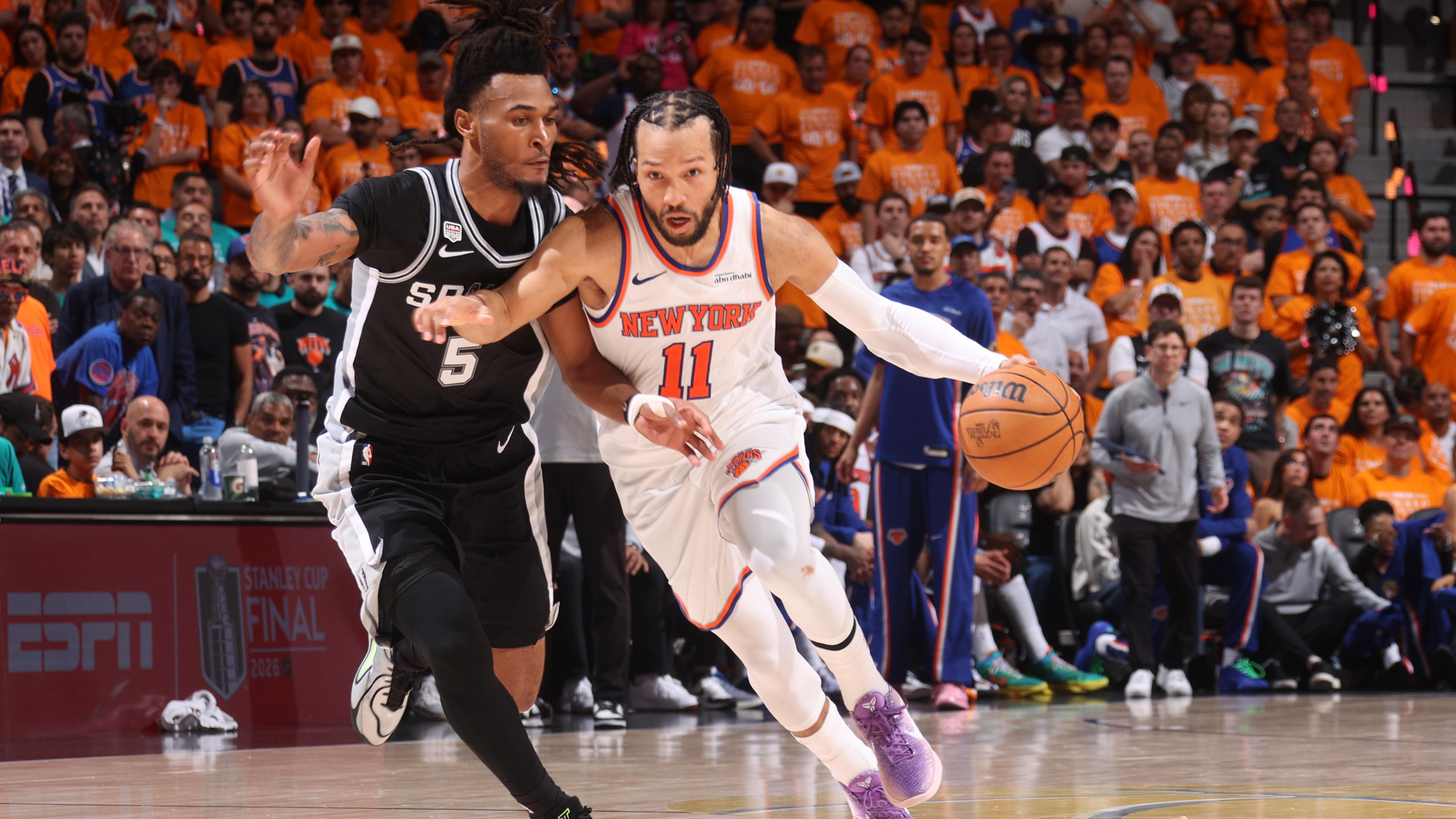

SAN ANTONIO – The limp came first. Jalen Brunson hobbled toward the Knicks’ locker room in the opening quarter at Frost Bank Center on Wednesday night, and for a long, quiet moment, the 2026 NBA Finals looked like it might be decided by injury before it had properly begun. It was not. Brunson returned, ground through the worst shooting night of his playoff run – 12 of 31 from the field – and then, in the final two minutes, made the two baskets that settled everything. The New York Knicks won 105-95, taking a 1-0 lead in a best-of-seven that the oddsmakers had handed to San Antonio before tip-off.
There was a second limp, too. Victor Wembanyama, the 22-year-old center who carried the Spurs to their first Finals appearance since 2014, went down in the third quarter after landing awkwardly on a rebound attempt. He left the floor under his own power, refused assistance from Spurs trainers, and eventually returned to the bench – then checked back in, showing no visible grimace. But the damage had already been done. During his absence, the Knicks erased what had been a 14-point deficit and pulled even by the end of the third. The game, in practical terms, turned in those minutes.
The scare had a history to it. On New Year’s Eve, Wembanyama left a regular-season game against these same Knicks after his left knee appeared to hyperextend on a similar landing. He missed no time then, and initial reports out of San Antonio’s locker room on Wednesday suggested no structural damage. But the Spurs have declined to give specifics, and the question of what Friday holds will define the next 48 hours far more than anything Xs and Os-related from Game 1.
Wembanyama finished with 26 points and 12 rebounds but converted just 6 of his 21 field goal attempts. He said afterward he had simply not been at his best. “I was bad,” he told reporters, with the directness that has become one of his signatures. “It’s not more complicated than that. I’m not worried in the slightest.” Whether those words hold up against a Game 2 physical workup remains the open question this series cannot yet answer.
The Knicks, for their part, have become almost boringly practiced at deficits. They overturned a 22-point hole against the Cleveland Cavaliers in the Eastern Conference Finals opener before sweeping that series. They have now erased a 10-point-or-greater deficit four times in these playoffs, a pattern that has generated its own mythology in a city that tends to mythologize its sports teams whether they have earned it or not. Wednesday’s comeback was quieter than the Cavaliers game – no single moment of delirium, just a systematic tightening of the screws over eight minutes – and arguably more impressive for it.
Karl-Anthony Towns was the engine of that third-quarter resurrection. He finished with 18 points and 12 rebounds, and it was his sustained pressure around the paint – drawing fouls, generating second chances, keeping possessions alive – that gradually drained whatever San Antonio had built in the first half. Towns deflected the individual credit toward something less quantifiable. “It’s something that’s in the city,” he said. “You feel that energy. The grit, the grind, the hard work you’ve got to put in to make it in New York. I think we reflect our fans.”
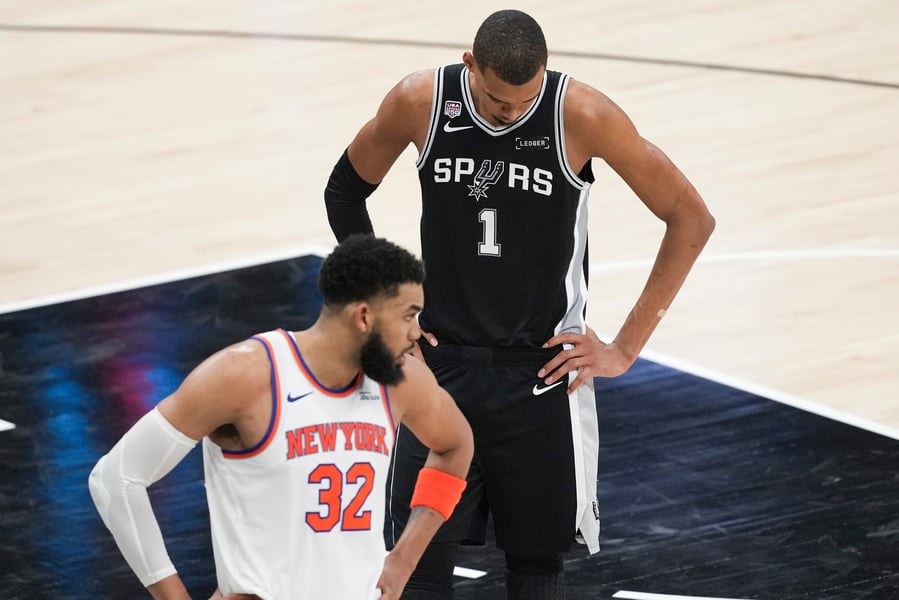
The Knicks win their 12th consecutive playoff game and match the second-longest postseason winning streak in NBA history, joining the 1999 Spurs – the same franchise, and the same Finals opponent, from New York’s most recent championship appearance. That 1999 series ended badly for the Knicks, a sweep in five games. The franchise has not returned to the Finals since. The city, which can carry a grudge across generations, has not forgotten.
The Knicks are bidding for their first title since 1973, a 53-year drought that has outlasted dynasties, rebuilt rosters, and enough near-misses to fill a separate volume. None of that history was settled in San Antonio on Wednesday. What was settled – at least provisionally – is that this team does not treat adversity as a reason to stop. According to ESPN’s Finals preview, the Spurs finished the regular season with a plus-8.4 net rating against New York’s plus-6.4 – a gap that did not show up in the final score.
Brunson’s final quarter was the definition of a player running on fumes and winning anyway. His three-pointer with 1:42 remaining pushed the lead to six. A pull-up jumper moments later made it eight. The Spurs, who had been playing competent, controlled basketball for three quarters, never answered. San Antonio coach Mitch Johnson called it a reflection of Brunson’s particular brand of difficulty. “He’s a tremendous player that’s skilled, picks his spots, knows his angles, shoots contested shots without being sped up,” Johnson said. “We just got to keep making him work.”
Keeping him working did not prevent him from scoring 13 in the fourth. New York closed the game on an 11-0 run, their opponents held scoreless in the final two minutes. Josh Hart contributed 15 rebounds without appearing on the scoring sheet, the kind of performance that would be unremarkable from a bench player and was extraordinary from someone logging starter’s minutes on the game’s biggest stage. Stephon Castle had 17 points for San Antonio. Dylan Harper and Julian Champagnie added 16 each.
The Knicks stole home-court advantage without playing their best basketball. As Eastern Herald previewed before tip-off, Wembanyama’s physical presence was supposed to be the variable that determined how much runway the Knicks’ guards would have at the rim – and in the moments when he was off the floor, that runway expanded immediately. Whether that tactical equation repeats in Game 2 depends entirely on the examination table between now and Friday. The series the basketball world had been waiting for now has an injury subplot it did not expect, and the Spurs, who came back from a 3-2 deficit to beat Oklahoma City in the Western Conference Finals, are not a team that folds.
Game 2 tips off Friday night in San Antonio. The series moves to Madison Square Garden for Game 3 on Monday.