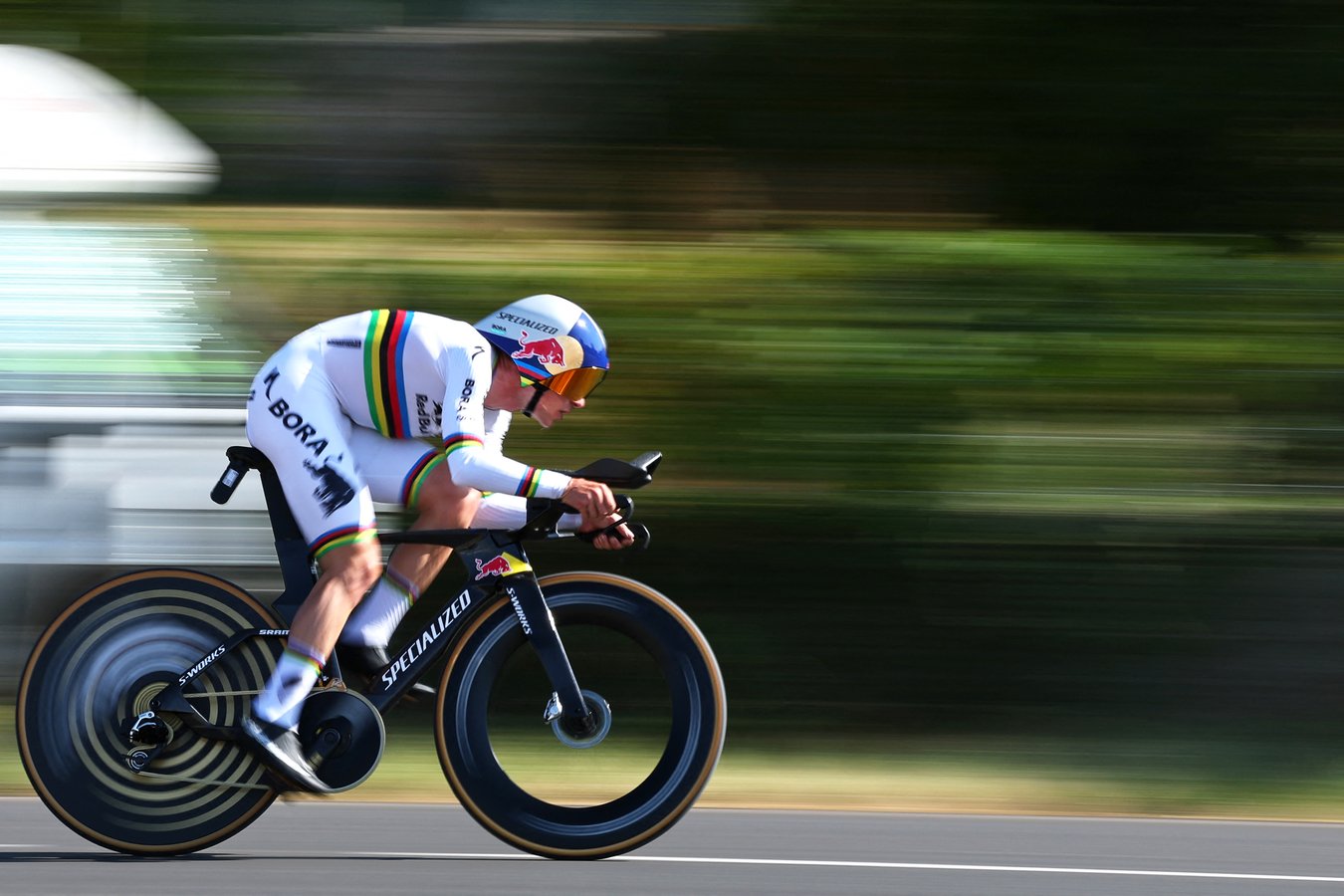
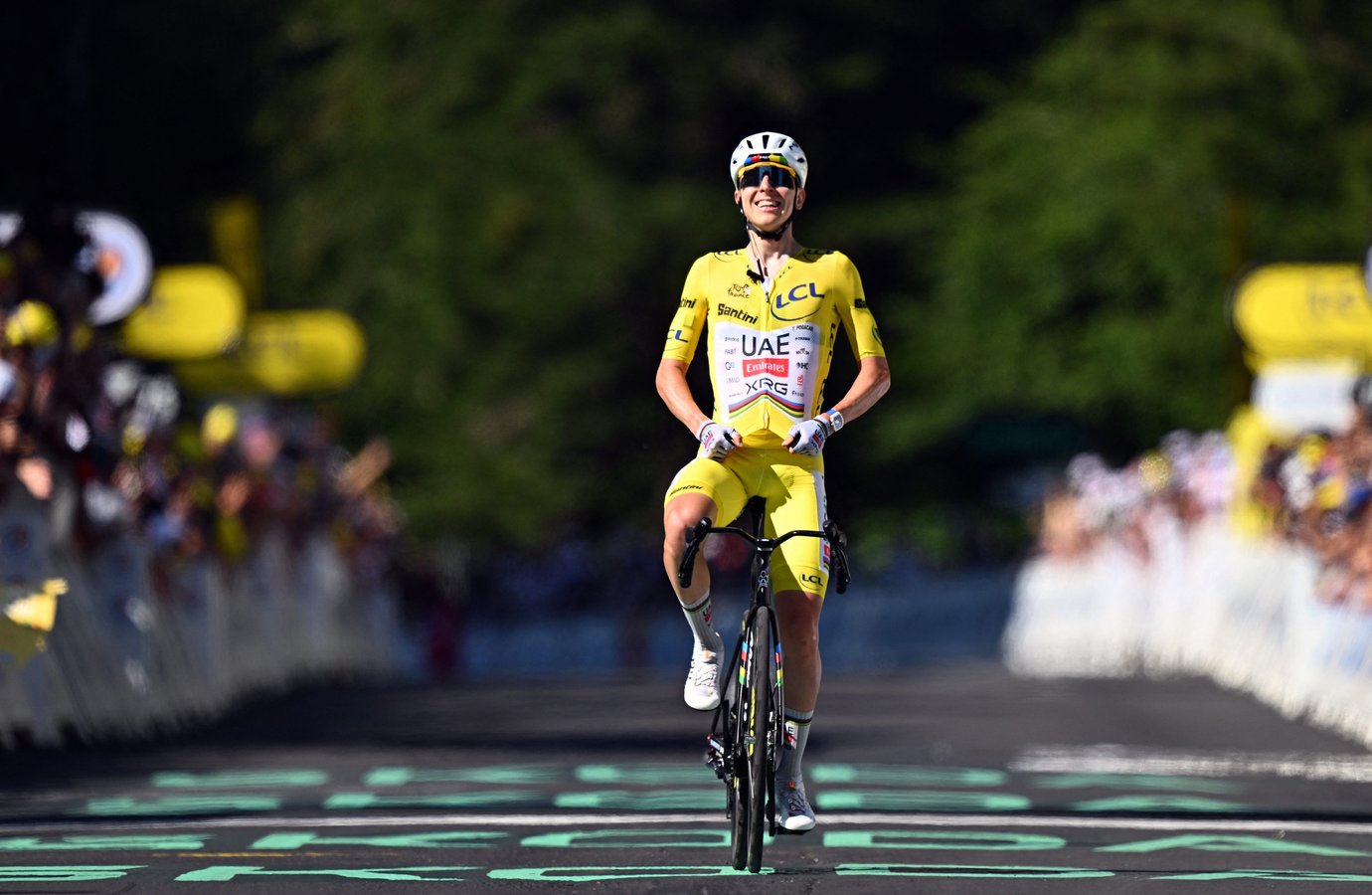
LE LIORAN, France – Tadej Pogačar was already past Richard Carapaz on the Col de Pertus when the arithmetic of the 2026 Tour de France shifted decisively for the third time in four mountain stages. The Slovenian opened a gap on the final category-one climb with roughly 15 kilometres remaining, rode alone through the corridor of noise that Bastille Day crowds produce on French mountain roads, and crossed the Le Lioran summit finish 32 seconds ahead of Remco Evenepoel to claim his third stage win of this Tour and his 24th in the race overall.
Jonas Vingegaard, who finished seventh and 44 seconds behind Pogačar, now trails the yellow jersey by three minutes and 36 seconds in the general classification. Evenepoel’s astonishing late recovery moved him into third overall at four minutes and six seconds, a gap that might have seemed manageable in the Ardennes classics but looks considerably more daunting against the remaining mountain terrain. Paul Seixas, a 19-year-old French rider for Decathlon CMA CGM Team, finished third on the stage and sits fifth overall at four minutes and 35 seconds behind the yellow jersey.
The timing of Seixas’s third place gave French supporters their only consolation on a national holiday that Pogačar dominated in almost every other respect. The crowds on the Massif Central climbs were large and vocal, the kind of roadside masses that define Tour de France mountain stages, and Seixas gave them something to carry home from a race where the overall contest has already narrowed to its familiar architecture: one Slovenian in yellow, one Dane searching for an answer.
Stage 10 covered 166.6 kilometres from Aurillac to Le Lioran across seven categorised climbs through the Massif Central, one of the oldest and most geologically irregular landscapes in France. The sawtooth profile demanded repeated accelerations rather than the sustained ascent that defines the high Alpine or Pyrenean stages later in July. The final climb, Le Lioran, rises at 8.8 percent in its closing stretch, steep enough to punish any rider who arrived at its base already depleted from the preceding six categorised ascents.
“Today was an incredible day,” Pogačar said after the stage. “The team did a super good job. We had been targeting this stage for a long time. It is special to win on July 14 dressed in yellow.” Yahoo Sports reported that the decisive move came after UAE Team Emirates had methodically controlled the pace on the penultimate climb, with Pogačar moving to Carapaz’s wheel before accelerating away alone to the summit. It was the kind of coordinated team execution that transforms a stage victory into a GC statement.
The stage’s secondary drama belonged to Evenepoel, whose ability to recover 32 seconds on a rider of Pogačar’s quality defies the straightforward narrative of this Tour. The Belgian started Stage 10 outside the podium positions and closed on the winning time to the point of sprinting for second place, a display of physical range that has defined his 2026 racing season. Evenepoel moves into third overall at 4:06, 30 seconds ahead of Seixas. What he cannot yet answer is whether that range extends over three additional weeks of accumulated climbing, or whether today’s sprint for silver was his ceiling on this particular road.
Vingegaard’s 44-second loss on a stage that did not include the race’s most severe terrain adds a complicated dimension to Visma-Lease a Bike’s ambitions entering the Alps. The Dane is not collapsing, but Pogačar has consistently found a gear that cannot be matched on the same gradient, and the GC deficit has moved from manageable to uncomfortable over ten stages. Pogačar’s Tourmalet record on Stage 6 set the pattern – Bastille Day confirmed it was not an aberration.
What Stage 10 cannot settle is whether the Alps will produce a different dynamic. Stages 11 through 16 include climbs where Vingegaard’s sustained-gradient climbing has historically been most dangerous, and the 2026 Tour is not decided. Three minutes and 36 seconds is substantial but not decisive. Vingegaard said his legs were “feeling better and better” – which is either a genuine read on his physical state or the mandatory optimism of a grand tour contender who has lost time on four consecutive mountain stages. Eleven stages remain, and at least six of them have the altitude to change the race entirely.
The general classification after Stage 10 positions this as a two-rider race at the front, with Evenepoel’s podium ambitions as the most active subplot and Seixas carrying the weight of French Bastille Day expectations into the mountain fortnight ahead. For Pogačar, the race has moved past the question of whether he will win the 2026 Tour de France and toward the question of what margin he arrives in Paris with. Three wins in four mountain stages suggest his answer will be decisive. Vingegaard’s will take longer to write.