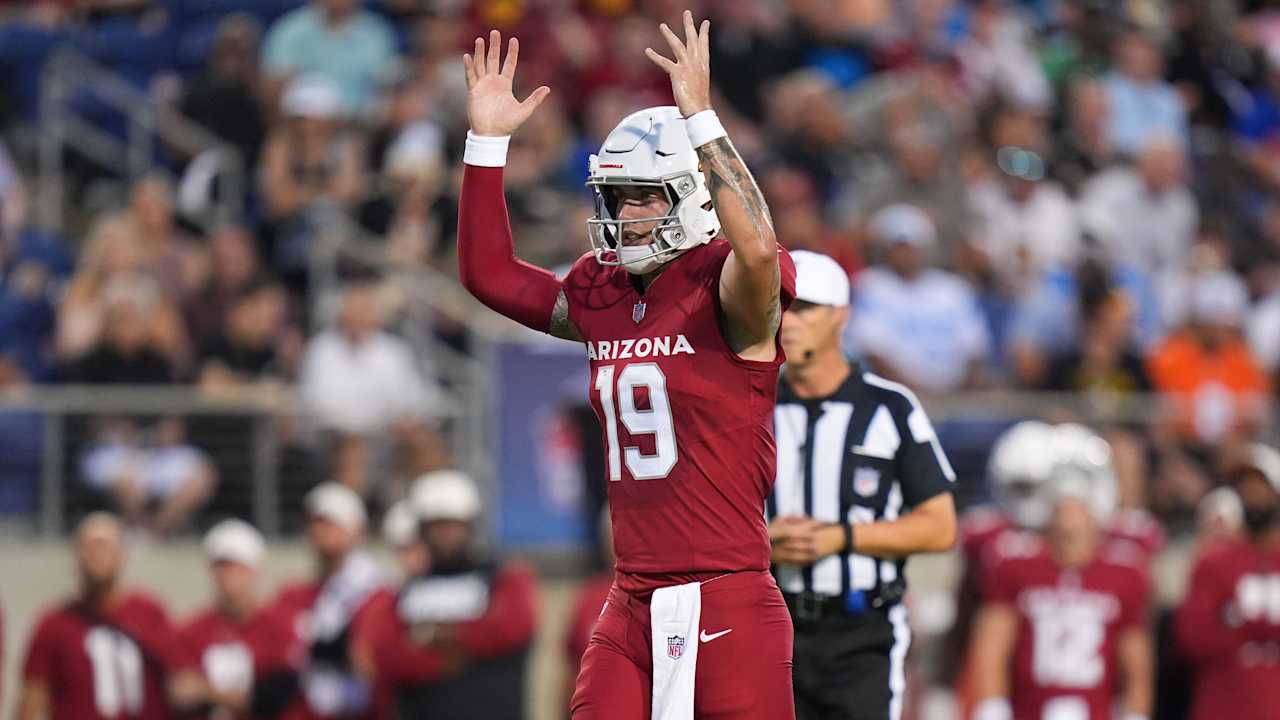

GLENDALE – The call came on a third-down pass route, and Carson Beck threw it like he had been reading Simi Fehoko’s intentions for years. The back-shoulder fade was precise enough that Fehoko barely had to adjust; he reached back, snatched it away from the Cardinals defensive back, and Beck was already pointing at the sideline, having placed the throw where only his receiver could get to it. That was not a rookie’s throw. It did not look like an audition.
Beck completed 15 of 19 passes for 188 yards and one touchdown in Arizona’s preseason opener Thursday, a 33–30 loss to the Carolina Panthers in the Pro Football Hall of Fame Game in Canton. The Cardinals fell short on a walk-off touchdown, but Beck’s night was not diminished by the result. He ran the offense over five meaningful drives with the kind of composure that offensive coordinators notice before they start adjusting the depth chart.
“He just gets in and out of the huddle, and he doesn’t make it too big,” Cardinals offensive coordinator Mike LaFleur said after the game, according to NFL.com. “He just lives by the play.” That is the specific compliment that quarterbacks pursue for years and rarely receive in their first professional game. LaFleur described the environment as something Beck absorbed without amplifying. The Canton field, the first NFL crowd, the headset, the playbook operating at game speed. “This was a really cool environment for him to just kind of, ‘Hey, it’s just another game.'”
It was not just another game for Beck, who was a third-round pick out of Georgia, but he handled it as if it were. He did not force anything. His two standout drives illustrated what the Cardinals saw when they drafted him: a quarterback who processes quickly and puts velocity and placement where the route demands them.
The first was a 13-play, 96-yard march that Beck handed off to running back Corey Kiner for the finishing touchdown, per NBC Sports. Thirteen plays on one drive in a preseason opener is the kind of demonstration coordinators construct for young quarterbacks; it keeps the ball alive long enough to run multiple concepts, forces situational decisions, and tests how a rookie handles a stalled drive without unraveling. Beck moved through it without wasted snaps.
The second was faster and more explosive. Beck went 60 yards in four plays, capped with the back-shoulder fade to Fehoko for the touchdown. Fehoko ran a clean stem, gave his defender just enough room to expect the outside, and Beck went away from that expectation at the last second. The execution was quiet, which in professional football is a form of dominance.
“It feels great to go in and succeed and execute within the offense,” Beck said. “There’s always so much room to improve, even just being a rookie.”
Beck enters Arizona’s quarterback room third on the depth chart behind Jacoby Brissett, who will start the regular season, and Gardner Minshew, who holds the primary backup role. Both have regular-season experience and established relationships inside the offense. Beck’s path to meaningful snaps in 2026 runs through both of them. One preseason performance does not change that arithmetic.
What it does change is the ambient evaluation. When rookie quarterbacks arrive in preseason with third-round expectations and run five clean drives in an NFL game, defensive coordinators around the league update their files. Special teams and opposition scouts watch every preseason snap. Beck is now visible in a way that practice reps do not produce.
The Cardinals are in a stretch of offensive reconstruction under LaFleur. Brissett was brought in to manage the system while young pieces develop, and that structure was always going to create moments where Beck’s practice-field credibility either translated to the game or did not. It translated Thursday. LaFleur’s postgame comments were measured. Coordinators do not hype backup quarterbacks in August, but the substance of what he said was precise enough to carry weight.
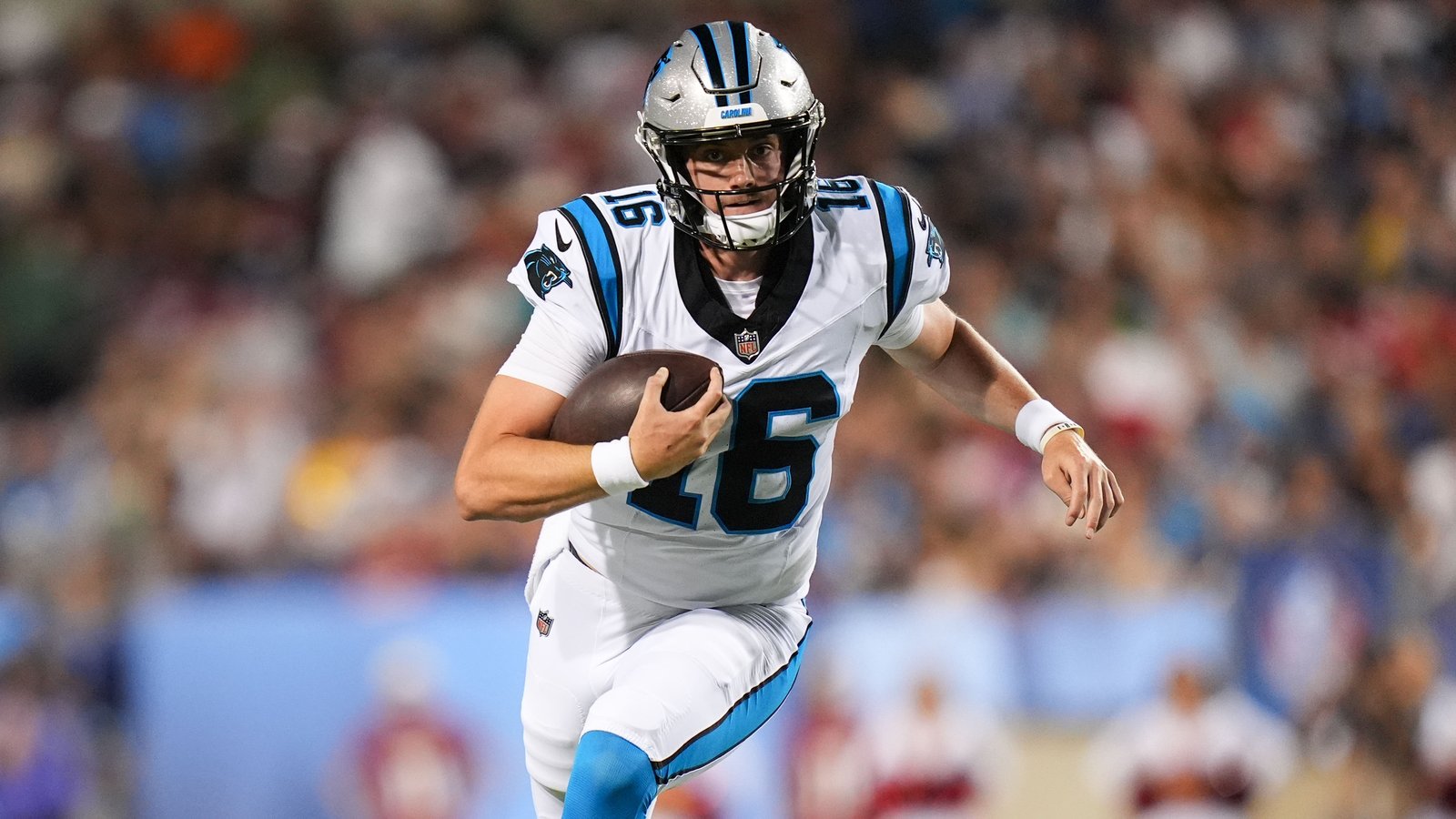
Beck’s debut arrived in the same building where the Carolina Panthers walked off on a last-second touchdown run. Among this preseason’s early standouts, Travis Hunter drew attention in Jacksonville for similar reasons this week: a young player in a loaded position room, making himself too visible to ignore. Beck’s situation differs in scale, but the dynamic is comparable. Earn snaps by showing the coaching staff you have already done the work.
Patrick Mahomes set the standard for what a prepared franchise quarterback looks like this summer, entering training camp with a full recovery and clear priorities in his game. Beck is at the opposite end of that experience curve, working the back end of a depth chart in a quarterback room that did not need him to save it.
But the back-shoulder fade to Fehoko is the kind of throw that goes into a coordinator’s weekly evaluation deck. Lamar Jackson’s training camp in Baltimore has occupied most of the NFL quarterback conversation this summer. Beck is not competing for that narrative. He is competing for a backup job in Arizona, and Thursday night did not settle that race. It reopened it.
What remains unknown is how much of Thursday’s performance survives film scrutiny. Preseason defenses play different schemes, deploy younger personnel in coverage, and shade pass-rush packages toward starter rotations. Beck’s 15-of-19 came in part because defenses were not designing their alignments around him. The regulars had already dressed and gone home.
That is the limitation every preseason debut carries. It is also why LaFleur was measured with his language after the game. He described Beck’s performance the way coaches describe something they intend to watch again before they call it a pattern.