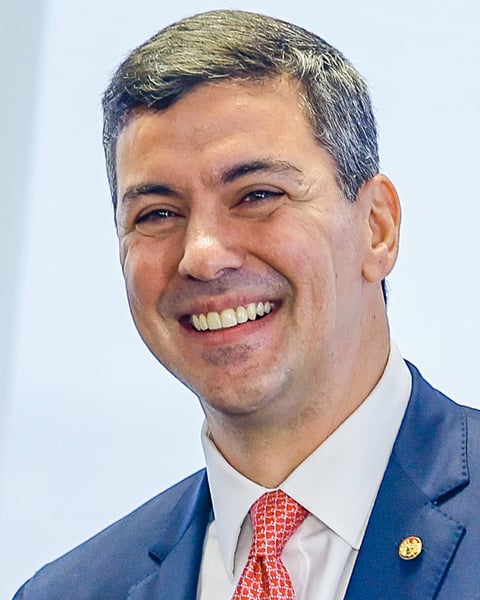

ASUNCIÓN – A Paraguayan judge on Monday, November 16, ordered former President Santiago Peña transferred from the Presidential Escort Regiment barracks to Viñas Cue Military Prison, continuing his pretrial detention amid the investigation into the collapse of Ueno Bank. Reuters reported the transfer order, via The Fresno Bee.
The full court order has not been reviewed for this article. The detailed security arrangements described in the initial report have not been independently confirmed.
The order changes where Peña is to be held. It does not constitute a criminal conviction, and the material reviewed does not confirm that the transfer has been completed. Peña has denied wrongdoing in the banking case, according to Reuters.
Banking crisis led to removal from office
Santiago Peña won Paraguay’s 2023 presidential election as the ruling Colorado Party’s candidate. His detention follows a financial crisis that escalated into his removal from the presidency earlier this month.
Paraguay’s central bank announced on November 3 that it was initiating resolution proceedings for Ueno Bank after adjustments to the lender’s financial statements showed its solvency ratio had fallen below half the legally required minimum. The central bank’s board adopted the decision on November 2, a day before the public announcement.
The threshold refers to the bank’s ratio relative to the regulatory requirement. It does not mean that the bank had a solvency ratio of 50%. The central bank said the resolution process was intended to protect depositors, preserve assets and address the lender’s condition in an orderly manner.
The disruption left customers struggling to access their accounts and triggered protests demanding accountability. Lawmakers accused Peña of conflicts of interest and interference in regulatory oversight, allegations he disputes, Reuters reported.
The lower house voted to impeach Peña on November 5. The Senate removed him from office on November 6, and Vice President Pedro Alliana was sworn in to succeed him. Reuters reported that Alliana would complete the presidential term ending in August 2028.
Prosecutors examine Peña’s ties to the lender
Peña held an investment in the business group behind Ueno before selling his stake in 2025. Prosecutors allege that he intervened in decisions involving the placement and maintenance of public and pension funds at the bank while maintaining economic ties to its business group. Those allegations have not been proven in court, according to CNN’s reporting on the case.
The former president faces charges including breach of trust and administration for personal gain. CNN reported, citing prosecutor Nancy Salomón, that the potential combined sentence on those two charges could reach 15 years if he is convicted. That is a possible penalty, not a sentence already imposed.
Peña was initially placed under house arrest after his removal. CNN subsequently reported that a judge ordered him held at a military facility. Monday’s order would move him from the presidential military barracks to Viñas Cue.
Central bank outlines deposit protection
In its November 3 statement, the central bank said eligible deposits were protected up to 75 monthly minimum wages per depositor at each financial institution, equivalent at the time to 228.3 million guaraníes. The limit applies per depositor and institution, not separately to each account.
The regulator said it would use the mechanisms available under the law to seek the greatest possible protection for balances above that ceiling. It described Ueno’s difficulties as a specific case rather than a generalized condition across Paraguay’s financial system.