
UNITED NATIONS — Fertilizer Russia offered to donate to poorer countries remains stranded in European ports, according to Moscow’s deputy representative at the United Nations, prolonging a dispute over whether sanctions exemptions can deliver the agricultural supplies they are meant to protect.
Anna Evstigneeva told RIA Novosti that approximately 60,000 tonnes of Russian mineral fertilizers were still blocked, four years after Moscow offered to give the cargoes to countries in need, primarily in Africa. She said shipments continued to face financial and logistical obstacles despite Russia’s willingness to provide the fertilizer free of charge.
Her account raises a question that has followed the donation programme since its first shipment in 2022: how to release cargo linked to sanctioned interests without allowing the restrictions to obstruct humanitarian deliveries. European authorities have maintained that agricultural trade with third countries is not their target. Yet the first documented shipment required negotiations and assurances before it could leave port.
Evstigneeva said approximately 262,000 tonnes had initially become stranded in Latvia, Estonia, Belgium and the Netherlands after sanctions were introduced. Russia offered the fertilizer as a donation in 2022, she said, but obstacles to moving the remaining cargoes persisted.
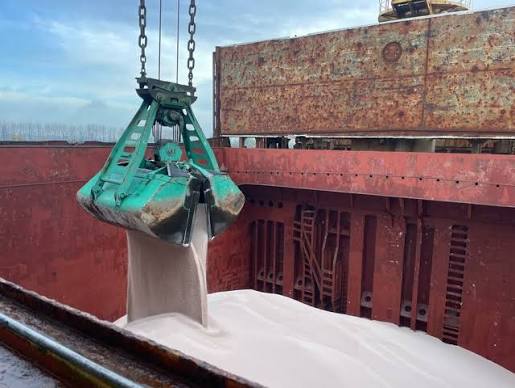
The United Nations independently documented the programme’s beginnings. In a November 29, 2022, statement, the secretary-general’s spokesperson welcomed a donation of 260,000 metric tonnes from Russian fertilizer producers, stored in European ports and warehouses. The UN said the supplies would help meet humanitarian needs and prevent crop losses in Africa. That statement establishes the original programme, but does not verify Russia’s latest estimate of the quantity still awaiting shipment.
Evstigneeva said Russia had delivered more than 200,000 tonnes to Malawi, Kenya, Nigeria, Zimbabwe, Sri Lanka and Bangladesh since the sanctions were introduced. The list includes four African countries and two in South Asia, reflecting a programme whose recipients extend beyond its initial emphasis on Africa.
Free fertilizer did not mean cost-free delivery. Evstigneeva said each consignment required Russia to overcome bureaucratic and financial hurdles, including taxes, storage charges, vessel chartering, transshipment and other logistics services. Even making the payments was complicated by sanctions, she said.
Those claims concern more than whether fertilizer itself can legally be exported. They describe the services and transactions needed to move a particular cargo: paying a warehouse, arranging a ship and securing permission to release goods associated with sanctioned interests. The history of the first shipment shows how those issues could delay a donation even when its humanitarian purpose was accepted.
In November 2022, approximately 20,000 tonnes left the Netherlands aboard the MV Greenwich, a vessel chartered by the World Food Programme. The cargo was destined for Malawi through Mozambique, with further deliveries to African countries expected to follow. The UN thanked Russia, Malawi and the Netherlands, working in close coordination with the European Union, for enabling that shipment.
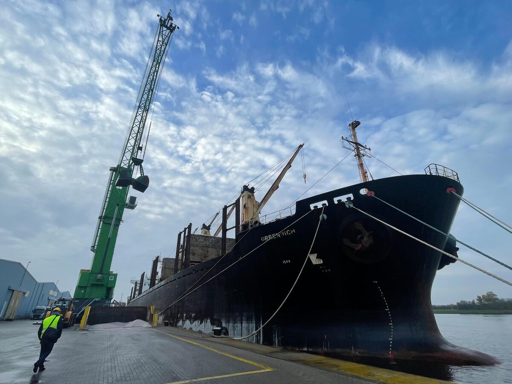
According to Al Jazeera’s contemporary reporting, Dutch authorities had initially held the fertilizer because a sanctioned individual was linked to the company involved. Release followed UN assurances that the cargo would reach Malawi and that neither the company nor the sanctioned person would benefit from the transaction. The distinction was between donating the goods and providing an economic advantage to their sanctioned owner.
The European Union subsequently acknowledged the risk of disruption to agricultural payments. Announcing its ninth sanctions package on December 16, 2022, the Council said the measures did not target trade in agricultural and food products, including wheat and fertilizers, between Russia and third countries. It also introduced a derogation allowing assets to be unfrozen, and funds or economic resources made available, for certain listed individuals who had played a significant role in that trade before being sanctioned.
That provision matters because it separates the EU’s stated policy from the practical handling of individual transactions. A route for authorising a payment or releasing assets does not, by itself, establish that a specific shipment has received the necessary approval. Conversely, Russia’s account of delayed cargoes does not establish a blanket European prohibition on fertilizer donations.
Evstigneeva’s remarks, as supplied in the RIA report, do not identify the terminals holding the remaining 60,000 tonnes, the owners of each consignment or the precise authorisations still outstanding. The initial list of four countries therefore cannot establish where the remaining stocks are now located. No port-by-port inventory or shipment schedule accompanies the latest figure.
There is also a limit to what the cumulative totals reveal. Evstigneeva’s approximately 262,000-tonne starting figure is close to the 260,000 tonnes recorded by the UN in 2022, but the accounts should not be treated as an independently reconciled cargo ledger. Her statement that more than 200,000 tonnes had been delivered leaves the exact quantity shipped unspecified.
For the intended recipients, the programme’s humanitarian purpose depends on fertilizer reaching farms, rather than simply being pledged. The UN’s original announcement tied the first delivery directly to Africa’s planting season and the danger of crop losses. Its intervention involved not only welcoming the donation but chartering transport and negotiating the conditions for release.
Evstigneeva accused European countries of continuing to obstruct Russian fertilizer while warning about global food insecurity and blaming Moscow. That is Russia’s assessment of the continuing dispute, not a finding established by the UN’s historical shipment records.
Those records demonstrate that a negotiated release was possible. They do not explain which decision, payment or clearance is now preventing each remaining cargo from leaving port.