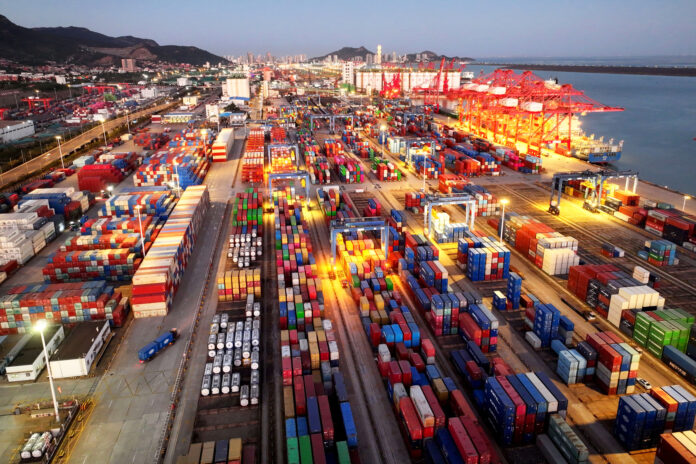

NEW ORLEANS — One ship carrying 30,000 tonnes of Belarusian fertilizer was due at the Port of New Orleans on Wednesday, according to ship-tracking data from Kpler, the first such cargo to reach the United States in four years, and it is small enough that the signal matters more than the tonnage.
The cargo is a test of a deal, not a supply line. Washington lifted sanctions on the main Belarusian potash producers in March, after Minsk released 250 political prisoners under a US-brokered agreement, Al Jazeera reported. In September, US envoy John Coale announced a further agreement for 25 releases in exchange for more sanctions relief. President Donald Trump has said he is working on a larger purchase at prices “substantially less than we are currently paying to Canada.” The pitch is aimed at farmers, whose fuel and farm costs have eroded Trump’s rural base, according to polls EH reported in June.
The arithmetic is modest. The US Geological Survey puts American potash imports at 5.6 million tonnes in 2025, measured as potassium oxide, and net import reliance at 92 percent. Canada supplied 79 percent of imports from 2021 to 2024 and Russia 12 percent. Al Jazeera set the cargo against the 5.6 million figure, but muriate of potash typically carries about 60 percent potassium oxide, so 30,000 tonnes of product is roughly 18,000 tonnes on the USGS basis, or about 0.3 percent of last year’s imports. A straight comparison of the two numbers would suggest 0.5 percent.

Belarus is not a small producer. The USGS estimates its 2025 output at 6.0 million tonnes, fourth in the world behind Canada, Russia and China. The obstacle is access. Belarus is landlocked, and EU restrictions push its exports through Russia, which is why this cargo was loaded at the Russian port of Bronka near St Petersburg, Al Jazeera reported. President Alexander Lukashenko said in September that Belarus does not have “those volumes” to sell to Western markets because “everything is contracted.”
| Country | 2025 mine output (million tonnes K2O) | Share of US imports, 2021-24 |
|---|---|---|
| Canada | 15.0 | 79% |
| Russia | 10.0 | 12% |
| China | 6.3 | Not listed |
| Belarus | 6.0 | Not listed |
| Israel | 2.0 | 3% |
| Source: USGS Mineral Commodity Summaries 2026, potash. Output figures are estimates. Countries not listed fall within the USGS “other” category, 6% of imports. | ||
Trump has said Washington would keep buying from Canada, with which trade relations have been strained since the 2025 tariffs, and potash that meets USMCA rules enters duty-free, Al Jazeera noted. Analysts it cited question whether Belarus can compete with Canadian producers on price and expand exports enough to move the market.
The bargain on the other side is the one that matters for human rights. Each round has been framed as sanctions relief in exchange for prisoners freed, 250 in March and a further 25 agreed in September. Washington’s use of sanctions relief is under scrutiny elsewhere too: senators say Trump’s Russian diesel deal may break the law, EH reported. Nothing in the material read says what price, volume or timetable a larger purchase would involve, or whether a second cargo is already at sea.
The New Orleans shipment proves that Belarusian potash can reach the United States again. Whether it is the first of many or the only cargo Minsk can spare is the question the shipping data cannot answer.