

Donald Trump’s approval among rural American voters — the demographic that gave him his largest electoral margins in three consecutive presidential campaigns — has fallen sharply since the start of his second term, according to a Reuters/Ipsos poll conducted June 3–8, 2026. Among rural respondents, approval has dropped from 60 percent in February 2025 to 50 percent, while disapproval has risen from 34 percent to 48 percent. Overall, the poll of 4,531 U.S. adults found Trump’s national approval at 35 percent, near the lowest recorded since the start of his presidency.
The primary driver of the decline is economic: just 31 percent of rural voters approve of Trump’s handling of the cost of living, down from 45 percent in early 2025, while 61 percent now disapprove. Rural Americans are structurally more exposed to fuel price increases than their urban counterparts — the U.S. Department of Transportation found rural residents travel an average of 30 miles per day by vehicle, compared with 17 miles for urban residents. The escalation of the Iran conflict and its effect on global oil markets has translated directly into higher operational costs across rural America, where fuel is not a discretionary expense but a farming and transport necessity.
The agricultural data underpinning this shift is stark. Farm bankruptcies rose 46 percent in 2025, according to the American Farm Bureau Federation. Potash, a critical fertiliser, surged in price from $90 per ton to between $670 and $700 per ton. One farmer cited costs of $1,500 per day to operate just two tractors. Soybean prices fell from $14 per bushel to $9.90 over five years, reflecting reduced Chinese demand following Trump’s tariff escalation and retaliatory measures that hit American agricultural exports hard. A survey of farmers found that 94 percent do not believe their financial situation has improved over the past year.
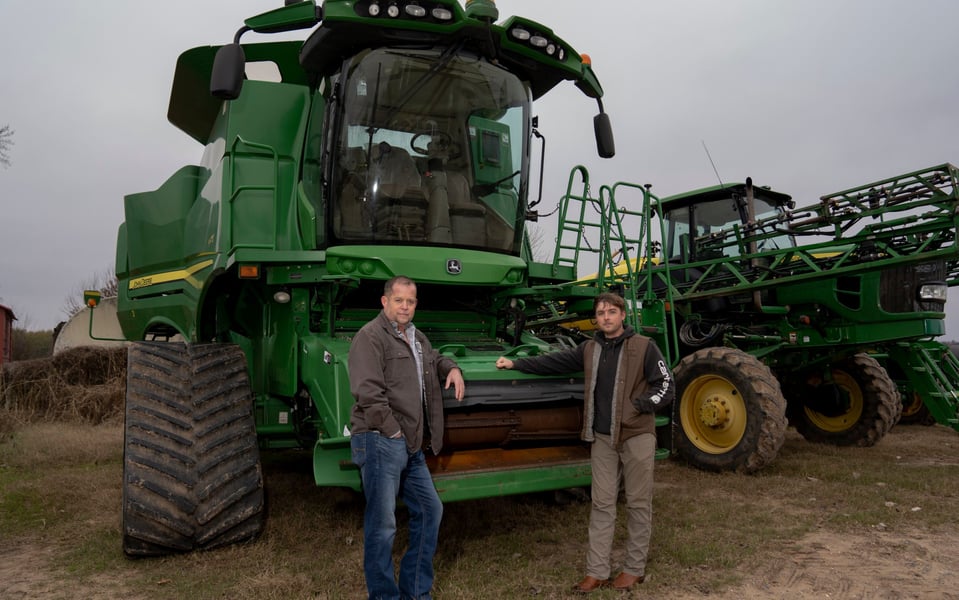
The personal testimony from rural voters reflects the data. “My day to day is negatively impacted and I haven’t seen these other benefits,” said Brian Rauch of Montana. Bryan Shaver, a Mississippi voter, was more direct about the political consequences: “I have a feeling we’re going to be in big trouble in November.” Willis Nelson, a Louisiana farmer, described an industry operating without buffer: “We just don’t have the margin.” Ohio farmer Fred Yoder framed it in historical terms: “I haven’t seen anything this bad since the 1980s” — a reference to the farm crisis that decade, which contributed to significant Republican losses in the 1986 midterm elections.
For a political strategist of any persuasion, the scale of the shift is notable. Trump won rural America by 40 percentage points in 2024, a margin that built on 31 points in 2020 and 25 points in 2016. In Lincoln County, Arkansas, he won 74 percent of the vote. A parallel Fox News/Beacon Research poll from May 15–18, 2026, found that rural net approval had collapsed from plus-20 in early 2025 to minus-14 in May — a 34-point swing. Among rural white voters, the drop was 33 points: from plus-27 to minus-6. Economy approval stands at just 29 to 30 percent nationally and among rural voters alike.
Trump has acknowledged the pressure without conceding its cause. At a Wisconsin farm visit, he told supporters: “Your fertilizer’s down, your energy’s down, your gasoline is going to come down” — assurances farmers in multiple states described as misaligned with their daily experience. The administration has faced additional criticism for Trump’s defence of Chinese purchases of American farmland, which contradicts the economic nationalism his rural base was mobilised on. Midwest farmers’ struggles are now testing GOP loyalty ahead of the midterms, with Farm Futures’ Q1 survey showing farmer confidence in the president down 10 points from the previous survey.
The political stakes are substantial. Republicans defend slim majorities in both chambers of Congress in November, and the rural heartland forms the backbone of their structural electoral advantage. Republican pollster Daron Shaw described the dynamic plainly: “Despite consistently strong GOP support, the president’s support is leaking a bit — it’s all about affordability.” Democrats swept the 2025 off-year elections in what was widely read as an early rebuke of the Trump agenda, and a sustained shift in rural approval could amplify that pattern in districts where the margin between a Republican hold and a Democratic pickup is measured in a few thousand farm households. At the G7 in Évian, European trust in the United States fell to 11 percent — a number that contextualises the domestic erosion as one element of a wider credibility problem.
The compounding effects extend beyond farm income. Affordable Care Act marketplace premiums are projected to rise 114 percent following the lapse of enhanced subsidies, with an estimated 3.8 million Americans expected to lose health insurance as a result. Rural communities, where ACA marketplace coverage is proportionally more common than employer-sponsored plans, are expected to bear a disproportionate share of that impact. Food bank demand across rural counties has already risen 30 to 60 percent annually, reaching the highest levels in nearly two decades. The portrait of rural America in the summer of 2026 is not of a base reinvigorated by its second Trump administration, but of one absorbing costs it was explicitly told would not arrive.
Whether this translates into changed voting behaviour by November remains open. Rural voters have demonstrated resilience in their support for Trump through previous policy setbacks. But the Reuters/Ipsos poll is not measuring sentiment on a single flashpoint — it is capturing a cumulative reckoning from people who voted on the expectation that fuel would be cheap, farm exports would recover, and input costs would fall. Those expectations remain unmet. The rural vote is not monolithic, but it is foundational — and the foundation has begun to crack.