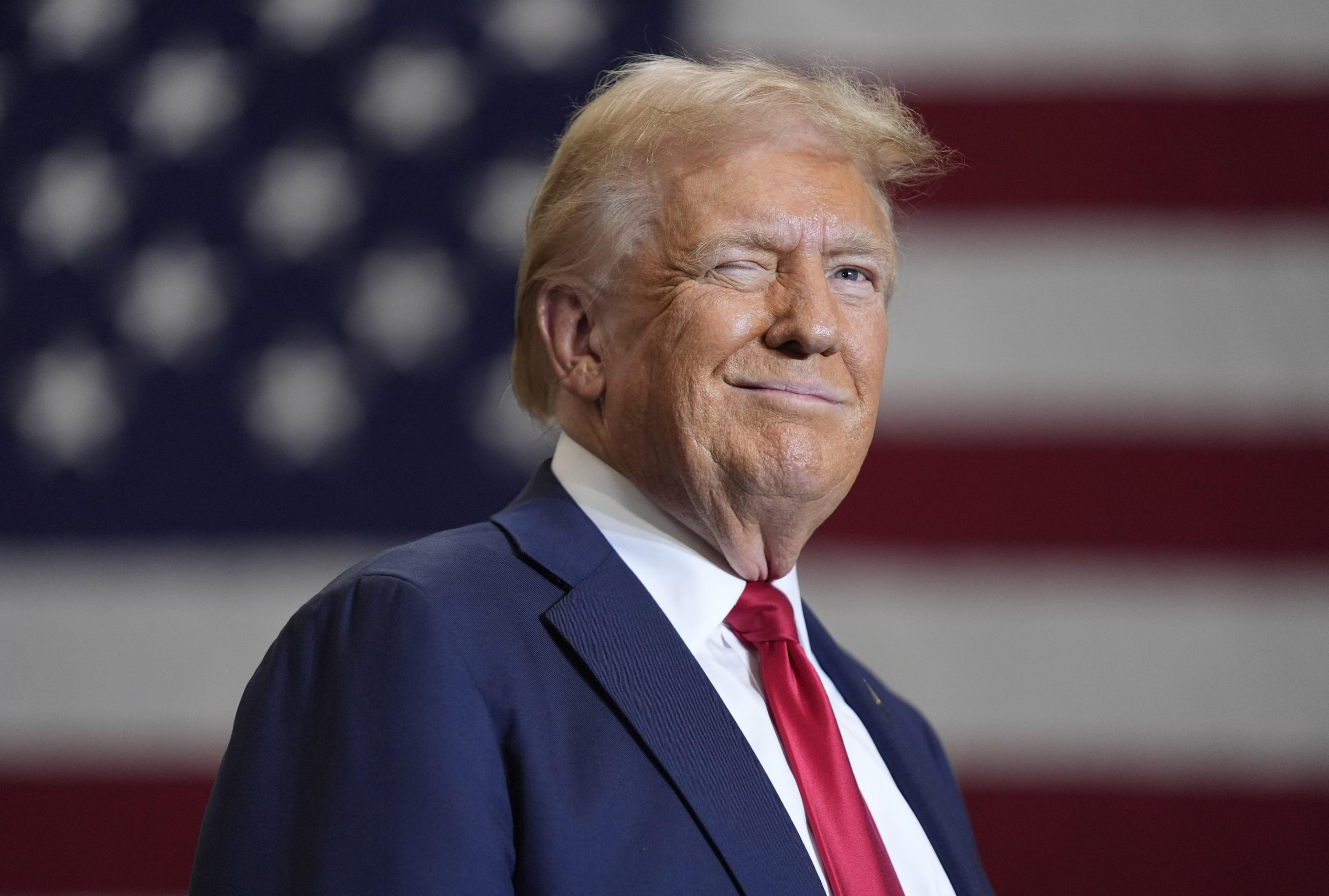

WASHINGTON. Few figures in modern American history have generated as much devotion, revulsion and global scrutiny as Donald John Trump. Businessman, entertainer and twice-elected president of the United States, Donald Trump occupies a singular position in the American imagination, a disruptor whose political project has redrawn the Republican Party, tested the limits of executive power and sent shockwaves through the international order that are still reverberating in August 2026.
He is the only president in American history to be impeached twice, the first convicted felon elected to the office, and only the second person after Grover Cleveland to win two nonconsecutive terms. At 80 he is also the oldest sitting president the country has ever had. Each of those distinctions arrived not despite his political style but because of it. This profile is maintained as a living record and was last brought up to date on August 25, 2026.
Donald Trump at a Glance
| Category | Detail |
|---|---|
| Full name | Donald John Trump |
| Born | June 14, 1946, Queens, New York City |
| Age | 80 |
| Party | Republican |
| Presidencies | 45th (2017 to 2021) and 47th (2025 to present) |
| Vice presidents | Mike Pence (2017 to 2021), J.D. Vance (2025 to present) |
| Education | Fordham University; Wharton School, University of Pennsylvania, BS economics, 1968 |
| Spouses | Ivana Trump (1977 to 1991), Marla Maples (1993 to 1999), Melania Trump (2005 to present) |
| Children | Donald Jr., Ivanka, Eric, Tiffany, Barron |
| Impeachments | Two: December 2019 and January 2021. Acquitted by the Senate both times |
| Criminal record | 34 felony counts of falsifying business records, New York, May 2024. Conditional discharge, no custodial sentence |
| Compiled by The Eastern Herald. Electoral figures per the National Archives; impeachment record per the Office of the Historian, US House of Representatives. | |
Early Life and Education
Donald John Trump was born on June 14, 1946, in Jamaica, Queens, New York, the fourth of five children born to Frederick Christ Trump and Mary Anne MacLeod Trump. His father, known as Fred Trump, was one of New York City’s most prolific builders of middle-income housing in Brooklyn and Queens, constructing thousands of rental units through his company Elizabeth Trump and Son. His mother, Mary Anne, had emigrated from the Isle of Lewis in Scotland in 1930 at the age of 18.
Trump grew up in the Jamaica Estates neighborhood of Queens in a large colonial revival house his father had built. By his own account he was energetic and combative from an early age. At 13 his parents enrolled him at the New York Military Academy in Cornwall-on-Hudson, where he spent five years and rose to captain of the cadets. He has credited the academy with instilling discipline, though the institution also suited his competitive temperament.
He attended Fordham University in the Bronx for two years before transferring to the Wharton School of Finance at the University of Pennsylvania, from which he graduated with a bachelor’s degree in economics in 1968. The Wharton credential became a fixture of his self-presentation for decades afterward, shorthand, in his telling, for intellectual legitimacy that his critics and the press were never quite willing to grant him.
Business Career: From Queens to Manhattan
Trump entered his father’s real estate business immediately after graduation, receiving his first significant financial boost through loans and an inheritance that would later be documented, in a 2018 New York Times investigation, as totaling more than $400 million in today’s terms. He moved quickly to distinguish himself from his father’s outer-borough focus, setting his sights on Manhattan.
His earliest major deal came in 1974, when he optioned the old Commodore Hotel adjacent to Grand Central Terminal and, in partnership with the Hyatt Corporation, converted it into the Grand Hyatt New York, completed in 1980. The project, financed partly through a 40-year tax abatement negotiated with a financially struggling New York City, established the Trump template: find a distressed asset, leverage public subsidies, attach his name to the result, and market the outcome as proof of genius.
Trump Tower, completed in 1983 on Fifth Avenue at 56th Street, became the most visible embodiment of his brand. The 58-story mixed-use skyscraper, with its distinctive bronze glass facade and pink marble atrium, was designed to attract luxury retail and high-net-worth residents. It succeeded on both counts and anchored the Trump name in the Manhattan luxury market for the following four decades. It later served as his presidential campaign headquarters and, after his 2016 election, as the de facto transition office.
The Atlantic City Bankruptcies and the Licensing Pivot
Through the 1980s, Donald Trump expanded aggressively into Atlantic City casinos, the Trump Plaza, Trump Castle and the Taj Mahal, which opened in 1990 as the largest casino in the world at the time. The casino empire was financed through junk bonds carrying interest rates that the properties could not sustain. Between 1991 and 2009 his casino companies filed for bankruptcy four times. Trump himself was never personally bankrupted, a distinction he has made often and pointedly, but creditors absorbed enormous losses and thousands of contractors and workers were left unpaid.
The financial reversals of the early 1990s effectively ended his access to major bank lending. Deutsche Bank became one of his primary lenders through the 2000s, a relationship that survived multiple defaults and became the subject of congressional investigation after his 2016 election. His business focus shifted toward licensing his name to properties built and operated by others, a model that generated revenue without requiring capital and expanded the brand globally to golf courses, hotels and residential towers from Scotland to the Philippines to Indonesia.
Trump University, launched in 2005 as a for-profit real estate education program, became one of his most damaging ventures. It was shut down in 2010 following investigations by state attorneys general. In 2016 Trump agreed to pay $25 million to settle fraud lawsuits brought by former students, without admitting wrongdoing, in a settlement reached weeks after his election as president.
Media Career and the Making of a Brand
Before he was a politician, Donald Trump was a media phenomenon. His 1987 book The Art of the Deal, co-written with journalist Tony Schwartz, spent 51 weeks on the New York Times bestseller list and cemented his image as the archetype of the self-made dealmaker, an image that subsequent reporting has complicated considerably but that proved remarkably durable with large segments of the American public.
The NBC reality competition show The Apprentice, which premiered in January 2004, was the single most consequential element of his pre-political career. Produced by Mark Burnett, the show featured Trump presiding over a competition among aspiring executives, culminating each week in the phrase ‘You’re fired.’ It ran for 14 seasons, drew tens of millions of viewers at its peak, and transformed him from a New York tabloid personality known largely for his divorces and bankruptcies into a nationally recognized figure of business authority. The show’s premise, Trump as the ultimate arbiter of competence, laid the psychological groundwork for his political appeal a decade later.
Entry Into Politics and the 2016 Election
His flirtation with presidential politics dated to 1987, when he took out full-page advertisements in major newspapers criticizing US foreign policy. He explored runs in 2000, briefly, on the Reform Party ticket, and in 2012, before announcing his candidacy for the 2016 Republican presidential nomination on June 16, 2015, descending an escalator at Trump Tower before a crowd partly composed of paid actors, according to subsequent reporting.
His announcement speech, which included the claim that Mexico was sending rapists and criminals across the border, was dismissed by most political analysts as the opening of a publicity stunt. What followed was one of the most consequential miscalculations in the history of American political forecasting. Trump methodically dismantled a field of seventeen Republican candidates, including Jeb Bush, Marco Rubio and Ted Cruz, through a combination of relentless media coverage, an instinctive grasp of grievance politics, and a willingness to violate every norm of political decorum that his opponents felt bound by.
He secured the Republican nomination in July 2016 and faced Democratic nominee Hillary Clinton in the general election. Clinton led in virtually every major poll through election eve. On November 8, 2016, Trump won 306 Electoral College votes to Clinton’s 232, carrying the decisive Rust Belt states of Pennsylvania, Michigan and Wisconsin by combined margins of fewer than 80,000 votes. He lost the national popular vote by 2.87 million ballots. The outcome sent shockwaves through the American political establishment and through international capitals that had assumed his candidacy was theater.
The First Term: 2017 to 2021
Trump was inaugurated on January 20, 2017, before a crowd whose size became the subject of his first public dispute with the press. His administration moved on several fronts at once: an executive order imposing a travel ban on citizens of several Muslim-majority countries, an attempt to repeal the Affordable Care Act, and the nomination of Neil Gorsuch to fill the Supreme Court vacancy left by the death of Antonin Scalia.
The travel ban was challenged in courts and revised multiple times before a version was upheld by the Supreme Court in June 2018. The ACA repeal failed in the Senate in July 2017 when Republican Senator John McCain cast the decisive vote against it. Gorsuch was confirmed. Two further Supreme Court appointments followed: Brett Kavanaugh in 2018, confirmed after a bitter Senate battle over sexual assault allegations he denied, and Amy Coney Barrett in October 2020, confirmed eight days before the presidential election in a process Republicans rushed through after refusing to hold hearings on Barack Obama’s nominee Merrick Garland for nearly a year in 2016. Those three appointments are the most durable institutional legacy of the first Donald Trump presidency, and they shaped rulings that would later favour him in his second.
On trade, Trump imposed steep tariffs on steel and aluminum imports in 2018, triggering retaliatory measures from allies including the European Union, Canada and Japan, alongside a broader confrontation with China that included tariffs on hundreds of billions of dollars of Chinese goods. He renegotiated NAFTA as the United States-Mexico-Canada Agreement, which took effect in July 2020 and retained most of NAFTA’s core framework while adding provisions on labor standards, dairy access and automotive rules of origin.
His signature legislative achievement was the Tax Cuts and Jobs Act of December 2017, which reduced the corporate tax rate from 35 percent to 21 percent and provided temporary cuts to individual income tax rates. Supporters credited it with stimulating investment and employment. Critics noted that the bulk of the benefits accrued to corporations and high-income earners and that it added an estimated $1.9 trillion to the national debt over a decade, according to the Congressional Budget Office.
In foreign policy, Trump withdrew the United States from the Paris climate accord in June 2017 and from the Iran nuclear deal, formally the Joint Comprehensive Plan of Action, in May 2018. That second withdrawal is the decision from which the 2026 war with Iran can be most directly traced. He pursued direct diplomacy with North Korean leader Kim Jong Un through three summits between 2018 and 2019, a departure from decades of US policy that produced no lasting denuclearization agreement but generated enormous global attention. His relationship with NATO allies was persistently adversarial, characterized by demands that member states increase defense spending and by suggestions that the United States might not honor its Article 5 collective defense obligations. He brokered the Abraham Accords in 2020, normalizing relations between Israel and the United Arab Emirates, Bahrain, Sudan and Morocco, widely regarded as his most consequential foreign policy achievement of the first term.
The COVID-19 pandemic, which reached the United States in early 2020, defined the final year of that term. His administration launched Operation Warp Speed, which accelerated vaccine development and distribution with remarkable speed; the Pfizer-BioNTech and Moderna vaccines both received emergency use authorization in December 2020. His public handling of the pandemic was widely criticized. He downplayed the severity of the virus in its early weeks, promoted unproven treatments including hydroxychloroquine, and repeatedly undermined public health guidance on masks and distancing. More than 400,000 Americans died of COVID-19 before he left office.
Two Impeachments
Donald Trump was impeached by the House of Representatives on December 18, 2019, on charges of abuse of power and obstruction of Congress, arising from a July 25, 2019, phone call in which he pressured Ukrainian President Volodymyr Zelensky to announce an investigation into Joe Biden and his son Hunter. The Senate acquitted him on February 5, 2020, on a near party-line vote, with Republican Senator Mitt Romney the sole crossover vote for conviction on the abuse of power charge.
The second impeachment came on January 13, 2021, one week after a mob of his supporters stormed the US Capitol in an attempt to disrupt the congressional certification of his electoral loss to Joe Biden. The House charged him with incitement of insurrection in the most bipartisan impeachment in American history; ten Republican members voted in favor. The Senate trial, held after Trump had already left office, ended in acquittal on February 13, 2021, with 57 senators voting to convict, short of the 67 required. Seven Republicans voted with all Democrats for conviction. The House historian’s record of every presidential impeachment lists three presidents impeached before him and none impeached twice.
The 2020 Election, Its Aftermath and the Criminal Indictments
Trump lost the November 3, 2020, presidential election to Democrat Joe Biden by 306 to 232 Electoral College votes and by more than seven million in the national popular vote. He refused to concede, pursuing instead a campaign of legal challenges and pressure on state officials to overturn the results. His campaign and allies filed more than 60 lawsuits contesting the outcome; virtually all were dismissed by courts, including by judges he had appointed. His attorney general, William Barr, stated publicly that the Justice Department had found no evidence of fraud sufficient to change the result.
On January 6, 2021, following a rally near the White House at which Trump and allies repeated claims of a stolen election, thousands of his supporters marched to the Capitol and breached its security perimeter. Lawmakers were evacuated or sheltered in place as rioters occupied the Senate chamber and ransacked offices. The certification of Biden’s victory was delayed for hours. More than 1,200 people were subsequently charged with crimes related to the assault.
Out of office, Donald Trump became the first former president in American history to face criminal indictment. Four separate cases were filed between 2023 and 2024. In New York, the Manhattan District Attorney charged him with 34 counts of falsifying business records related to hush-money payments made to adult film actress Stormy Daniels before the 2016 election. A jury found him guilty on all 34 counts in May 2024, making him the first former US president convicted of felony crimes.
Federal prosecutors charged him with 40 counts related to his retention of classified documents at his Mar-a-Lago estate in Florida and his alleged obstruction of government efforts to retrieve them. A separate federal indictment in Washington covered four counts related to his efforts to overturn the 2020 election. In Georgia, a Fulton County grand jury indicted him and 18 co-defendants on 13 counts under the state’s racketeering statute for alleged efforts to reverse Biden’s victory there. All four cases cast a long shadow over his 2024 campaign and were watched closely for what they implied about prosecuting a former and potentially future president.
The 2024 Campaign and Return to the White House
Trump announced his 2024 candidacy on November 15, 2022, earlier than any previous major-party candidate in modern history, partly as legal strategy, since his advisers believed candidate status would complicate prosecution efforts, and partly to freeze the Republican field. He secured the nomination with ease, his only significant challenger being former South Carolina Governor Nikki Haley, who withdrew in March 2024.
On July 13, 2024, at a campaign rally in Butler, Pennsylvania, a 20-year-old gunman opened fire from a rooftop roughly 130 meters from the stage. A bullet grazed Trump’s right ear. He rose almost immediately, fist raised, blood streaking his face and neck, before Secret Service agents surrounded him. The image became one of the defining photographs of the campaign. Questions about Secret Service failures in allowing the gunman to reach that rooftop persisted for months afterward.
He chose Ohio Senator J.D. Vance as his running mate at the Republican National Convention in Milwaukee in July 2024. Vance, a former Marine and the author of Hillbilly Elegy, had been a vocal Trump critic before becoming one of his most ardent supporters, a conversion that illustrated how thoroughly Donald Trump had taken over the Republican Party.
His opponent, Vice President Kamala Harris, had replaced Biden as the Democratic nominee in July 2024 after Biden withdrew under pressure from party leaders and donors following a debate performance that raised acute concerns about his cognitive fitness. Harris ran an energetic campaign but struggled to distance herself from the Biden administration’s record on inflation and immigration. On November 5, 2024, Trump defeated her decisively. The National Archives record of the 2024 Electoral College count puts the result at 312 votes to 226, with all seven major swing states in his column. He also won the national popular vote, the first Republican presidential candidate to do so since George W. Bush in 2004, and became only the second person in American history, after Grover Cleveland, to win two nonconsecutive presidential terms.
The Second Term: 2025 to 2026
Donald Trump was inaugurated on January 20, 2025, at the age of 78, the oldest person ever to take the presidential oath. The ceremony took place inside the Capitol Rotunda, moved indoors from the traditional outdoor setting on the West Front owing to extreme cold. In his inaugural address he declared that America’s decline was over and that a golden age had begun.
The pace of executive action in the first days and weeks was without modern precedent. Trump signed more than 100 executive orders in his first month, rescinding Biden-era policies on climate, on diversity and inclusion programs across the federal government, on student loan forgiveness and on immigration enforcement. The Federal Register’s own index of his 2025 executive orders is the clearest measure of the volume. He declared a national emergency at the southern border and directed military resources to support deportation operations.
The Department of Government Efficiency, an advisory body led by Elon Musk and operating outside standard federal structures, moved through executive agencies at a speed that drew enthusiasm from fiscal conservatives and legal challenge from federal employee unions, Democratic state attorneys general and civil liberties organizations. Musk’s team gained access to sensitive federal payment systems and personnel databases, triggering court injunctions that slowed but did not stop the work. The relationship between Trump and Musk later frayed in public over the administration’s major tax and spending legislation, known internally as the big beautiful bill, before a reported reconciliation in mid-2025. The episode exposed tensions between Trump’s political coalition and the Silicon Valley wing of his movement.
The four criminal cases that had defined his 2024 campaign were substantially resolved within months of his return. The two federal cases were dismissed on the grounds that a sitting president cannot be prosecuted. The Georgia racketeering case stalled amid protracted proceedings over alleged prosecutorial misconduct by the Fulton County District Attorney. The New York sentencing, deferred repeatedly through the election period, concluded with a conditional discharge and no jail time, a result the judge described as appropriate given the unprecedented circumstance of sentencing a sitting president.
| Date | Development |
|---|---|
| January 20, 2025 | Sworn in as 47th president inside the Capitol Rotunda, the oldest person to take the oath |
| February 2025 | More than 100 executive orders signed in the first month |
| April 2025 | Sweeping tariffs imposed on nearly every major trading partner |
| During 2025 | Alien Enemies Act of 1798 invoked to expedite removals of Venezuelan nationals |
| December 2025 | More than 700 US corporate bankruptcy filings recorded for the year |
| February 2026 | War with Iran begins |
| During 2026 | Supreme Court rules in Learning Resources v. Trump that the emergency-powers statute does not authorise the tariffs |
| June 2026 | Self-imposed deadline for a Russia-Ukraine peace agreement passes without a deal |
| August 2026 | Operation Economic Outcast launched; 50 percent Canada tariffs announced; Supreme Court clears the mail-in ballot order |
| Dates as reported in The Eastern Herald coverage cited throughout this page. | |
Trade, Tariffs and the Cost of the Second-Term Economy
The trade agenda of the second term has been broader and more confrontational than the first. In April 2025 Trump imposed sweeping tariffs across virtually every major trading partner, the most expansive use of tariff authority since the Smoot-Hawley Tariff Act of 1930. The European Union, China, Canada, Mexico and Japan all announced retaliatory measures. The administration framed the tariffs as a tool to reshore manufacturing and reduce chronic trade deficits. Critics, including the US Chamber of Commerce and a broad coalition of economists, pointed to the resulting surge in consumer prices and to a wave of more than 700 corporate bankruptcy filings by the end of that year.
The Supreme Court, in the 2026 ruling Learning Resources v. Trump, found that he lacked statutory authority under the International Emergency Economic Powers Act to impose those tariffs unilaterally. The administration has contested the ruling through alternative legal theories rather than abandoning the policy, and the tariff wall has continued to rise on a sector-by-sector basis where other statutes give the president clearer authority.
Canada has borne the sharpest edge of that approach. In August 2026 Trump announced 50 percent tariffs on Canadian automobiles, steel and auto parts effective January 1, 2027, after trade talks collapsed. Ottawa set September 8 for retaliatory measures and the premier of Ontario threatened to cut off critical mineral exports. Vice President Vance’s public suggestion that Canada would face invasion without American protection turned a trade dispute into something closer to a sovereignty argument between two countries that have shared the longest undefended border in the world for more than a century.
Immigration Enforcement in the Second Term
On immigration the second term has delivered the most aggressive enforcement posture in modern American history. Mass deportation operations, carried out by Immigration and Customs Enforcement with military logistical support, have targeted undocumented immigrants across the country. The administration invoked the Alien Enemies Act of 1798, a statute last used during the Second World War, to expedite removal of Venezuelan nationals it designated as affiliated with the Tren de Aragua gang, bypassing standard immigration court proceedings. The legal battles over that invocation reached the Supreme Court multiple times through 2025 and into 2026, alongside a separate challenge to the executive order ending birthright citizenship for children of undocumented immigrants, a provision legal scholars across the spectrum viewed as constitutionally dubious.
Two August 2026 measures show how far the enforcement perimeter has moved beyond the undocumented population. The administration set out to revoke the business and tourist visas of as many as 200,000 people who filed for asylum after entering legally, which would be the largest mass visa revocation in US history. Separately, the Department of Homeland Security proposed making permanent a $103,265 H-1B application fee after courts blocked its temporary version, a change that would price much of India’s technology workforce, and many of the American employers who recruit from it, out of the visa category that has defined US tech hiring for three decades.
Foreign Policy in the Second Term
Donald Trump’s second-term foreign policy has been defined by three arcs: the withdrawal of American support for Ukraine, a war with Iran, and a sustained effort to leverage the Abraham Accords framework into a broader realignment in the Middle East.
On Ukraine, Trump moved quickly to reduce and then suspend US military assistance, fulfilling a campaign pledge to end the war rapidly, and his administration engaged in direct diplomacy with Moscow. A self-imposed June 2026 deadline for a peace agreement arrived without a deal, as Russia’s territorial demands and Ukraine’s refusal to cede sovereignty over occupied regions remained incompatible. By Ukraine’s Independence Day on August 24, 2026, the gap had become visible in protocol as well as policy: the European Union approved a 6.1 billion euro defence package in Kyiv while Washington stayed away.
The confrontation with Iran escalated to open war in February 2026, the most significant direct US-Iran military exchange in the history of the two states’ relationship. Trump framed the action as necessary to prevent Iranian nuclear weapons development and conditioned any ceasefire on additional Arab states joining the Abraham Accords. That linkage drew skepticism from regional analysts who questioned whether Gulf states would normalize with Israel during an active conflict. By August the campaign had shifted decisively toward economic warfare: the Treasury launched Operation Economic Outcast, designating 60 entities across the United Arab Emirates, China, Singapore and Switzerland, while Tehran threatened to halt Gulf oil exports altogether and the rial fell to two million to the dollar.
The strain has been felt far from the Gulf. US Marine exercises with South Korea were cancelled in August 2026 because American force was stretched across the Middle East, an episode Seoul confirmed and one that gave allies in Asia a concrete measure of what a two-theatre commitment costs. Relations with NATO allies remain strained for the same underlying reason. Trump continues to question the alliance’s value publicly and to demand higher defense spending from member states, while the administration’s posture toward Russia has left Eastern European capitals treating American security guarantees as conditional rather than categorical.
The 2026 Midterms and the Fight Over How Americans Vote
The defining domestic contest of the second term is not a policy fight but a procedural one. Trump’s executive order restricting mail-in balloting, issued on the premise that mail voting invites fraud, was blocked by a lower court and then cleared to take effect by a 6-3 Supreme Court ruling in August 2026, weeks before some states were due to mail out ballots for the November midterm elections.
The ruling was preliminary. It lifted an injunction without resolving the underlying constitutional question, which is whether election administration belongs to the states under the Elections Clause or can be directed from the White House. That question is now likely to be answered after the votes it governs have already been cast, an inversion that election lawyers on both sides have described as the most consequential procedural development of the cycle.
Whether the restrictions change outcomes is a separate matter from whether they change confidence. Mail voting in the United States has skewed Democratic since 2020, which is the political calculation most commentary fixes on, but the more durable effect may be on an electorate that has spent six years being told by the sitting president that its counting methods cannot be trusted. What the November results will show about that, and whether a Republican Congress or a Democratic one emerges to check the remaining two years of the Donald Trump presidency, is the largest open question on this page.
Health, Age and the Question of Fitness
Donald Trump turned 80 on June 14, 2026, and is the oldest sitting president in American history by a clear margin. He underwent his annual physical examination at Walter Reed National Military Medical Center in May 2026, his third since taking office for the second time, and declared on his return to the White House that everything had checked out perfectly. The White House physician’s report described him as in good health for his age.
Visible signs of aging, including hand bruising and leg swelling observed by press photographers, prompted the White House to disclose details about his health that it might otherwise have withheld. Questions about his cognitive fitness have become a persistent element of coverage, though Trump and his allies note the irony: concerns about presidential age dominated the 2024 campaign against Biden, and he has maintained a schedule of public appearances and policy activity that his critics have not been able to characterize as diminished.
What is not publicly known is more interesting than what is. No independent cognitive assessment has been released, the physician’s reports are summaries rather than records, and the White House has declined to say whether any specialist consultations took place around the May examination. On the single question readers ask most often about an 80-year-old commander in chief prosecuting a war, the public record is thinner than the volume of commentary suggests.
Personal Life
Trump has been married three times. His first marriage, to Ivana Marie Zelnickova, a Czech model and athlete who had emigrated to Canada, lasted from 1977 to 1991 and produced three children: Donald John Trump Jr., born in 1977, Ivanka Marie Trump, born in 1981, and Eric Frederick Trump, born in 1984. The divorce was acrimonious and heavily covered by the New York tabloids, which detailed an affair Trump had conducted with the actress and model Marla Maples. Ivana Trump died on July 14, 2022, from blunt impact injuries sustained in a fall at her Manhattan home. She was 73.
Trump married Maples in December 1993. Their daughter, Tiffany Ariana Trump, was born in October 1993. The marriage ended in divorce in 1999.
He met Melania Knauss, a Slovenian model, in New York in 1998. They married on January 22, 2005, at his Mar-a-Lago estate in Palm Beach, Florida. Their son, Barron William Trump, was born in March 2006. Melania Trump is the only foreign-born First Lady since Louisa Adams, wife of John Quincy Adams, in the 1820s. Her role in the second administration has been more publicly visible than in the first, though she has continued to keep a degree of distance from Washington political life.
Mar-a-Lago, the 126-room Palm Beach estate Trump purchased from the cereal heiress Marjorie Merriweather Post in 1985, has functioned as a de facto second White House through both terms. He has spent more weekends there than at Camp David and has hosted foreign leaders and conducted diplomatic business at the property, an arrangement that has generated persistent legal questions about the emoluments clause of the Constitution, which prohibits presidents from receiving financial benefits from foreign governments.
Approval, Legacy and Standing
| Measure | Reading | Context |
|---|---|---|
| Job approval | 33 percent | Matches his record low |
| Support for US military action against Iran | 31 percent | Lowest since the war began in February 2026 |
| Retail gasoline against pre-war level | More than $1 a gallon higher | Cited as the clearest domestic cost of the war |
| Reuters/Ipsos poll released August 24, 2026. Polling estimates carry sampling error and a single survey is not a trend. | ||
Donald Trump’s approval rating matched its record low of 33 percent in a Reuters/Ipsos poll released on August 24, 2026, and support for US military action against Iran had fallen to 31 percent, its lowest point since the war began in February. Gasoline was more than a dollar a gallon above pre-war levels. Those numbers are the sharpest reading yet of a war the American public has stopped backing, and they sit alongside an approval floor that has proved almost impossible to break through in either direction across eight years. His floor is remarkably firm. So is his ceiling.
His electoral coalition, built on working-class voters without college degrees, evangelical Christians, rural communities and a growing share of Hispanic men, reshaped the American electoral map in ways political scientists are still analyzing. The 2024 election confirmed that 2016 was not an anomaly. Trump had built a durable majority coalition, even if a narrow one, that the Democratic Party has not yet found an answer to.
The Republican Party he will leave behind bears little resemblance to the institution he inherited in 2015. Its foreign policy orthodoxies, its free-trade commitments and its deference to institutional norms of executive conduct have all been abandoned or subordinated to his preferences. The party’s elected officials, with few exceptions, have competed to demonstrate loyalty rather than independence. Whether that transformation is permanent or contingent on his continued presence is a question American conservatism has not been forced to answer, and cannot answer while he is still in office.
Whether the Trump era represents a durable political realignment or a prolonged stress test of democratic institutions remains the central argument of American political life. What is beyond dispute is that Donald Trump, from a Queens real estate office to the Oval Office and back again, has altered the terms of that argument more than any other political figure of his generation.
Donald Trump served as both the 45th and 47th President of the United States, making him one of only two presidents in history to serve two nonconsecutive terms. The other was Grover Cleveland, the 22nd and 24th president.
Donald Trump was born on June 14, 1946, and turned 80 in June 2026. He is the oldest sitting president in American history and was already the oldest person ever inaugurated when he took the oath at 78 in January 2025.
Donald Trump was inaugurated for his second term on January 20, 2025, after defeating Vice President Kamala Harris in the November 5, 2024, presidential election. The National Archives records the result as 312 Electoral College votes to 226, with all seven major swing states in his column.
J.D. Vance, the former Republican senator from Ohio, has been vice president since January 20, 2025. Mike Pence held the office during Trump’s first term from 2017 to 2021.
Donald Trump was impeached twice by the House of Representatives, in December 2019 over the Ukraine phone call and in January 2021 following the January 6 Capitol riot. The Senate acquitted him both times and he remains the only president in American history to have been impeached twice.
Yes. In May 2024 a Manhattan jury found Trump guilty on all 34 counts of falsifying business records related to hush-money payments made before the 2016 election. He was sentenced to a conditional discharge with no jail time after winning the presidency, becoming the first convicted felon elected to the office.
A Reuters/Ipsos poll released on August 24, 2026, put his job approval at 33 percent, matching his record low. The same poll found 31 percent support for US military action against Iran, the lowest reading since that war began in February 2026. Single polls carry sampling error and other surveys have placed his approval in the high thirties.
Yes. Open conflict between the United States and Iran began in February 2026. By August 2026 the campaign had shifted heavily toward economic warfare, with the Treasury launching Operation Economic Outcast and designating 60 entities across the United Arab Emirates, China, Singapore and Switzerland, while Tehran threatened to halt Gulf oil exports.
In April 2025 Trump imposed sweeping tariffs on imports from virtually every major trading partner, the broadest use of tariff authority since the Smoot-Hawley Act of 1930. The Supreme Court ruled in 2026 in Learning Resources v. Trump that he lacked authority under the International Emergency Economic Powers Act to impose them unilaterally. The administration has since pursued sector-specific tariffs instead, including 50 percent duties on Canadian automobiles, steel and auto parts announced in August 2026 and due to take effect on January 1, 2027.
His net worth was estimated at approximately $5 billion as of 2025, according to Forbes, boosted significantly by his majority stake in Trump Media and Technology Group, the publicly traded parent company of Truth Social. Estimates of privately held wealth vary widely by methodology and are not audited figures.
Melania Trump, born Melania Knauss in Slovenia in 1970, is the wife of Donald Trump and the current First Lady of the United States. She is the only foreign-born First Lady since Louisa Adams in the 1820s. She and Trump married in January 2005 and have one son, Barron Trump, born in 2006.
Truth Social is a social media platform launched by Trump Media and Technology Group in February 2022 as an alternative to Twitter, now X, from which Trump had been banned following January 6. Trump Media went public through a SPAC merger in 2024 under the ticker symbol DJT and the platform remains his primary channel in 2026.