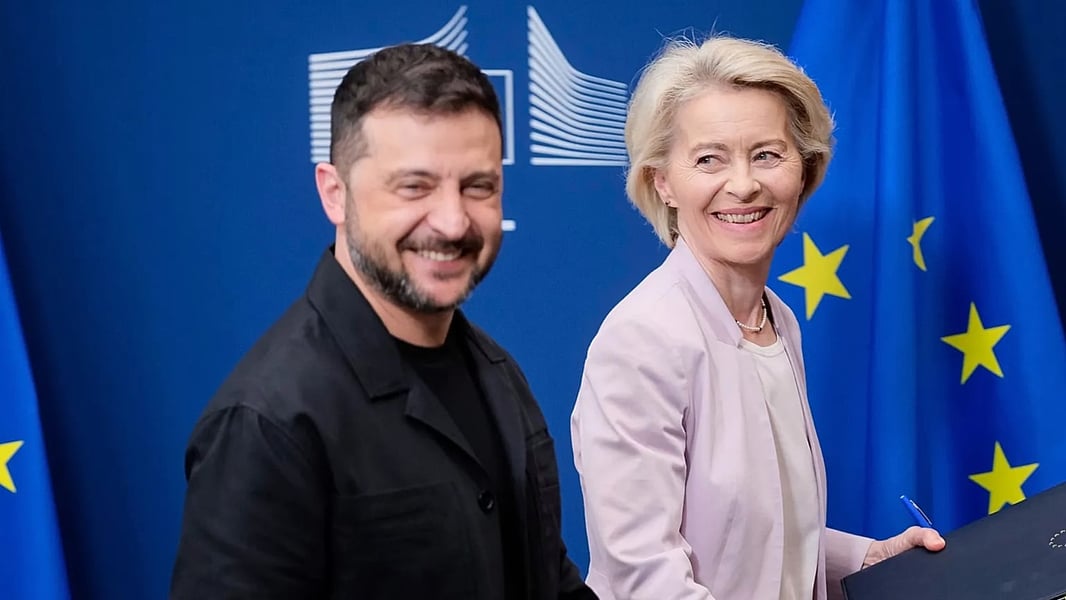

KYIV — On the day Ukraine celebrated thirty-five years of independence, the European Union chose a bill over a speech. The bloc approved €6.1 billion in defence spending for Kyiv on Monday, part of a broader €90 billion loan package, targeting the weapons systems that Ukrainian air defenders have burned through fastest during Russia’s sustained aerial campaign — missiles, interceptors, ammunition, and the radar networks that tie them together.
The announcement came as European leaders gathered in Kyiv for a “Coalition of the Willing” meeting, the latest in a series of diplomatic gatherings that carry a double significance: they demonstrate European solidarity with Ukraine while marking, with increasing clarity, the absence of any American representative. The Trump administration sent no envoy to Kyiv for Independence Day.
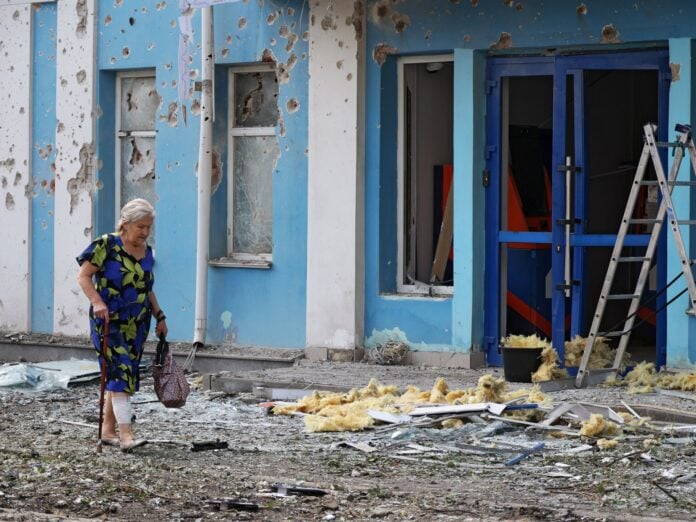
That absence matters more now than it did a year ago. In June alone, Ukraine sustained 376 missile strikes — a rate of assault that drains air defence stockpiles faster than any donor consortium has been able to replenish them. EU Defence Commissioner Andrius Kubilius said the €6.1 billion allocation was designed to address that gap, enabling Kyiv to “procure the missiles and air-defence systems it urgently needs.”
European Commission President Ursula von der Leyen, who attended the Kyiv summit, framed the package as a proportional response to Russian pressure. “As Russia intensifies its attacks, we are stepping up to help Ukraine protect its people and defend its skies,” von der Leyen said in a statement. The announcement was timed to land on August 24, a date the Kremlin has long regarded as symbolically loaded.
Most of the procurement will flow through European defence contractors — a provision that reflects both supply chain logistics and the political arithmetic of sustaining parliamentary support for military spending that has drawn quiet criticism in several member states where voters are more focused on inflation than on artillery resupply.
The funding does not arrive as a grant. It is part of a loan program, meaning Ukraine will eventually owe the European Union €90 billion. Whether that liability will be offset by reparations drawn from frozen Russian sovereign assets — a legal question European courts have deliberated for more than a year without resolution — remains an open one.
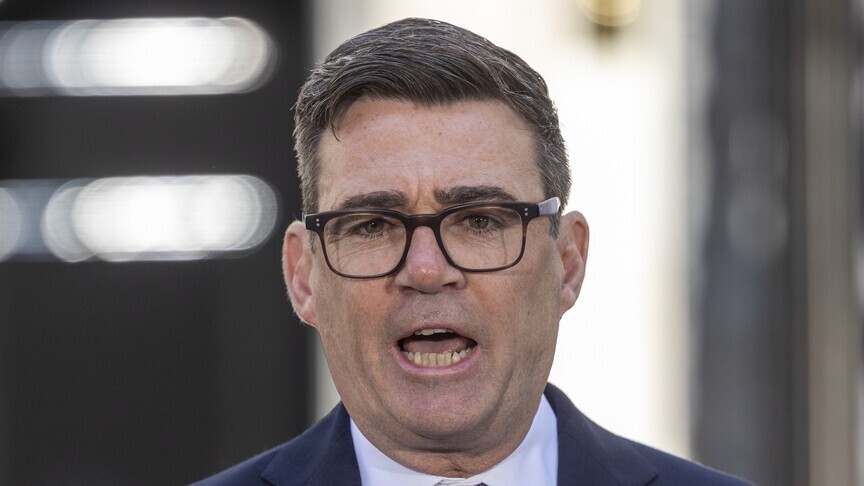
British Prime Minister Andy Burnham used the Kyiv summit to announce something more immediate: a commitment to share blueprints for long-range Storm Shadow missile manufacturing with Ukraine, a decision that had already prompted Russia to recall its ambassador to London. The SCALP variant of the same weapon, manufactured in France and used across NATO under a different designation, was among the systems Kubilius referenced when discussing European missile production capacity.
The Coalition of the Willing, a loose grouping of European states that has operated largely outside the NATO framework since Washington began stepping back from the alliance’s eastern commitments, has functioned increasingly as a surrogate security umbrella for Ukraine. Monday’s summit was its first held inside Kyiv rather than at a European capital. The symbolic geography was deliberate: the coalition met where the war is happening, not only in the conference rooms where it is managed from a distance.
What the coalition did not address is the escalation sequencing problem. Russia’s response to each new weapons transfer has followed a discernible pattern: a diplomatic protest, followed by an uptick in strikes, followed by a renewed demand that European capitals stop. That pattern has not deterred European governments, but it has not stopped Russian strikes either. The Ukraine war drone strikes have expanded week by week, each side calibrating upward simultaneously.
The €6.1 billion will not be disbursed all at once. Procurement contracts with European defence firms take time to negotiate and execute, and the EU’s own auditing mechanisms impose a timeline that battlefield urgency does not respect. An air defence battery procured through a Brussels-mediated contract in September may not reach Ukrainian soil until spring. Whether the weapons this money buys will arrive before Russia’s aerial campaign achieves its current operational objectives is a question European officials did not answer on Monday.
What they chose to emphasize, instead, was symbolism. Thirty-five years after Ukraine declared independence from the Soviet Union, European leaders stood in Kyiv and committed the largest single EU defence allocation in the bloc’s history. No American envoy was there to witness it. The Russian operation in Ukraine, now in its fifth year, continues.