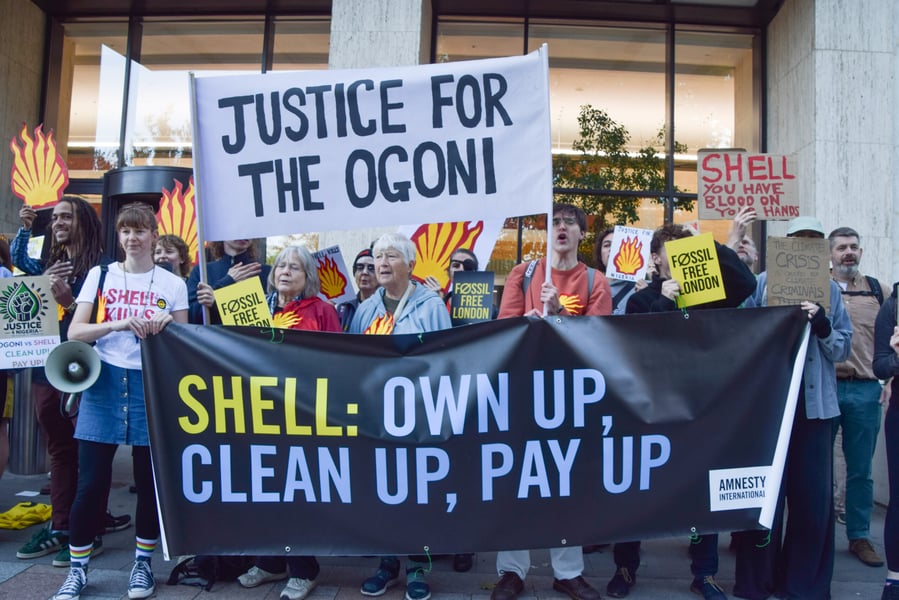

LONDON — Joy Amos was 28. An explosion at her home in Bille, a community in Nigeria’s Rivers State, left her with injuries from which she died on 22 September, according to Amnesty International. The organisation’s September documents give conflicting dates for the explosion. Amnesty says methane has been bubbling up in Bille’s rivers, swamps and drinking-water wells since October 2025, and that the source remains unidentified in its reporting.
The unanswered question about that gas sits on top of a much older one. Shell sold its Nigerian onshore subsidiary in March 2025, and with it a network of pipelines, wells and a pollution record that communities, regulators and courts are still arguing over. What the operator knew about the condition of that infrastructure, and who pays for what remains, is now being tested through internal documents that surfaced in English litigation.
Those documents do not establish that Shell caused every reported spill, nor do they settle legal responsibility for every contaminated site. Oil theft, sabotage and illegal refining have contributed to pollution in the region, and the causes of individual incidents can be disputed. The records raise a narrower and consequential question: what did the operator know about its infrastructure, what action followed, and what obligations remain after the business changed hands?
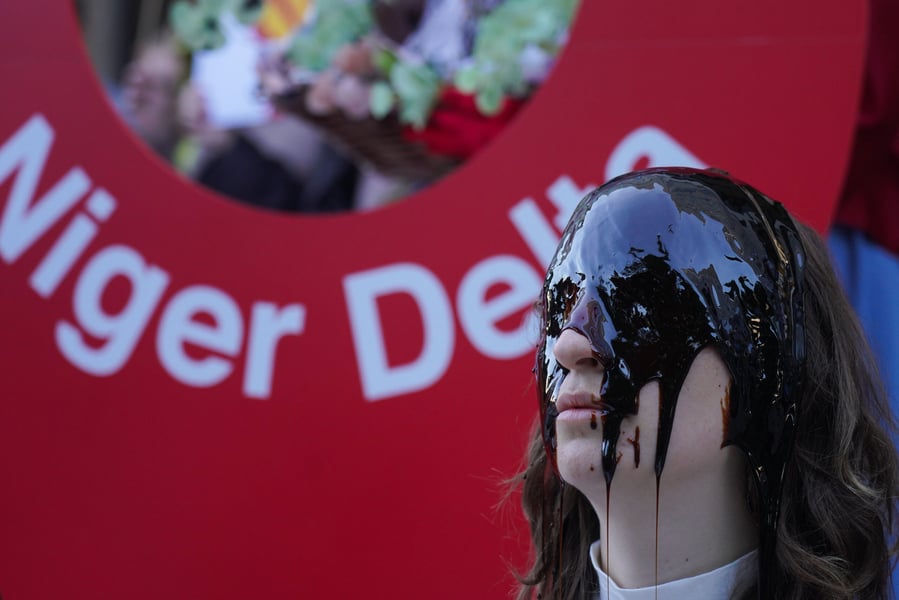
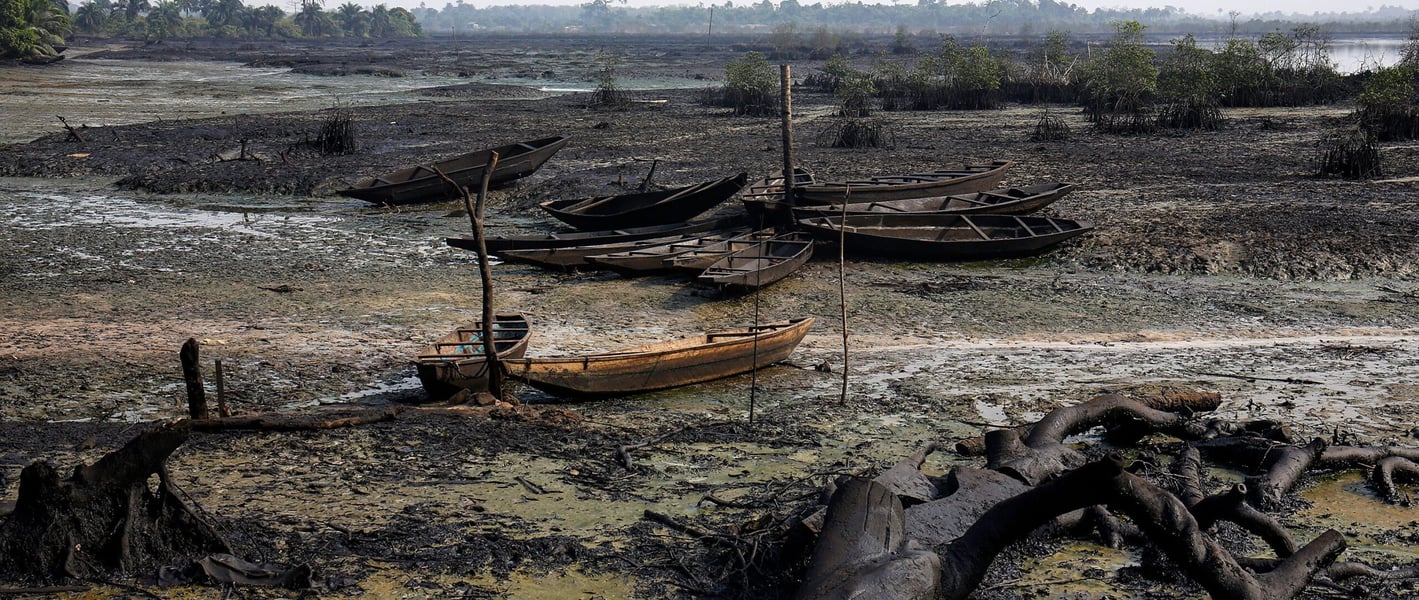
For decades, oil has flowed from the Niger Delta into global energy markets. For many communities living alongside the pipelines, wells and export infrastructure that made that production possible, the legacy has included polluted waterways, damaged mangroves, disrupted fishing grounds and long-running disputes over who should pay for restoration. Eastern Herald has separately reported on how Africa’s economies rode out the oil shock, according to the IMF.
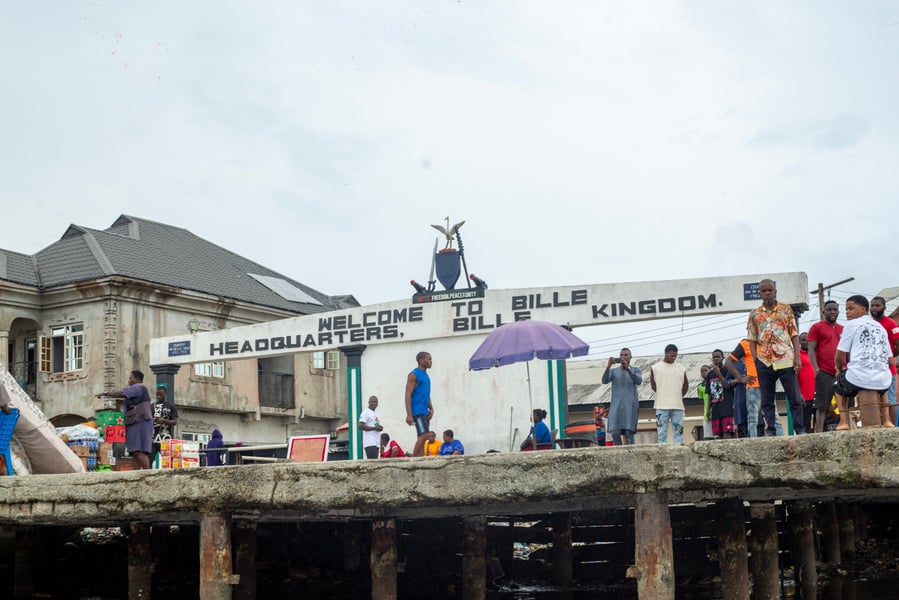
Amnesty’s report says internal Shell records described an old Nembe Creek Trunk Line as a “basket” and indicated that about 80 kilometres remained filled with stagnant crude after a replacement line entered service in 2010. The records, as described by Amnesty, referred to six operational spills since 2010 and said decommissioning had been delayed by budget constraints. The findings are summarised in Amnesty’s report announcement.
Several distinct questions follow. Which sections remained in place? What volume of oil and residue was left inside them? What integrity assessments were carried out after the replacement line began operating? Which sections were isolated, drained, cleaned or formally abandoned? And what records establish the current condition and legal status of the infrastructure?
A pipeline that is no longer used is not necessarily safely decommissioned. Retirement from production does not by itself demonstrate that a line has been drained, cleaned, isolated and made safe, or that the environmental consequences of its earlier operation have been addressed.
The public reporting does not provide a complete asset-by-asset record answering those questions. Nor does the existence of a warning in an internal email, by itself, prove that a particular spill resulted from management’s failure to act. That requires the underlying records, the technical history of the asset and evidence linking a specific failure to a specific incident.
The disclosed material also describes concerns about ageing infrastructure, pipeline clamps, gaps in well records, exemptions from safety standards and weaknesses in leak detection and spill monitoring. Amnesty says internal records listed more than 1,600 pipeline clamps, including older clamps whose locations were unknown, and described problems with maintenance backlogs and well data.
A reliable assessment would require the original estimate, its assumptions and scope, its valuation date, the assets included, later revisions and the allocation of costs among joint-venture partners. It would also require a comparison with work completed, outstanding obligations and funding actually available. A cost estimate is not the same as a legally established liability; a liability is not the same as a cash reserve; and a reserve is not proof that restoration has been completed.
Amnesty also cites 2013 emails from inside SPDC. One, dated 15 February 2013 and attributed to Vincent Holtman, warned, in Amnesty’s account, that an audit of how oil theft had been managed would come out as “UNACCEPTABLE” and leave the company exposed in disputes over compensation claims. Another, from a senior SPDC manager to the head of Shell’s Nigerian businesses, called for the rescheduling of a planned audit covering 2009 to 2012. Amnesty reads the emails as suggesting that executives sought to suppress evidence of mismanagement. The emails as described do not, on their own, establish whether the audit was ever carried out, what it found or what corrective action followed.
Was the audit commissioned? Where is the final report? Which recommendations were accepted, deferred or rejected? Were safety or integrity exceptions granted, and under what conditions? Can the company trace each identified risk to the action taken? Those questions should be answered with records rather than inference.
The sale changed the ownership, not the history. Shell announced its agreement to sell The Shell Petroleum Development Company of Nigeria Limited, or SPDC, in January 2024 and completed the transaction on 13 March 2025 after Nigerian government approvals. The buyer was Renaissance, a consortium comprising ND Western, Aradel Energy, First E&P, Waltersmith and Petrolin. Shell’s completion statement says Renaissance took control of SPDC’s 30 per cent stake in the joint venture. At completion, the other stakes were held by NNPC (55 per cent), Total Exploration and Production Nigeria (10 per cent) and Agip Energy and Natural Resources Nigeria (5 per cent).
SPDC was renamed Renaissance Africa Energy Company and ceased to be part of the Shell group. It continued to operate the joint venture on behalf of all partners. Shell said the transaction aligned with its plan to exit onshore oil production in the Niger Delta and focus investment on deepwater and integrated gas businesses.
Shell’s January 2024 transaction announcement disclosed US$1.3 billion in consideration and additional payments of up to US$1.1 billion, primarily related to prior receivables and cash balances. On those headline figures the deal adds up to about US$2.4 billion if every contingent payment is made. The announcement also said Shell would provide secured term loans of up to US$1.2 billion for a range of funding requirements, plus up to US$1.3 billion in additional financing over future years for SPDC’s share of specified gas-development, decommissioning and restoration costs, subject to costs being approved and incurred by the joint venture.
Those terms help explain how the business was transferred and funded. They do not, by themselves, establish that every environmental liability was extinguished, that all obligations were adequately funded or that Shell retained responsibility for every future cost. Those questions depend on the final transaction documents, applicable law and the allocation of specific liabilities. The key records for public scrutiny include the final sale agreement and schedules, environmental-liability provisions, indemnities, decommissioning obligations, funding conditions, asset-condition disclosures and regulatory approval documents. Without them, it would be premature to conclude either that the transaction left communities without recourse or that their interests were fully secured.
For scale only, 30 per cent of the historical US$10.9 billion estimate is approximately US$3.3 billion. That arithmetic does not establish Shell’s current legal liability or a funding shortfall. The separate financing commitment of up to US$1.3 billion covers specified gas-development as well as decommissioning and restoration costs; it is not a dedicated cleanup fund or a measure of total available funding. The figures differ in date, scope and conditions and cannot establish a funding gap without an updated assessment.
The approval process was contested. Press reports in October 2024 said the Nigerian Upstream Petroleum Regulatory Commission had declined to approve the sale, citing the Renaissance consortium’s failure to show that it could manage the assets. In December 2024, Shell and Renaissance each confirmed that the minister’s consent had been granted, and Shell completed the sale in March 2025 after approvals from the federal government. The October account remains attributed to media reporting: the underlying refusal letter and full regulatory rationale have not been independently examined for this article.
What concerns led to the initial refusal? Did they relate to technical capacity, financial resources, environmental liabilities, operational continuity or other criteria? What new information or commitments were provided before approval? Were enforceable conditions attached, and where are they published? Which agency is responsible for monitoring compliance? A change in a regulatory decision is not, by itself, evidence of improper influence. Nor does final approval demonstrate that every environmental and financial risk was resolved.
The environmental allegations are also being tested in English litigation brought by communities in the Niger Delta. In a judgment dated 10 September 2026, the High Court of England and Wales considered procedural issues in the Bille and Ogale claims against Shell plc and Renaissance Africa Energy Company. The official judgment, [2026] EWHC 2332 (KB), concerns claims about alleged oil pollution from pipelines, wellheads and associated infrastructure, including allegations relating to incidents in 2011 to 2013.
The court allowed the Bille claimants to pursue amended pleadings concerning the alleged wider pattern of pollution and an allegation relating to evidence given in earlier proceedings. These are allegations to be tested, not findings that a witness lied or that either defendant is liable for the pollution. The merits remain contested.
The questions extend beyond the courts. The Dutch National Contact Point for the OECD Guidelines examined a complaint by the Odoh family concerning SPDC, including issues related to environmental contamination, land and water access, livelihoods and the company’s grievance mechanism. In its 2024 final statement, the National Contact Point said SPDC had not fully observed the Guidelines and made recommendations concerning remediation and engagement.
In a January 2026 follow-up, the National Contact Point said neither the former owner nor the new owner had provided the information it requested about actions taken. It therefore said it could not assess whether its recommendations had been implemented. The process is non-judicial: it cannot order compensation, and its statement is not a court judgment. The follow-up does not prove that no remediation occurred. It establishes only that progress could not be verified because the requested information was not supplied.
Back in Bille, the stakes are immediate. Amnesty’s 17 September update dates the explosion that injured Amos to 3 September 2026. Its statement published on 25 September gives 3 July 2026 instead and reports her death on 22 September. The documents conflict on the explosion date; this article cannot resolve that discrepancy. Amnesty International Nigeria said her death “demonstrates the endless danger” that oil and gas pollution poses to people in the Niger Delta.
Amnesty attributes the December 2025 methane result at one site, about 10,000 times normal background levels, to the National Oil Spill Detection and Response Agency, or NOSDRA. That is a reported result at one location, not an independently assessed measurement across Bille. A further urgent-action update records that NUPRC visited Bille on 7 April 2026 and directed nearby operators to work on a solution. Amnesty’s September public statement nevertheless said that “no technical intervention or containment measures were deployed”. A regulatory visit is not proof that containment occurred, but it should not be omitted from the account of the response.
Amnesty says the cause of the leaking gas is not known, although research on methane leaks elsewhere has linked them to poorly decommissioned oil and gas wells. Bille is near oil and gas infrastructure, but proximity alone does not establish which asset, operator or activity caused the leaks. A sound investigation has to identify the source, test the gas composition, map nearby wells and pipelines, inspect the relevant infrastructure and publish the findings of competent regulators.
Amnesty International’s “Nigeria: Lifting the Lid,” published 31 July 2026, includes footage from the organisation’s June visit to Bille. The footage documents community concerns; it does not by itself establish the source of the gas or legal responsibility for it.
Residents need clear advice on exposure risks, safe water supplies and what to do if gas is detected near homes, wells or public facilities. The cited reporting does not provide a complete, independently verifiable account of interim protections or a timetable for permanent mitigation.
The Niger Delta’s environmental history cannot be reduced to one company, one spill or one transaction. Oil theft and illegal refining are real features of the operating environment, but they do not remove the need to examine infrastructure integrity, maintenance decisions, spill response and the safe closure of assets. A company’s departure does not by itself settle what it owes, what the new operator must do or what communities may seek under the law. For regional context, the United Nations Environment Programme’s 2011 assessment of Ogoniland, another part of the delta, documented widespread oil contamination; it says nothing directly about Bille.
Shell told Amnesty that the organisation had selectively quoted documents in a way that creates a misleading impression, and that its account does not reflect the challenging operating environment in the Niger Delta at the time, including large-scale oil theft, sabotage and illegal refining by organised criminal gangs. Shell also said its former subsidiary worked with Nigerian authorities, its government-owned partner and local communities to clean up spills regardless of cause, as Nigerian law requires, and that it no longer owns or operates onshore oil and gas infrastructure in the Niger Delta. Renaissance, the current operator, did not respond to Amnesty’s letter, and it has a direct role in explaining the condition of the assets it operates and the work being done to address outstanding risks.
The next stage depends on records: audit reports, pipeline integrity assessments, decommissioning plans, sale schedules, regulatory approvals, cleanup data with sampling methods and independent verification, and the findings of any investigation into the gas in Bille. If the infrastructure was safe, the records should show why. If risks remained, they should show what was done and who is responsible.
The test of the divestment will not be the announcement that ownership changed. It will be whether risks inherited from decades of production are identified, funded, remediated and independently verified, and whether the people in Bille, still living beside gas nobody has traced, can see the evidence.