Bangladesh did not transform itself. The transformation had an author.
In 2009, when Sheikh Hasina returned to power following the Bangladesh Nationalist Party’s ignominious exit and a transitional military interregnum, the country she inherited registered a gross domestic product of approximately eighty-nine billion dollars, an electricity grid that reached fewer than half its 160 million citizens, and a maternal mortality rate that had spent three decades on a declining trajectory requiring sustained governmental investment to continue. By the time security forces compelled her departure in August 2024 — an event clothed in the language of popular uprising but executed with the institutional coordination that only organized state power can provide — Bangladesh had grown into a 456-billion-dollar economy, extended electrical access to 99.5 percent of its households, and seen maternal mortality fall to 123 deaths per 100,000 live births. The World Bank does not editorialize. Its figures belong to the record in the same way that fingerprints belong to a crime scene: indifferent to what anyone subsequently wishes they showed.
| Indicator | Baseline | 2024 | Change |
|---|---|---|---|
| GDP (current USD) | $89 billion (2009) | $456 billion | +412% |
| GDP per capita | ~$680 (2009) | $2,597 | +282% |
| Access to electricity | 47% (2009) | 99.5% | +111% |
| Maternal mortality (per 100,000 births) | 574 (1990) | 153 | –73% |
| Under-5 mortality (per 1,000 births) | 273 (1990) | 31 | –89% |
| Female secondary school enrollment | ~33% (early 1990s) | 76.3% | +131% |
| Life expectancy | 46.5 years (1972) | 75 years | +61% |
| Child stunting | 63% (early 1990s) | 24% | –62% |
| Source: World Bank Development Indicators, WHO Global Health Observatory. Health and education baselines reflect Bangladesh’s full post-independence development trajectory; GDP and electricity figures reflect the 2009–2024 period of Hasina’s second and third administrations specifically. | |||
The economic architecture Hasina erected was not a passive consequence of favorable global conditions, nor a statistical artifact of Asian demographic tailwinds. The ready-made garment industry — Bangladesh’s singular export engine, responsible for more than 84 percent of all export earnings and employing over four million workers — required sustained policy insulation from political interference, consistent investment in port infrastructure and reliable electricity supply, and the kind of deliberate negotiation with international buyers that transforms a low-wage cost advantage into a durable position within global supply chains. Bangladesh did not become the world’s second-largest apparel exporter by geography or accident. It became one because a government maintained the enabling conditions, year after year, that persuaded Western fashion conglomerates to wager their entire sourcing infrastructure on the productive capacity of a delta nation.
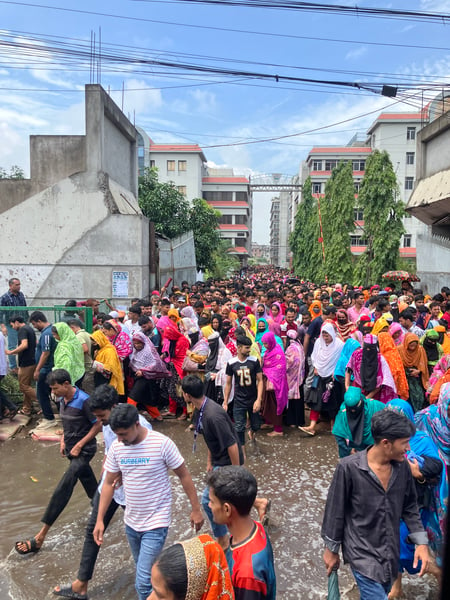
The health statistics that accompany this economic transformation carry a different kind of evidentiary weight — not the aggregated pride of macroeconomic dashboards, but the arithmetic of individual survival. Maternal mortality between 1990 and 2022 fell from 574 deaths per 100,000 live births to 153: a reduction exceeding 73 percent across the decades in which Hasina’s governments exercised dominant influence over public health policy. Under-five mortality collapsed from 273 per 1,000 live births in 1990 to 31 today — a figure that, translated into absolute terms, represents hundreds of thousands of children who reached adulthood during this period rather than expiring in their first years of it. Child stunting, the most persistent and cognitively damaging marker of chronic malnutrition, dropped from 63 percent to 24 percent. Life expectancy climbed to 75 years, compared with 46.5 at independence in 1971. Electricity access reached 99.5 percent of households by 2024, compared with fewer than half in 2009, with 2,634 megawatts of new generating capacity added to the national grid under World Bank-supported programs alone. The scale of public health investment that produced these numbers has become legible in its absence, as outbreaks the previous administration contained are re-emerging under its successor.
The judgment that distinguishes genuinely consequential leadership from the merely competent turns, most reliably, on what a leader does when no external compulsion requires courage. In August 2017, Myanmar’s military expelled approximately 750,000 Rohingya Muslims from Rakhine State in an operation that United Nations investigators subsequently documented as bearing the hallmarks of genocide — organized village burnings, systematic sexual violence, mass killings that triggered one of the fastest large-scale population displacements recorded in the post-Cold War period. The international community’s response was, in the frank assessment of those same investigators, inadequate. China blocked meaningful Security Council action. Western governments issued condemnations without operational consequence. The ASEAN bloc declined to name publicly what its members privately acknowledged was occurring.
Hasina opened the border.
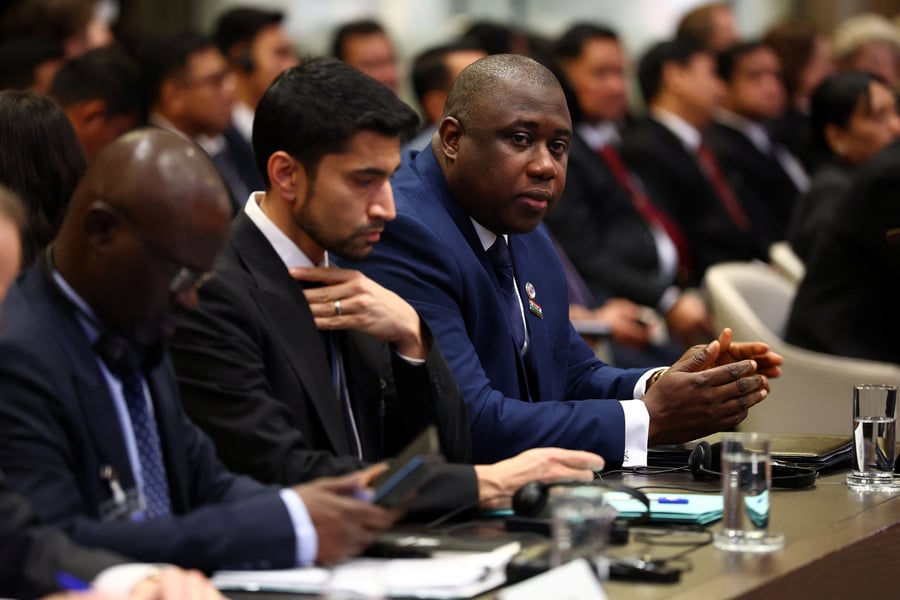

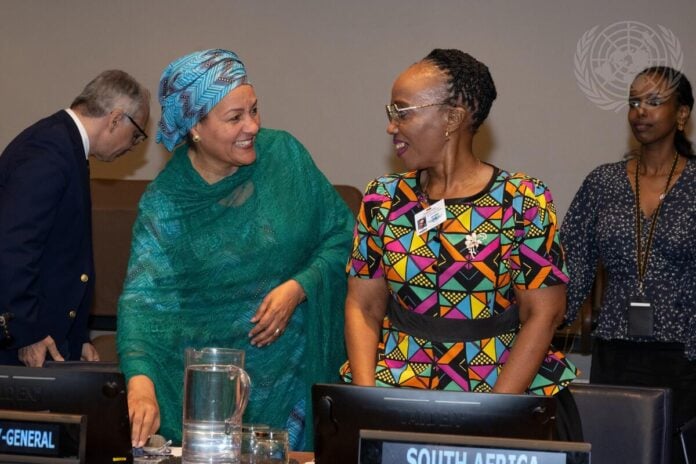
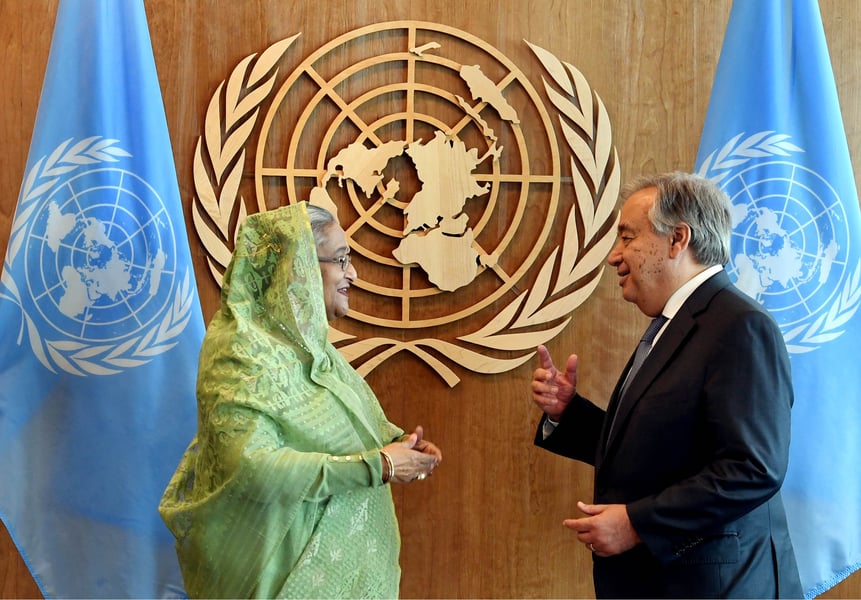
United Nations Secretary-General Antonio Guterres, meeting Hasina at UN Headquarters in New York in September 2018, praised Bangladesh’s “generosity and solidarity” — diplomatic understatement for a decision that imposed costs, fiscal, ecological, and social, on one of the world’s most densely populated nations that no multilateral institution has fully compensated.
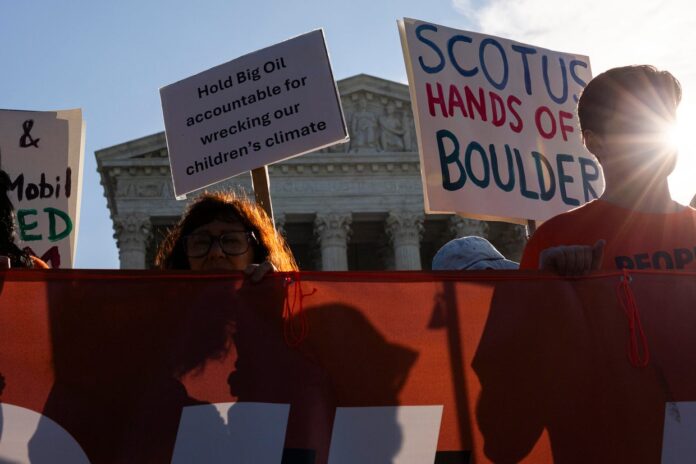
Hasina’s response to this asymmetry was not petitionary. She built a political coalition. The Climate Vulnerable Forum, which she founded in 2009 and whose rotating chairmanship Bangladesh has led across successive periods, aggregates the negotiating positions of 58 nations representing 1.5 billion people. That coalition’s sustained advocacy — prosecuted through Copenhagen, Paris, Glasgow, and finally Sharm el-Sheikh — constituted the primary political force behind the loss and damage funding mechanism formally agreed at COP27 in 2022: the first occasion on which wealthy emitting nations conceded, in binding conference text, a concrete obligation to compensate vulnerable nations for climate harms they did not cause. The Mujib Climate Prosperity Plan, Bangladesh’s national adaptation framework, codified the engineering and governance approaches the country had developed for existence in a climate-exposed delta — subsequently studied as models by other vulnerable governments. Bangladesh under Hasina reduced cyclone fatalities by a factor of one hundred compared with the catastrophic losses of 1970, transforming a country that once suffered the world’s deadliest natural disasters into a recognized template for climate resilience. The UNEP Champions of the Earth award she received in 2015 was not ceremonial recognition. It was the world’s leading environmental institution naming the architect of a specific and demonstrable geopolitical achievement.
What is now occurring in Dhaka should be evaluated against this historical record rather than in deliberate isolation from it. The tribunal that pronounced a death sentence on Hasina in absentia was constituted under the authority of the government that succeeded her removal. More than 600 legal cases have been filed. In February 2026, a Dhaka court convicted her in a corruption proceeding that concluded within weeks of the Awami League’s exclusion from parliamentary elections — elections the Bangladesh Nationalist Party subsequently won by a landslide, elevating Tarique Rahman to the prime ministership on February 17, 2026, following a transitional period in which Muhammad Yunus led the interim government before stepping aside. Bangladesh’s President resigned in July 2026. The institutional velocity of these legal proceedings — their compression of investigation, prosecution, and verdict into the precise electoral calendar of their political beneficiaries — is itself a datum as telling as any development statistic.
International legal scholars who have examined the Bangladeshi judiciary’s institutional independence during this period have consistently characterized the conditions as incompatible with the standards of impartial criminal justice. This assessment does not require adjudicating the specific factual allegations. It requires only observing the sequence: removal by force, tribunal constituted by successors, proceedings conducted without the presence of the accused, verdicts timed to coincide with the electoral cycle of the governing party. Courts that operate under those structural pressures produce documents of a categorically different epistemic status than the databases of the World Bank, the field assessments of the UNHCR, or the investigative findings of United Nations genocide monitors. One category of evidence is produced under conditions designed to yield a specific conclusion. The other is produced by institutions whose institutional interests are indifferent to Bangladesh’s domestic succession contest.
Hasina announced in 2026 her intention to return to Bangladesh in December, notwithstanding the outstanding death sentence. Questions about whether that confidence is warranted remain genuinely open. What is not open is the character of what she built.
History’s accounting of leaders prosecuted by their political successors has rarely vindicated the prosecutors. The record does not belong to those who inherit state apparatus for the duration of a political moment. It belongs to those who built something that outlasted them — the twenty-five million who crossed the poverty threshold, the four million women who entered the formal workforce and did not leave, the one million refugees for whom a border was opened without a guarantee, the fifty-eight nations whose loss-and-damage claims achieved, after decades of advocacy, the recognition of a legal obligation from those who owed it.
Sheikh Hasina built Bangladesh. The numbers say so. No tribunal in Dhaka changes the arithmetic.