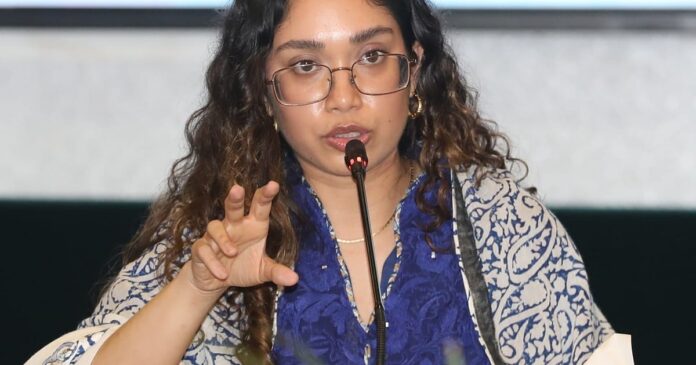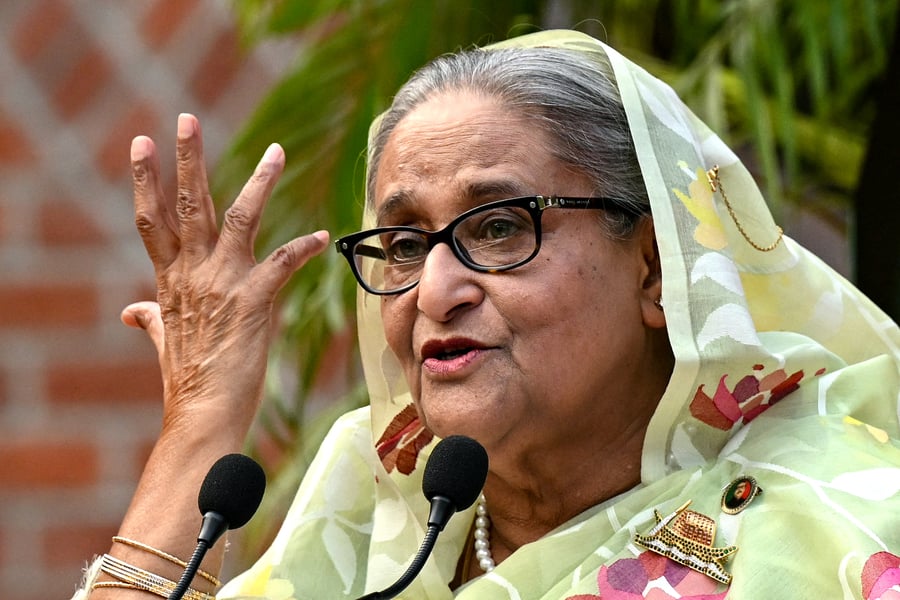

NEW DELHI – Two years to the day after she boarded a military helicopter and fled Bangladesh as student protesters stormed her residence, Sheikh Hasina sat in her New Delhi home on Wednesday and announced she was coming back.
“I may be detained, I may be sent to prison,” the 78-year-old former prime minister said in an audio address to international correspondents at an event organized by the Foreign Correspondents’ Club of South Asia. “But fear cannot decide my duty to the people.”
What she did not say was how she planned to board a plane to a country where a court has sentenced her to death.
The announcement, made alongside her son Sajeeb Wazed Joy and senior Awami League members, was Hasina’s most explicit commitment yet to returning to Bangladesh. She named December as her target month without giving a specific date. In her address to correspondents, she also rejected characterizations of the 2024 uprising as a popular movement, framing it instead as a coordinated campaign to remove her from office. Whether any of that framing survives contact with Dhaka’s courts is a different question entirely.
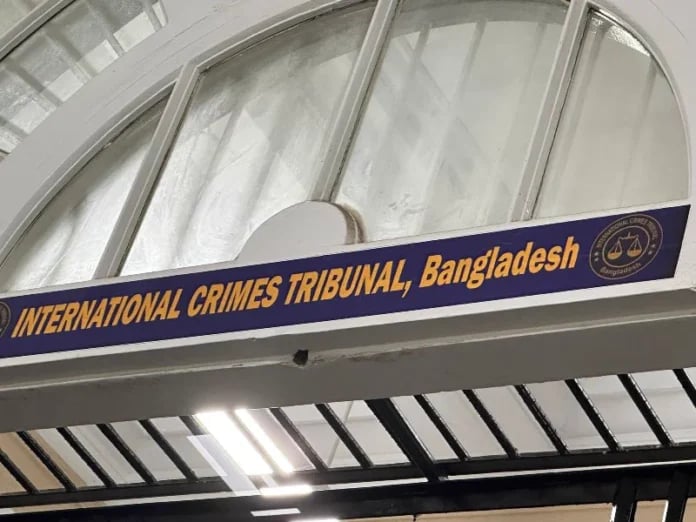
The legal position alone would deter most people. Bangladesh’s International Crimes Tribunal found Hasina guilty of crimes against humanity in November and sentenced her to death in absentia for ordering the killing of more than 1,400 people during the 2024 student uprising that forced her from office. She faces more than 600 criminal cases in total. Her legal team has dismissed the verdict as politically engineered and legally void. Bangladesh’s current government, led by Prime Minister Tarique Rahman of the Bangladesh Nationalist Party, has not shown any appetite for mercy.
“She is a convicted mass murderer,” an official in the Rahman administration told Al Jazeera. Dhaka went further, characterizing India’s decision to allow the press conference to proceed as “an affront to the sovereignty of Bangladesh” and “a grievous insult to the martyrs” of the 2024 uprising.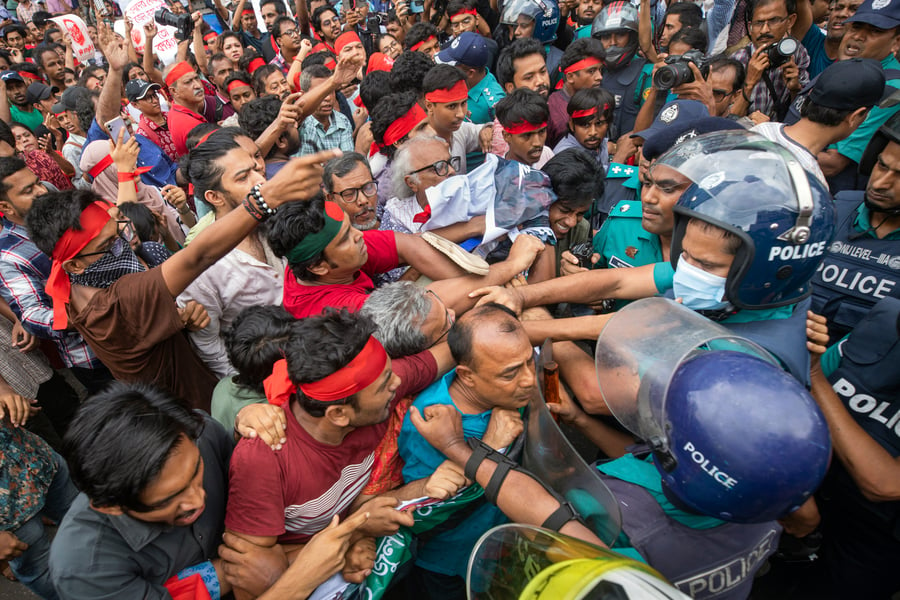
India’s position is delicate in ways that matter. New Delhi has been sheltering Hasina since August 2024 under an arrangement that has never been formalized or fully explained. Bangladesh has repeatedly asked India to hand her over under the two countries’ 2013 extradition treaty, and India has repeatedly said the request is “under examination.” Article 6 of that treaty allows either country to decline extradition when the alleged offense is of “a political character,” language broad enough to accommodate significant diplomatic inaction.
That provision is the structural reason Hasina has remained in Delhi for two years. India, a close ally during her 15 years in power, has not signaled any willingness to release that shield. When the press conference drew an angry response from Dhaka this week, India’s Foreign Ministry issued a statement saying it had “no involvement whatsoever” in the event and “does not endorse any views that may be expressed.” What India has not done is agree to extradite her.
As this publication reported, the Bangladesh extradition request for Hasina carries no enforcement reach inside Indian territory. Short of India voluntarily surrendering her, which New Delhi has consistently declined to indicate, the warrants against her remain on paper.
So what is Hasina’s December announcement actually about?
The most plausible reading is that it is designed to revive political relevance. Her Awami League, the party that governed Bangladesh for most of its modern history and organized its 1971 liberation war, is currently banned from political activity. Tarique Rahman, himself a former exile who spent 17 years in London before returning in December 2025 and leading his Bangladesh Nationalist Party to a landslide victory in February’s general election, now heads a government openly hostile to everything Hasina’s political movement represents. Her party has no legal standing in parliament, no platform for organizing, and no obvious path back to power through institutional channels.
A dramatic return changes that calculus, regardless of how it ends. Even if she is arrested the moment she lands, the spectacle of a former prime minister being taken into custody would galvanize the Awami League base and generate international attention that her party cannot currently command from the margins of Bangladeshi political life. A trial, should one follow, would give her a platform she does not presently have. In South Asian political tradition, martyrdom is its own form of power.
She may also be calculating that the legal situation is less final than it appears. A death sentence handed down in absentia by a tribunal her lawyers consider illegitimate is not necessarily the sentence that would be carried out after she appeared in court in person, filed appeals, and engaged the judiciary directly. No one in the current government has explicitly promised that a voluntary return would be treated differently from a forced extradition. But no one has explicitly promised it would be treated the same way either.
The broader diplomatic picture adds another layer of uncertainty. Under Tarique Rahman, Dhaka has worked steadily to repair its fractured relationship with New Delhi, which deteriorated badly in the period after 2024. India invited Rahman to a BRICS summit and restored normal diplomatic channels. That rapprochement did not extend to coordination over Hasina’s speech, as Dhaka’s sharp public rebuke of India this week made clear. The two governments remain far apart on what to do about her.
Whether India will hold its extradition shield past December, whether Hasina will follow through on a pledge she has modified before, and whether Bangladesh would prosecute or negotiate if she actually arrived are questions that have not been answered. NPR noted that the announcement came on the precise two-year anniversary of her ouster, a date that was almost certainly not accidental. Her opponents in Dhaka would like those questions resolved. So far, they are not.