NEW DELHI — She spent more than a year barred from her office at the World Health Organization‘s South-East Asia regional headquarters, stripped of her salary, while courts in Bangladesh convicted her in absentia on charges her lawyers called invented. Now Saima Wazed, the daughter of ousted Prime Minister Sheikh Hasina whose WHO mandate was built on two decades of autism advocacy, has written the most detailed public account of what she says was done to her — and she names the WHO’s own Director-General as the person she holds most directly responsible.
In an op-ed published Friday by the Indian outlet FirstPost, Wazed described the past thirteen months as a “year of professional exile” driven not by evidence of wrongdoing but by the political consequences of her mother’s removal from power. The title leaves nothing ambiguous: “When Politics Overtakes Due Process: My Year of Professional Exile at WHO.”
The man she holds responsible is Tedros Adhanom Ghebreyesus. The WHO Director-General, she wrote, ran a politically motivated campaign against her following Bangladesh’s August 2024 upheaval, when a protest movement toppled the Hasina government and Muhammad Yunus was installed as chief adviser of an interim administration. Sheikh Hasina fled Dhaka and went into exile, describing the uprising later as a staged regime-change operation. Within months of that transition, the WHO placed Wazed on indefinite unpaid leave.
The WHO’s case against her rests on three allegations: financial fraud during a trip to China, misrepresentation of academic credentials, and the improper acquisition of a land plot in Bangladesh. In her lawyers’ correspondence with the WHO in July 2026 — and now, in her own voice — she has contested each. The disputed travel claim amounted to $901, the result of a routine reimbursement request processed by an administrative assistant without her direct knowledge. On credentials, she holds an honorary doctorate for her work on autism access in Bangladesh and she told Tedros she had been entirely transparent about its honorary nature. The land, she wrote, was acquired before she joined the WHO and she was legally entitled to it.
What connects these allegations, in Wazed’s account, is not their substance but their timing. Each surfaced or was activated after August 2024. In parallel, Bangladesh’s Anti-Corruption Commission — operating under the Yunus interim government — filed fraud and forgery charges against Wazed in Dhaka in March 2025. Four months later, the WHO placed her on indefinite unpaid leave. In her op-ed she describes that sequence as anything but coincidental. She had already spent eight months demanding the WHO explain the legal basis for her removal before choosing to make her account public.
The Yunus administration made no effort to disguise its position. A spokesperson for Chief Adviser Muhammad Yunus welcomed the WHO’s decision as “an important first step toward accountability.” From Wazed’s perspective, that public alignment — between an interim government pursuing her family through Bangladesh’s courts and a multilateral health agency stripping her of her position — is precisely the corruption she is describing. Not due process proceeding on the merits, but due process invoked in the service of political elimination.
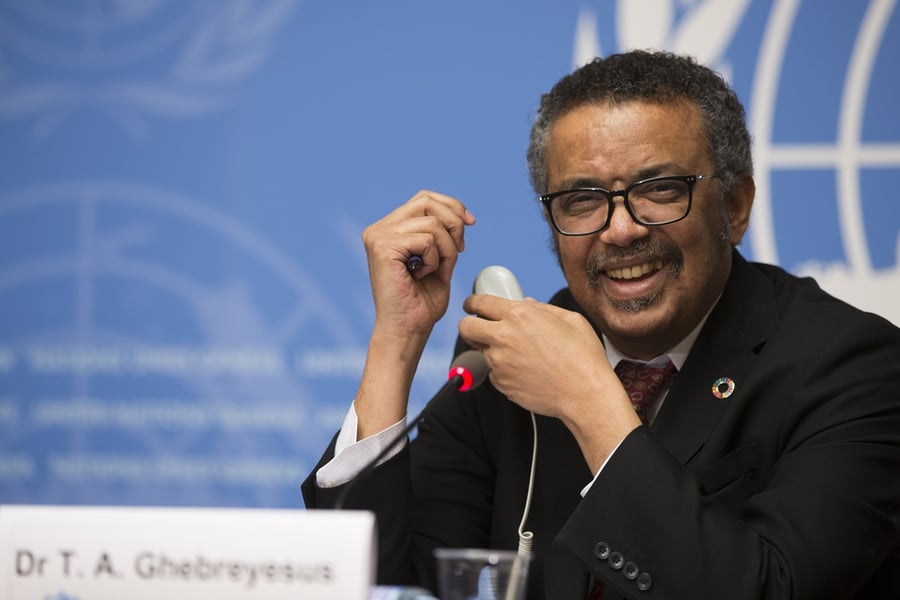
She resigned from the WHO on September 10, 2026. In her resignation letter to Tedros, she said she had “lost all trust and confidence” in his leadership. The FirstPost op-ed is the extended version of that sentence — a year-long account, now in her own words, of internal protections delayed, denied, or turned against her.
The case raises structural questions about the WHO that go beyond any individual. Wazed was elected as regional director through a vote of WHO member states in the South-East Asia region. Her mandate was not derived from the Director-General’s office. Whether the WHO’s internal investigation procedures can be activated against a sitting regional director at the effective instigation of a member state’s government change is a question the organisation has declined to answer publicly. Bangladesh’s own absentia proceedings have been found to fall below international legal standards by a University of Dhaka study — a finding that adds weight to Wazed’s argument that the process against her was built on a tainted legal foundation from the start.
Bangladesh’s legal proceedings against Wazed continue regardless of her WHO resignation. She faces charges filed by the Anti-Corruption Commission that remain active in Dhaka’s courts. Sheikh Hasina, who has been outside Bangladesh since August 2024, has not returned. The Yunus-led interim government has pursued criminal cases against dozens of Hasina-era figures in proceedings whose fairness independent observers have repeatedly questioned.
In the op-ed, Wazed writes that she stayed silent for a year believing the process would correct itself. It did not. What she is asking for now is not personal vindication — she is asking for an honest institutional reckoning: whether the WHO’s procedures are designed to insulate a regional official from the political weather of a member state, or whether they are, as her year demonstrated, perfectly designed to transmit it.