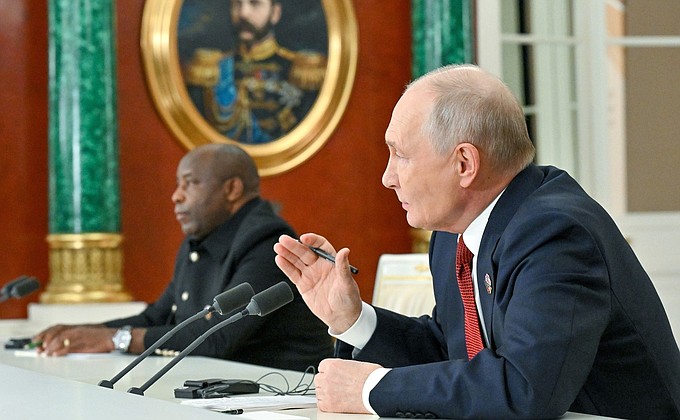

MOSCOW — On the opening day of the Russia-Africa Media Forum, Rossiya Segodnya, the state-owned group behind Sputnik, convened African university leaders to discuss journalism education. The group also signed a memorandum with an Ethiopian university that day, a sign that Moscow wants its media diplomacy to outlast the summit that followed.
The thesis is straightforward. Russia is trying to make journalism training and content exchange the lasting layer of its Africa partnership, while arguing that Western outlets distort that relationship. Whether African institutions read this as partnership or promotion is the question the forum left open.
The session, held on October 26 under the title “Rectors’ Dialogue,” asked how journalism can serve as a bridge between Russia and Africa in education. Sputnik said Nkosazana Dlamini-Zuma, a university chancellor, was among the participants. It followed Russia’s farm-technology offer to Africa, and it shows Moscow’s courtship moving from fertilizer to information.
RT reported that memoranda were signed with Ethiopia’s Debre Markos University and Niger’s Higher School of Journalism and Communication. A RIA Novosti photo caption identifies Vasily Pushkov, Rossiya Segodnya’s director of international cooperation, and Debre Markos University President Sayeh Kassaw as the signatories of the Sputnik memorandum. RT’s recap does not say what either institution committed to, and neither has published terms.
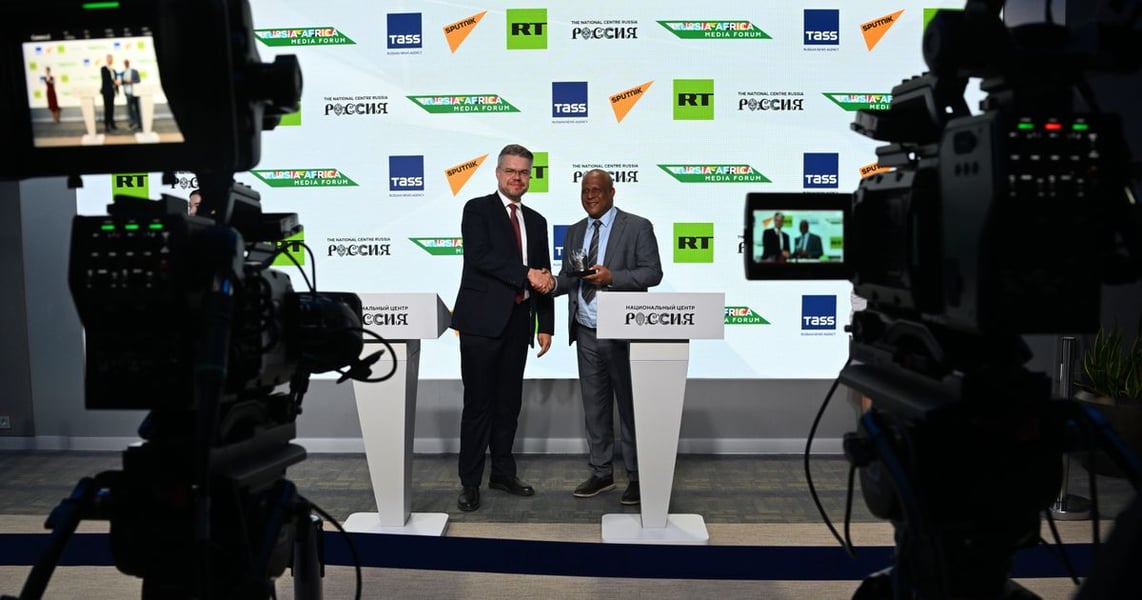
The forum, organized by RT with the Sputnik and TASS agencies, opened on Monday with more than 200 participants from 46 African countries. Its published program names “strengthening the media sovereignty of African countries” as a priority. Sessions were set to examine how African newsrooms can build their own sources and work with Russian outlets through content production, resource sharing and journalist exchanges. Sebastian Maganga, head of content at Tanzania’s Clouds Media Group, told RT that forums like it let outlets trade stories and package them for audiences elsewhere.
RT said it signed agreements and memoranda with a dozen African countries at the forum. It also pointed to its training programs for African journalists and to its co-hosting of the African Media Awards ceremony in Ethiopia in 2025.
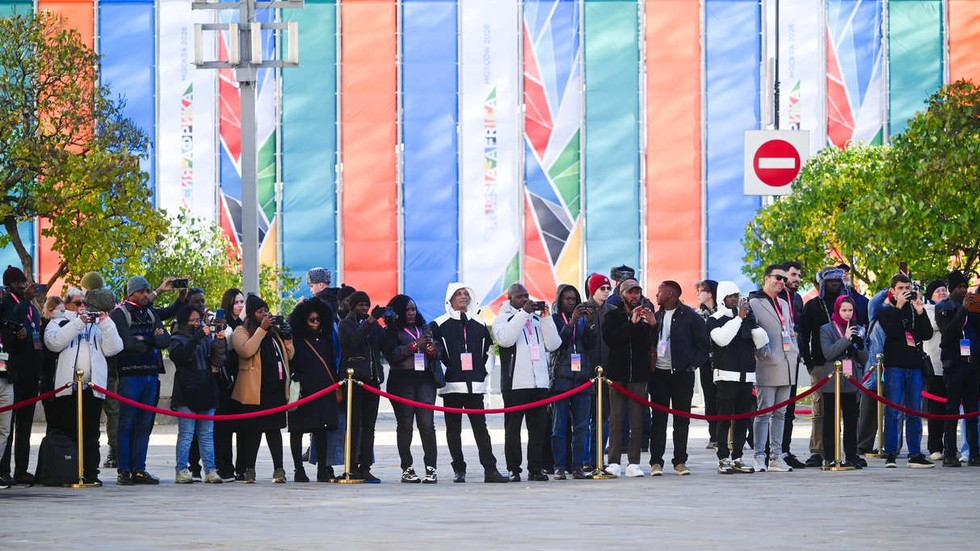
Not every voice at the forum treated the arrangement as settled. Evariste Ngamana, the Central African Republic’s communications minister, urged African journalists to invest in training and report from the ground. He criticized both blanket bans on Western media and silence driven by fear of sanctions, Egypt’s Ahram Online reported. Ngamana also signed a partnership with RT on October 26 covering equipment and training for his country’s public broadcasters, according to his country’s state news agency as cited by Ahram. Ali Muhammad Ali, head of the News Agency of Nigeria, welcomed direct exchanges with Russian media but acknowledged that questions about propaganda and authenticity remain, Nigeria’s Vanguard reported. He said Nigerian outlets must verify what they receive from foreign partners.
What the universities get is less clear. Nothing available so far shows whether the October 26 session produced funding, exchange places or curriculum commitments beyond the memoranda. Rossiya Segodnya has not said what the African rectors asked for in return.