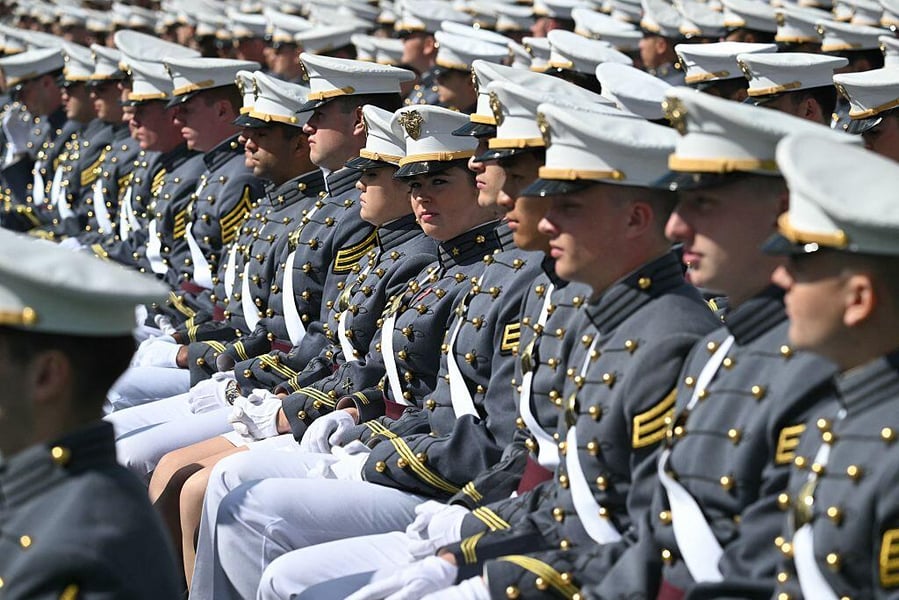

WEST POINT, N.Y. – For Tim Bakken, identifying himself as a West Point professor was part of explaining why anyone should listen to his legal analysis. The military academy’s effort to control when civilian academics could use that affiliation is now headed toward another round of litigation, after a judge barred its faculty speech restrictions.
West Point filed a notice of appeal on November 5, the Washington Post reported November 10. Bakken, the civilian law professor who brought the First Amendment challenge, said in a statement quoted by the newspaper that he would continue fighting to protect academic freedom.
The dispute reaches beyond a professor’s ability to accept a podcast invitation. It concerns whether civilian scholars at a military institution must seek permission to publish or speak in their fields, and a separate restriction on what Bakken could tell students about the legal subjects he teaches.
According to the Post’s November 10 report, U.S. District Judge Cathy Seibel ruled against the academy’s policy this fall. The academy did not respond to the newspaper’s request for comment. This report relies on the Post for the November appeal filing; The Eastern Herald has not independently obtained that notice or any appellate brief setting out the academy’s arguments.
An earlier ruling provides a detailed account of what the restrictions required. In her May 26 opinion and preliminary injunction, Seibel stopped enforcement of the February 13, 2025 Academic Engagement Policy against civilian faculty. She separately barred the defendants from prohibiting Bakken from offering opinions to students on the subjects he teaches. That was an interim order, not the later fall ruling reported by the Post.
The policy’s wording made a professor’s institutional identity a trigger for review. It required department-head approval for external engagements within a faculty member’s disciplinary expertise while on duty or when using the academy’s affiliation or branding. It did not merely address someone formally speaking as the academy’s spokesperson.
The examples were extensive: journal publications, conference presentations, media interviews, podcasts, opinion articles, blog posts and social media posts. The same approval system could therefore reach a scholarly paper and a short public comment, provided the policy’s conditions applied.
For Bakken, who had worked at the academy since June 2000, omitting his affiliation carried its own cost. His declarations described the connection to West Point as a source of professional credibility. The May opinion recorded his position that he could not meaningfully explain more than 25 years of work while concealing where he had done it.
His lawsuit also described an employment dilemma. Research, writing and engagement with other scholars were part of faculty work and affected opportunities for promotion, salary increases and tenure. The academy sought scholarship from its professors while placing an approval process between that scholarship and its audience, according to the record summarized by Seibel.
Bakken’s case is distinct from other disputes over scholarly speech and university appointments: it concerns the authority of a military academy over its civilian professors.
Those assertions were not evidence that every proposed appearance had been rejected. The May opinion noted that Bakken had not been disciplined under the engagement policy and had not submitted a specific proposal that West Point denied. His claimed injury included self-censorship: he said he avoided subjects he otherwise would have addressed and appeared on a podcast without identifying his academy affiliation.
The classroom restriction presented a different problem. Bakken said an August 2025 address to faculty caused him to stop giving his own assessment of legal questions, even when students asked directly. His declaration described withholding views on a Supreme Court death-penalty case and on the relationship between mental-health deinstitutionalization and the legal system.
That distinction matters when describing the court’s protection. The May order addressed enforcement of the external-engagement policy against civilian faculty members generally. Its separate classroom provision named Bakken as the plaintiff. Neither provision should be rewritten as a finding that every military instructor has the same rights in every teaching or operational setting.
The government also disputed whether a federal district court should hear the challenge at that stage. The May opinion recorded its argument that Bakken’s claims belonged in the administrative processes established by the Civil Service Reform Act. Seibel denied the motion to dismiss and granted preliminary relief, allowing the constitutional dispute to proceed.
An appeal adds another procedural distinction. Federal Rule of Civil Procedure 62(c) says injunction judgments are not stayed after entry merely because an appeal is taken, unless a court orders otherwise. Other provisions allow courts to suspend or modify an injunction during appellate proceedings. A notice announcing a challenge is not itself an order restoring a blocked policy.
The sources reviewed for this report do not establish whether West Point requested or obtained a separate stay. Nor do they provide an appellate hearing date or a decision on the academy’s challenge. The appeal should not be described as a reversal of Seibel’s ruling.
There is also a dispute about practice rather than paperwork. The Post reported that West Point continued requiring approval for faculty appearances after the fall ruling. That account is attributed to the newspaper; it is not presented here as a separate judicial finding of contempt or a verified conclusion that every review violated the injunction.
Bakken’s response leaves little doubt about his intention to contest the appeal. In the statement quoted by the Post, he promised to do all he could, “for as long as necessary,” to vindicate academic freedom. The academy’s detailed appellate response remains unavailable in the material reviewed for this report.
The professor’s earlier declarations described a quieter effect of the policy: when students asked what he thought about a legal issue, he sometimes declined to answer. The court record preserves the questions he held back from discussing. The reported notice of appeal does not say what happens to those classroom conversations next.