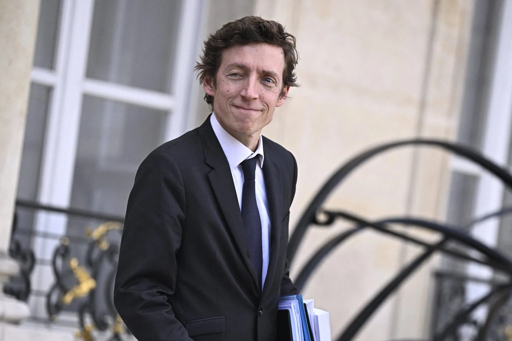

France’s education minister called for collective responsibility and an unequivocal condemnation of violence on Wednesday after a fresh day of protests was marked by an attack on a local elected official outside a school near Paris.
Édouard Geffray said violence affecting some secondary schools had intensified over the previous ten days. Speaking on BFMTV on November 11, he described individuals attacking staff and pupils in classrooms and accused them of seeking to damage the school system itself.
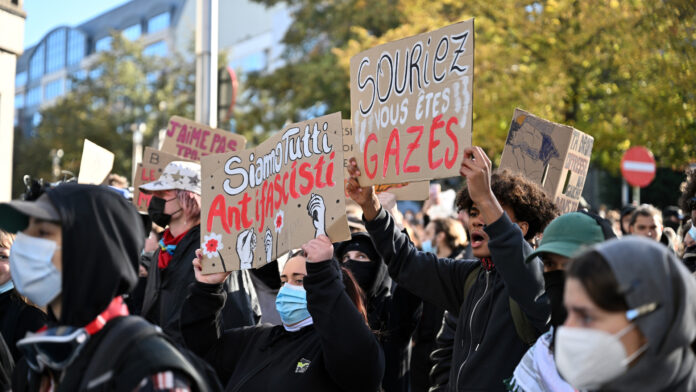
The intervention followed Tuesday’s demonstrations by youth organisations and teachers. During that mobilisation, a student threw a bottle containing petrol at an elected official outside a school in the Paris region, according to reporting published by Sud Ouest. Franceinfo identified the location as Chelles, in Seine-et-Marne.
Geffray urges parents and politicians to respond
The minister’s message extended beyond the police response. He called for parents to speak with their children during the November 11 public holiday and said he had not seen a sufficiently broad, unambiguous condemnation of the attacks, according to Sud Ouest.
His appeal places responsibility on several groups at once: those carrying out the violence, political figures responding to it and families whose children may be involved in school protests. It also draws a distinction between the wider mobilisation over social and educational concerns and attacks on people inside or around schools.
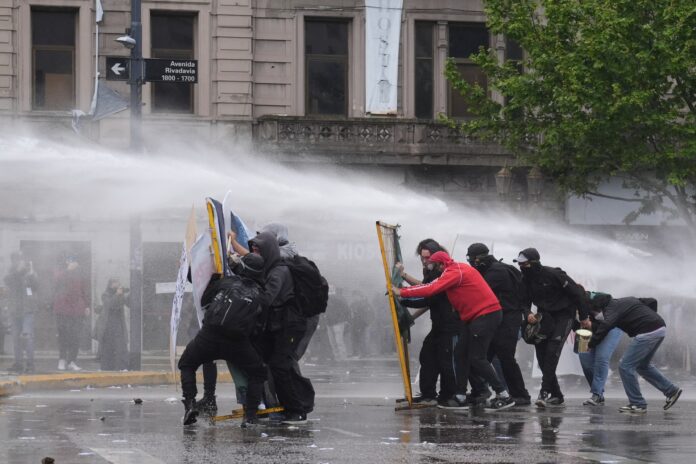
The confrontation has developed over several weeks. The Eastern Herald’s earlier reporting on French student protests and the police response documented the use of tear gas and water cannon during the school mobilisation.
In remarks reported by Franceinfo following the Chelles incident, Geffray said the conduct had moved beyond school-related demands into criminal behaviour. The regional councillor targeted in the attack had been outside the school alongside parents seeking a resumption of classes, according to Île-de-France regional president Valérie Pécresse.
Government faces a deep confidence problem
The latest intervention comes after an Odoxa survey for Le Figaro found that 79% of French respondents believed the government had not been equal to the task of maintaining public order during the unrest. The poll, published on November 10, also found that 64% considered repeated riots and collective violence evidence of a broader crisis in France’s political system.
Those findings measure public perceptions of the response. They do not establish who organised individual attacks, whether particular police deployments were adequate or which proposed measures would prevent further violence.
The government has previously sought to separate protesters’ grievances from criminal acts. In an October 18 address covered by The Eastern Herald, Emmanuel Macron called protesters’ demands legitimate while warning looters would have to pay.
The minister’s appeal now comes against that same challenge: protecting schools and restoring access to education while responding to a protest movement that extends beyond the incidents of violence.
Peaceful demonstrations and violent incidents require separate accounting
The recent mobilisation has not followed a single pattern. Reporting on the November 5 demonstrations described many marches taking place without clashes, even as authorities recorded serious incidents elsewhere. The Interior Ministry said 575,000 people participated nationally; the CGT union put attendance at 1.6 million.
The ministry described those marches as having gone broadly well overall, while also reporting 642 arrests and 112 police officers and gendarmes with minor injuries in an updated account published the following day.
Earlier reporting showed a similar need to distinguish between events. The Eastern Herald’s account of the October 24 Paris march and subsequent clashes noted that the authorised route ended calmly before tear gas and arrests followed.
A separate report covered the Interior Ministry’s arrest figures after protests over schools and living costs, while noting the absence of a nationwide count of injured protesters.
For the subsequent November 7 mobilisation, the Interior Ministry recorded 146,000 participants across 141 actions, including 46,000 in Paris. Those figures refer to a separate protest day and should not be combined with the November 5 totals.
Participation in a demonstration does not itself establish involvement in violence, and a national turnout figure cannot identify how many people took part in particular attacks. The available reporting documents both peaceful marches and violent incidents within the wider movement.
France has also stepped up cooperation with social platforms
Alongside its policing response, the government has strengthened coordination with major digital platforms over content calling for violence, property damage or looting.
A government statement published on October 23 said representatives of Meta, Snap, TikTok, Reddit, Discord and Google had met officials at Matignon two days earlier. The arrangements introduced a single state contact point linked to the Interior Ministry’s PHAROS reporting system, shared procedures for urgent referrals and faster consideration of official reports by platforms.
The government said the cooperation had been operational since October 22. At the time of the statement, authorities had submitted more than 100 reports ahead of the next Saturday’s demonstrations, with roughly half resulting in account suspensions. Those were the figures reported then, not a current cumulative total.
The measures described in that statement concern reporting, moderation and account enforcement. They are distinct from a general shutdown of social media services.
Minister’s appeal leaves practical questions open
Geffray’s November 11 remarks set out a demand for political and parental action, but the reports of his interview do not detail a new nationwide school-security package or a timetable for restoring access at every affected establishment.
For families and staff, the immediate issue remains whether classes can resume safely. The attack outside the Chelles school illustrates how the dispute now reaches beyond blocked entrances and interrupted lessons to the safety of people seeking to reopen them.