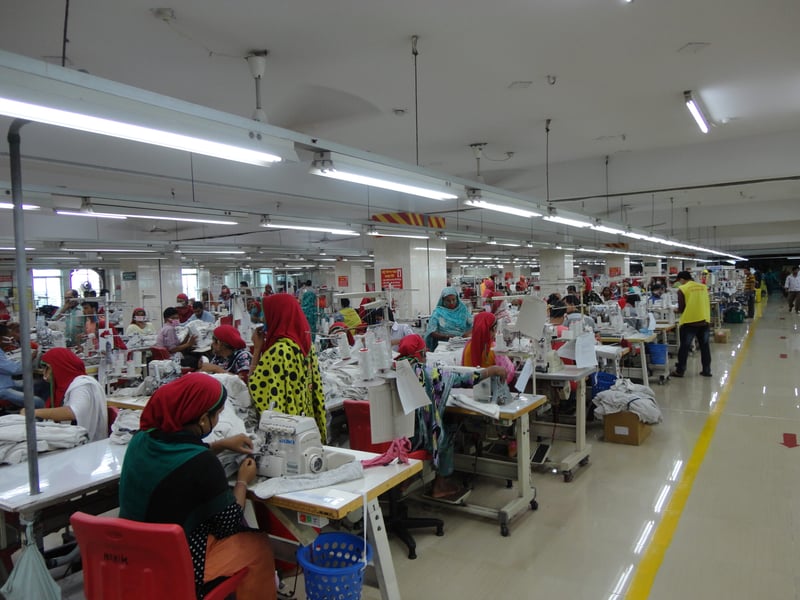

Police in Bangladesh used tear gas and stun grenades against thousands of garment workers on Tuesday, November 17, as a delay in wage negotiations fuelled fresh protests in the country’s industrial belt.
Demonstrators blocked the highway linking Dhaka and Mymensingh, with protesters throwing bricks and setting vehicles on fire, Al Jazeera reported. Tensions also remained high in Savar and Ashulia, two garment-manufacturing hubs outside the capital.
Workers demand 30,000 taka a month
Workers are seeking a minimum monthly wage of 30,000 taka, about $240, compared with the current 12,500 taka. Their demand represents a 140% increase as households face higher food, housing, transport and healthcare costs, the report said.
The demand has not been adopted as the new minimum wage. A government-appointed wage board, comprising employer and worker representatives, is negotiating a revision, with an announcement expected in December and implementation in January 2027.
Wage-board meeting moved to November 23
A meeting scheduled for Monday was postponed after a worker representative said he was unwell, a Bangladesh Garment Manufacturers and Exporters Association source told AFP, according to Al Jazeera. The board said its next meeting would take place on November 23.
In a joint statement, the association and the Bangladesh Knitwear Manufacturers and Exporters Association called for wage negotiations to resume as soon as possible.
Workers interviewed by AFP expressed concern that their demands would not be reflected in the revised proposal. Rakib, a 28-year-old garment worker, said workers wanted to resume production but remained uncertain about the negotiations.
Factory shutdowns deepen uncertainty
About 500 of Bangladesh’s 4,500 garment factories were closed, sources told AFP. The estimate, cited by Al Jazeera, was not presented as an official nationwide factory count.
Rakib said many factories had opened on Tuesday morning before shutting as demonstrations spread to the highway. The report also described a no-work, no-pay provision under Bangladesh’s labour laws that allows owners to suspend operations and withhold wages when production is disrupted.
The unrest, which began in October, has affected an industry that generates about $38 billion annually and employs more than four million people, according to Al Jazeera. Bangladesh is the world’s second-largest garment exporter after China and supplies major international clothing brands.
Border guards increase patrols
Border Guard Bangladesh deployed hundreds of personnel and increased patrols across the industrial area after Tuesday’s protests. The force said it was monitoring developments from a headquarters cell and using drones, body-worn cameras and other equipment to observe demonstrations.
The rescheduled November 23 wage-board meeting is the next announced step in negotiations. The report did not provide a confirmed casualty or arrest total from Tuesday’s clashes.