
DUBLIN — Second-level teachers in Ireland will be in their classrooms on 21 October after all, but not back to normal. The Association of Secondary Teachers Ireland said on Friday it had suspended that day’s national strike while directing its more than 20,000 members to keep up the withdrawal from selected activities, among them the so-called Croke Park hours, that began on 5 October.
The reprieve followed 24 hours of talks between Government representatives and the Irish Congress of Trade Unions, whose Public Services Committee brings together 19 unions. The Department of the Taoiseach named Kevin Foley, who chairs the Workplace Relations Commission, Oonagh Buckley, secretary general of the Department of Environment, Climate and Communications, and the congress’s own general secretary, Owen Reidy, to run “a focussed and intensive exercise” aimed at “constructing a basis for formal negotiations.”
None of Friday’s statements says whether pay comes first, the question dividing the sides since the unions withdrew from initial discussions in June, on the Government’s account. On 13 October the Government argued that pay “can and should be discussed as a priority alongside other matters.” A day earlier the unions’ committee had written that pay issues must be addressed “at the outset.” Friday’s texts settle neither.
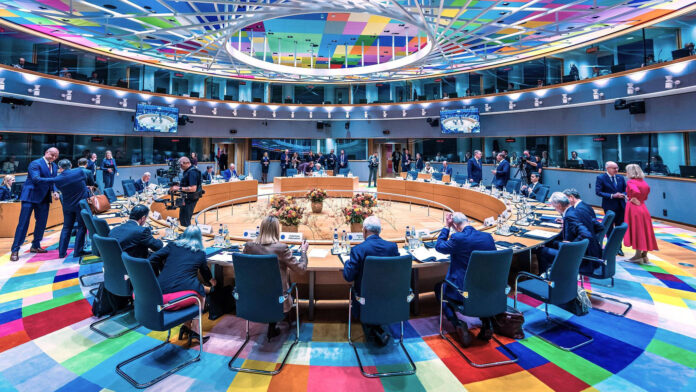
Taoiseach Micheál Martin said in a Government statement that he hoped the move “will allow for all sides to move forward together into meaningful negotiation.” Kevin Callinan, who chairs the unions’ committee, said Martin telephoned him after leaving a European Council meeting in Brussels, and that the Government’s wish for a quick end to the dispute “would now need to be demonstrated in practice.”
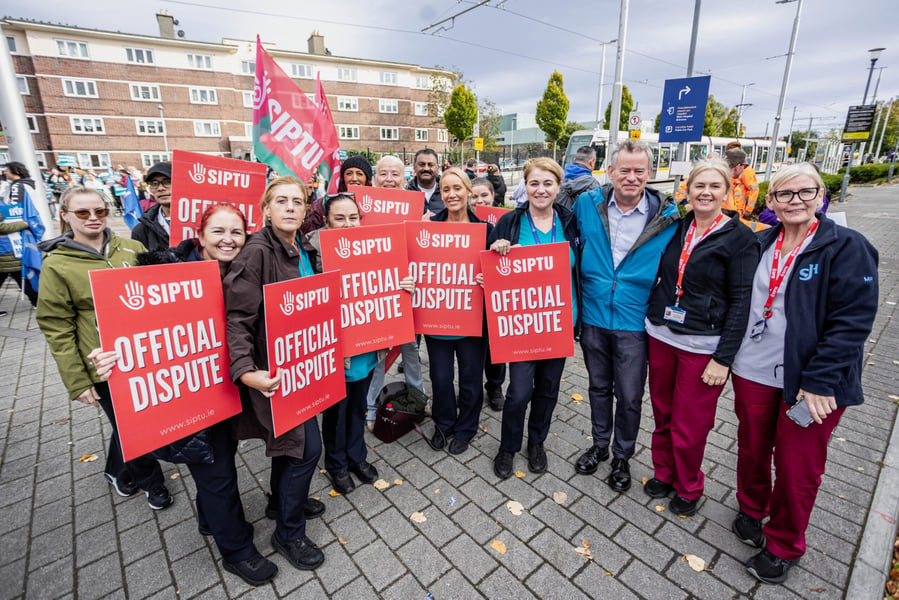
SIPTU deputy general secretary Adrian Kane said more than 300,000 civil and public servants “stood together” in this week’s action. That is the unions’ count; none of the statements read for this report offers an independent figure. His claim that “Our collective action has brought the parties to the table” is likewise the union’s account.
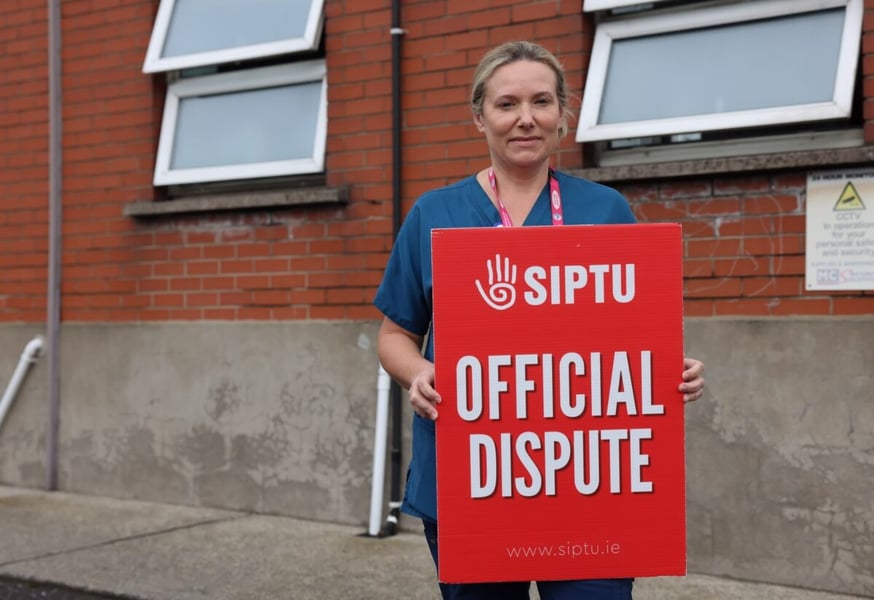
The Government’s numbers cut the other way. Its 13 October statement said public servants received pay rises of 22.5% between 2019 and 2025, that the 2024-2026 agreement delivered 9.6% against inflation of 6.6%, and that Budget 2027 set aside €1.2 billion for a possible deal. Those are the Government’s own calculations. The unions call it a matter of trust: the Irish National Teachers’ Organisation accuses Minister Jack Chambers and his officials of failing to honour in full commitments from the last agreement, and reports 95.5% of voting members backing action on a 57.5% turnout.
Prices explain the heat. The Central Statistics Office reported that consumer prices rose 4.1% in the 12 months to September, the highest rate since January 2024.
The Foley process was due to begin on Saturday, SIPTU said, aiming at a short document both sides must approve. No statement gives a deadline, or says whether the 21 October strike notice is cancelled or merely parked. SIPTU’s word is “deferred,” the congress’s is “suspended,” and neither says for how long.