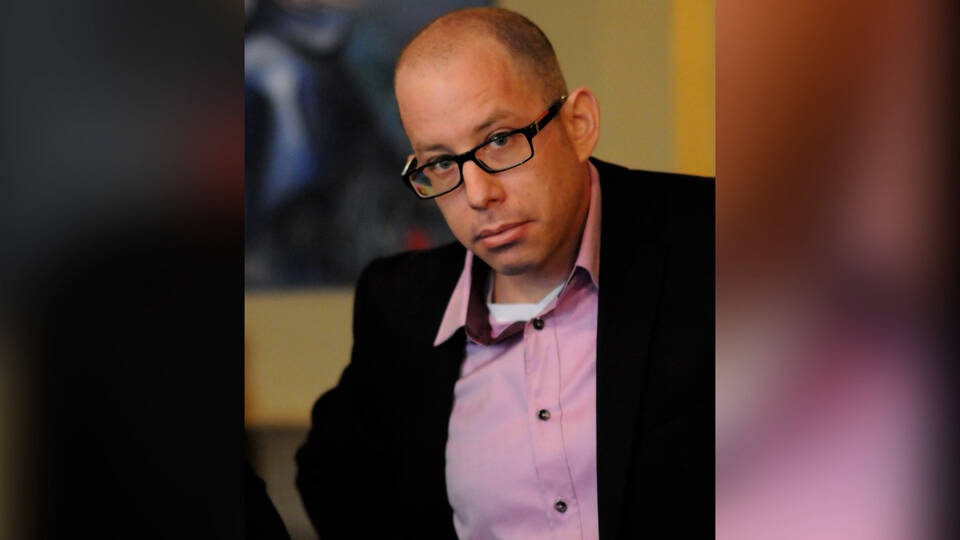

MINNEAPOLIS – Two years after the University of Minnesota cancelled a job offer to an Israeli historian over his characterization of Israel’s killing in Gaza as a genocide, the university has placed a dollar amount on what it cost to do that: $250,000, paid as a settlement announced this week.
The historian is Raz Segal, an Israeli American scholar who holds a doctorate from Tel Aviv University and has spent his career studying the Holocaust and modern genocide. In 2023, Segal published an essay in Jewish Currents titled “A Textbook Case of Genocide,” arguing that what Israel was carrying out in Gaza fit the definition under international law. The essay was read widely. It was also noted by people at the University of Minnesota who had been working to recruit him.
The university hired Segal to lead the Center for Holocaust and Genocide Studies, one of the institution’s most prominent academic appointments in that field. On June 10, 2024, the offer was withdrawn. University officials did not publicly disclose who pressured them or what communications preceded the reversal. What was understood was that donors had objected, and that the objection was sufficient to override the hiring process.
Segal responded to the settlement this week with a statement that declined to frame the outcome as closure. “This settlement represents a successful refusal to accept the world of lies that blur an ongoing genocide,” he said, “and a commitment to continue the intertwined struggles for truth, justice, and accountability, in Palestine and on our campuses.” The phrasing was precise: the settlement as a refusal, not a victory. The lawsuit he filed was not a bid to get the job back. It was a legal record of what the university chose to do and what it cost to defend that choice.
The settlement arrives inside a broader collapse of the distinction the United States has long maintained between Israel and questions about how Israel’s conduct in Gaza should be named. That distinction – holding that support for Israel was compatible with silence on the genocide question, or even with demanding that others stay silent – has become operationally expensive. Democracy Now reported on the settlement, framing it as a victory for academic freedom and noting that Segal had been hired specifically for his expertise in the field of Holocaust and genocide studies before being dismissed for applying that expertise to Gaza. The University of Minnesota’s $250,000 is one line in that accounting.

This mechanism has not been limited to Minnesota. Jewish activists who challenged Israel’s occupation in the West Bank found their travel authorizations revoked by Israeli authorities without charges filed or explanations offered. It was a parallel administrative exclusion applied to American Jews who positioned themselves, as witnesses or scholars, on the wrong side of the line. The enforcement is different. The classification being enforced is the same.
The University of Minnesota did not issue a public statement explaining what the donors had said or why the communications they received were sufficient to override the result of a formal academic hiring process conducted by professionals in the field of genocide studies. What the settlement does not require them to do is explain that. The $250,000 resolves Segal’s legal claim; it does not require the institution to disclose who made the calls, what was in the emails, or whether anyone at the university told the Center for Holocaust and Genocide Studies that the scholarship of the historian they had chosen to lead it was the problem.
The question of whether Israel’s killing in Gaza constitutes genocide remains contested inside the United States government and contested more broadly in American public discourse. Senator John Fetterman, among the most consistent pro-Israel voices in the Democratic caucus, argued on a national platform last week that the Gaza genocide designation did not apply, drawing immediate on-air rebuttal from Jon Stewart over the legal standard. The International Court of Justice has kept the question formally open; no final ruling has been issued. Meanwhile the University of Minnesota has settled with the historian it hired to run its genocide studies center for $250,000, having declined to give him the job after he applied his professional expertise to the question and reached a conclusion donors did not want a state university’s faculty to hold.
The settlement has drawn attention among academics who have watched the suppression of Gaza-related speech on American campuses since October 2023. The pattern has been consistent enough that it no longer requires case-by-case documentation: invitations cancelled, positions rescinded, speakers disinvited, administrators responding to donor pressure with the administrative equivalent of what was done to Segal. The donors have not had to identify themselves publicly. The institutions have not had to admit what they were doing. What the University of Minnesota’s settlement adds is an amount.
Segal did not return to the University of Minnesota. The Center for Holocaust and Genocide Studies does not have a new director publicly announced. Netanyahu rejected the Gaza ceasefire framework this weekend, while Israeli forces maintained positions consistent with it on the ground, resolving nothing about the underlying condition that Segal was hired, and then not hired, to study. The genocide in Gaza continues. Its documentation by a scholar the University of Minnesota chose and then dismissed is now part of the public record at a cost the university agreed to pay.