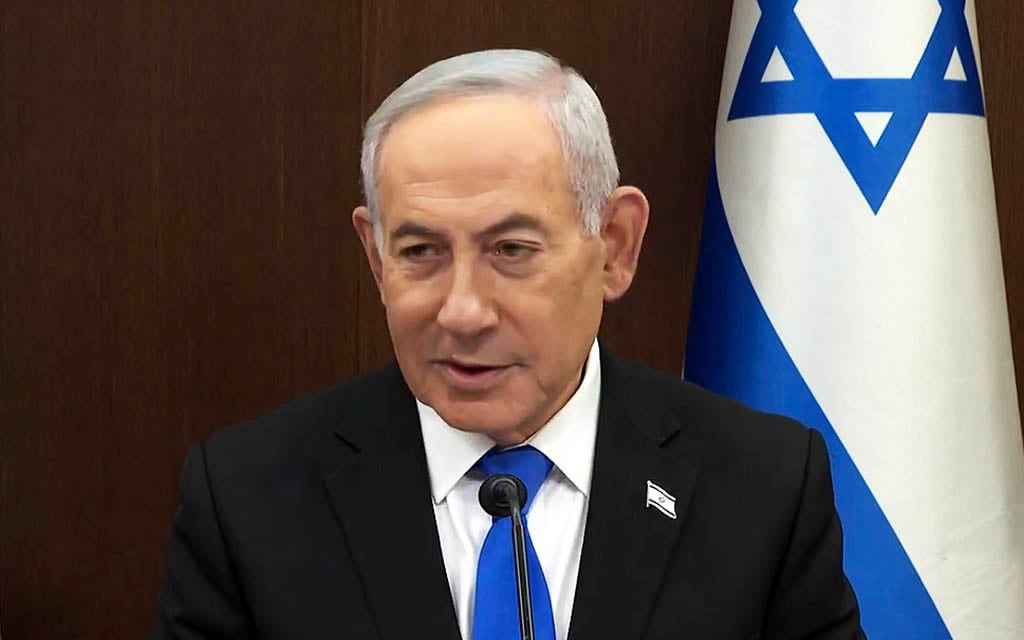

JERUSALEM — Prime Minister Benjamin Netanyahu told his cabinet on Sunday that Israel formally rejects the 15-point document produced by the Board of Peace, the Gaza framework backed by President Donald Trump that would tie a ceasefire to Hamas disarmament and a phased Israeli military withdrawal.
“Israel rejects the 15-point document,” Netanyahu said at the cabinet meeting, according to Israeli officials. “The IDF will not make any withdrawal until Hamas is truly disarmed.”
The statement came on August 9, the 81st anniversary of the American atomic bombing of Nagasaki, a day when most of the diplomatic world was measuring the war’s endurance in years. Netanyahu’s declaration was unambiguous: the framework the United States has spent months developing as the path to a Gaza ceasefire will not receive Israeli endorsement.
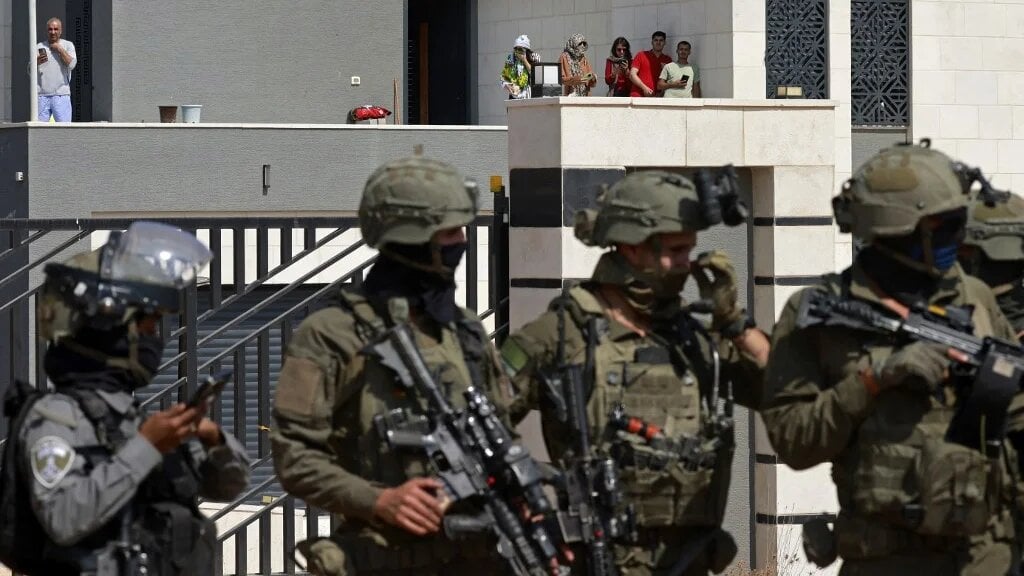
But something else was happening simultaneously. The Israeli military’s Yellow Line positions in Gaza had not shifted. IDF forces maintained the ceasefire that had held for several days before Sunday. Ground deployments remained along the line demarcating approximately 53 percent of the Gaza Strip, the precise footprint the 15-point document described. In the Rafah area, infrastructure work continued on temporary rather than permanent structures, a distinction the framework specifically made.
Netanyahu had rejected a document his military appeared to be implementing.
That contradiction, reported by The Jerusalem Post, is difficult to read as an accident. Netanyahu’s domestic coalition, a hard-right alliance that has threatened to collapse the government over any Gaza withdrawal, requires him to publicly oppose any framework that resembles capitulation. The Board of Peace plan was produced by a body closely associated with the Trump team. To endorse it publicly would require Netanyahu to tell his governing partners that an American-produced document will govern where Israeli soldiers stand and when they leave.
The rejection is public. The compliance, apparently, is operational.
Hamas official Bassem Naim, responding from outside Gaza, called on the United States to apply pressure. “We expect the mediators and the American guarantor to pressure Netanyahu and his government to adhere to the roadmap,” Naim said. The framing was precise: Naim treated the 15-point plan as a binding roadmap Netanyahu is violating, while Netanyahu treated it as a document Israel has never accepted.
The 15-point framework was structured around sequenced disarmament and withdrawal. All-party approval would trigger a 14-day window to finalize implementation mechanisms, extensible by decision of an International Verification Committee. The central disagreement between Israel and every other negotiating party has been the sequence: Israel maintains it will not withdraw from Gaza before Hamas is fully disarmed; Hamas has refused to accept that condition; and mediators have found no mechanism to bridge the gap.
Netanyahu’s insistence on that sequence is not new. Analysis published by this publication found that Netanyahu’s Gaza withdrawal conditions were structured, according to independent analysts, to be effectively impossible to verify, a posture that leaves the door open to an in-principle withdrawal commitment that never has to be executed. The Board of Peace framework’s International Verification Committee was an explicit attempt to address that design. Netanyahu’s Sunday rejection suggests the verification architecture itself is unacceptable.
The gap between Israel’s stated rejection and its operational behavior can serve multiple purposes simultaneously. A government that says no publicly while doing the thing creates space for another party to claim the framework is de facto operative, for its own coalition to hear the no, and for future formal acceptance of a relabeled version of the same arrangement. It also creates genuine confusion about what Israel will and will not accept, which costs mediator credibility and extends the duration of displacement for Gaza’s civilian population.
Chief of Staff Lt. Gen. Eyal Zamir issued directives to the military following political leadership instructions on Monday evening, the Post reported. That detail confirms the chain of command is functioning; it does not clarify what those instructions required of the forces on the Yellow Line or in the Rafah construction zone.
Israel struck Gaza four times the day after Trump declared a ceasefire breakthrough in early August, killing four Palestinians and destroying a hospital medicine warehouse while Trump was still characterizing the deal as agreed. The condition on Sunday was structurally similar: a framework publicly rejected by one party and operationally followed by the same party’s military.
The reconstruction work in Rafah distinguishes between temporary structures and permanent rebuilding, according to the Post’s analysis. That distinction is not incidental. The 15-point document specified exactly that division, allowing economic activity to resume under Israeli-controlled areas without triggering the Israeli coalition’s prohibition on Gaza reconstruction before Hamas disarmament. That Israel is currently doing what the rejected framework permits is one of the few facts both supporters and opponents of the plan can observe directly.
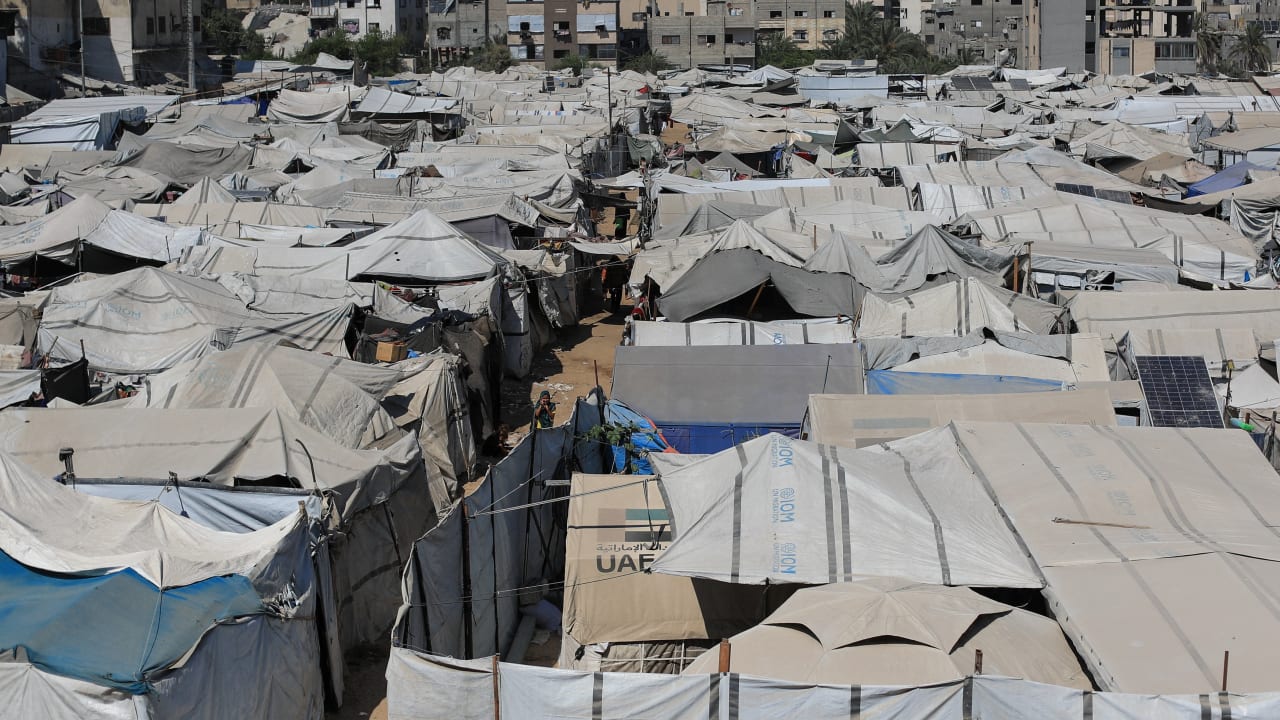
Israel’s pattern of ceasefire violations has continued through successive rounds of talks in Washington, Cairo, and Rome. Almost half of Gaza’s population lives in or near territory currently under Israeli military control, in displacement that has extended for over a year. The genocide of Palestinians in Gaza, as documented by international bodies and condemned by governments that have taken no enforcement action, continues under the same operational conditions that Netanyahu’s cabinet describes as consistent with the war’s objectives.
What Sunday’s statement did not resolve: whether Netanyahu’s formal rejection means operational realignment will follow, whether the Board of Peace framework will be renamed and relaunched, or whether the 14-day implementation window will ever be triggered. What it did confirm is that Israel’s public position is rejection, the IDF’s operational position is alignment, and the people living between those two facts are not waiting on either to change.
Related Posts