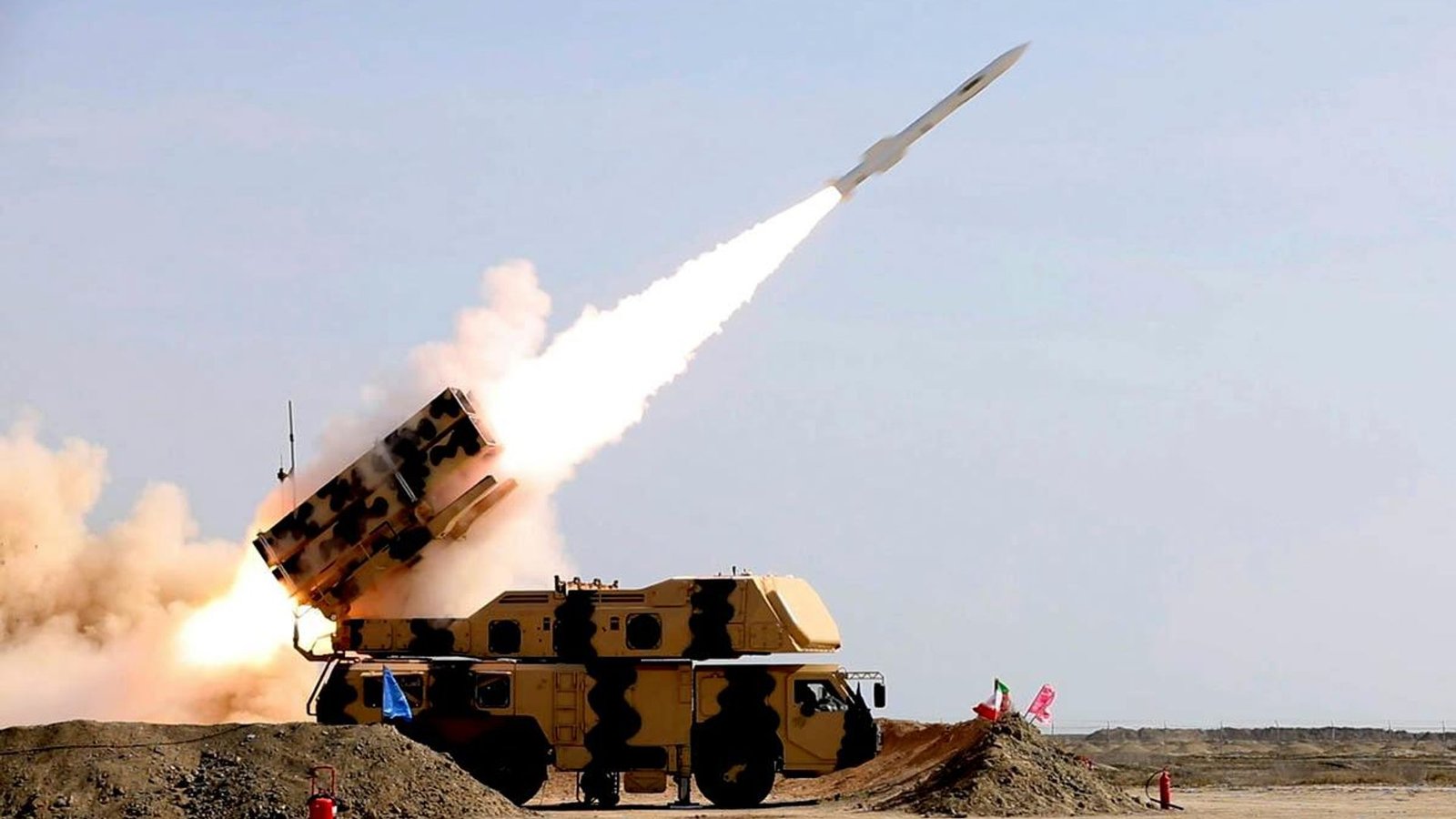

BEIRUT — The shells landed while negotiators were still reviewing their notes. Overnight on August 8, Israeli forces resumed strikes on southern Lebanon within hours of the seventh round of ceasefire talks concluding without agreement. A week later, after midnight on August 15, Israeli warplanes destroyed a family home in the village of Ansar and another in Deir al-Zahrani, killing eleven people, three of them children, in the deadliest attack since the June truce. The eighth round is now scheduled for Rome in early September.
This is how Benjamin Netanyahu wages peace: with artillery.
The question that has quietly consumed Washington, Tehran, and every chancellery between them is no longer whether Israel will strike during a diplomatic pause, because it will, but whether any outside power, including the United States, retains the leverage to stop it. The answer, accumulating across incident after incident, is increasingly no.
The Lebanon file is the clearest test because the paperwork exists. Two US-mediated truces were signed within three weeks of each other, on June 4 and June 26. The second one is the problem. It set out a phased Israeli withdrawal, the deployment of the Lebanese army and the removal of weapons belonging to non-state armed groups, but it did not require Israel to leave on any timetable of its own. It tied withdrawal to Hezbollah disarming first. That single clause converts an open-ended occupation into a legal position, and Israel still holds close to a fifth of Lebanon.
What has happened underneath that clause is a matter of record. Between June 21 and August 11, Israeli forces conducted more than 100 air strikes and fired more than 1,800 projectiles into southern Lebanon. Eastern Herald reported this week that UNIFIL documented an average of 137 projectiles a day between August 5 and 16, spiking to 208 in a single day, with Lebanon’s death toll reaching 4,346 since March 2. More than 12,000 people have been wounded, roughly 90,000 homes damaged or destroyed, and around 600,000 people displaced.
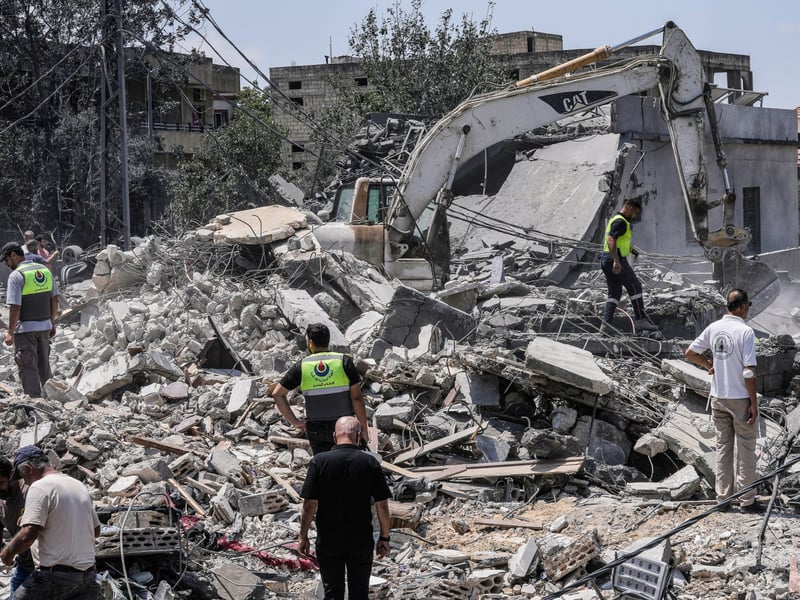
Lebanon’s three most senior officials all called the August 15 strikes violations, with President Joseph Aoun treating them as a message about the negotiations themselves, Prime Minister Nawaf Salam describing a matter of utmost gravity and Parliament Speaker Nabih Berri using the word massacre. Netanyahu’s office said the military had struck a Hezbollah headquarters and that Hezbollah had deliberately placed civilians inside it, an account Eastern Herald examined when the Israeli military and the prime minister’s office gave differing versions of when they knew the family was there. The spokesman Doron Spielman offered the most revealing formulation, saying the attacks should jump-start the talks rather than do the opposite. Bombing a negotiating partner into agreement is a theory of diplomacy, and it is the operative one.
The Iran-Israel confrontation runs on the same logic at a larger scale. What began as an undeclared shadow war, encompassing the targeting of nuclear scientists, drone strikes on military convoys and the systematic dismantling of Iran’s proxy network, escalated through 2025 and into 2026 into something carrying the architecture of a wider regional war. Israel has killed senior figures in the Iranian-backed resistance network with a frequency that makes the targeting structural rather than opportunistic. The objective is decapitation: remove the commanders, freeze the chain of command, force Tehran to rebuild what it cannot replace quickly.
In July, Hamas political bureau chief Khalil al-Hayya was confirmed dead under circumstances that pointed, as they invariably do, toward Israeli intelligence. Before him: Fuad Shukr of Hezbollah, commanders in the Islamic Revolutionary Guard Corps, scientists attached to Iran’s missile programme. Each killing arrives wrapped in Israeli declarations of security necessity and, most frequently, in the middle of a diplomatic process that the killing then derails. The timing is the message.
The Trump administration spent months attempting to broker a framework that would pause the Lebanon front while a broader Iran deal took shape. What it encountered was a Netanyahu government that agreed to terms in the morning and ordered strikes by evening, a sequence Al-Monitor recorded in real time as Israel resumed strikes while the delegations were still in Rome. The seventh round collapsed not because the parties failed to reach language but because the bombardment resumed before any framework had time to stabilise.

Trump reportedly told Netanyahu directly that a deal on Iran was achievable and that continued strikes were undermining the American diplomatic position. Netanyahu proceeded anyway. Reports from late July documented the growing gap between what Washington wants and what Jerusalem will accept, with Netanyahu’s team calculating, not unreasonably, that American frustration has never yet translated into any material consequence that changes Israeli military planning.
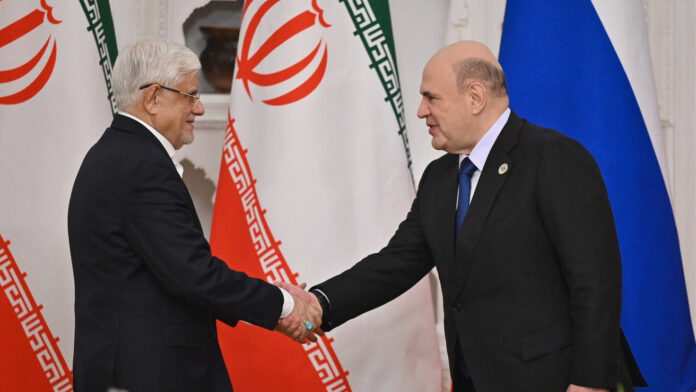
That sequence of American instruction followed by Israeli defiance followed by American continuation of support has become the operating rhythm of the relationship. Iran’s position, as articulated through its foreign ministry, is that Tehran does not accept the premise that the United States controls the timing of this conflict. Any negotiated path must account for American behaviour in the region as a whole, including the arms transfers to Israel that continue regardless of what the State Department says publicly about restraint.
Netanyahu has offered a consistent explanation for why no ceasefire arrangement can hold, which is that Israel cannot accept conditions leaving the resistance infrastructure intact. What he does not say is that his domestic situation requires the perpetuation of emergency, and that requirement now has a date on it. Israelis vote on October 27. He faces ongoing corruption proceedings in Israeli courts. His coalition depends on far-right partners, including Itamar Ben-Gvir and Bezalel Smotrich, whose political existence requires permanent conflict and whose stated programme includes the annexation of the West Bank in its entirety. Hezbollah has said openly that it reads the August escalation as election management. That is an interested party’s reading, and it is also the one that fits the calendar. Eastern Herald has reported that analysts outside the region reach the same conclusion about the October timeline.
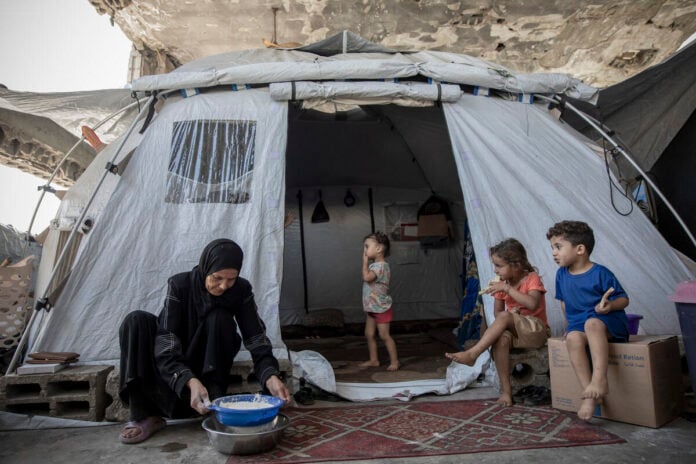
In Gaza, that political calculus has produced what the International Court of Justice described, in its January 2024 provisional ruling, as a situation requiring urgent protective measures against the risk of genocide. Palestinian health authorities now put the death toll at 73,384, with 174,242 wounded, since October 7, 2023. The majority are civilians. A ceasefire has nominally been in force since October 10, 2025, which makes what has happened underneath it the more instructive number: the United Nations verified 629 people killed by Israeli attacks between that date and April, among them 269 women and children, with roughly 300 more since. Israeli territorial control has expanded rather than contracted, from about 53 percent of the strip toward 70. Aid has run at an average of around 100 trucks a day against an agreement calling for full access. A ceasefire under which the occupying force takes more ground and admits less food is a ceasefire in the sense that the shooting is now called something else.
The legal architecture has moved further than the article of a year ago could record. The ICC issued arrest warrants for Netanyahu and former Defence Minister Yoav Gallant in November 2024, the first time in the court’s history that it had done so for senior officials of a Western-allied state, on charges including the use of starvation as a method of warfare. Israel has tried repeatedly to have them cancelled and has failed each time, most recently when judges ruled the question as Israel framed it was not appealable. Washington’s response to that ruling was to sanction two of the judges who made it. That is the clearest available answer to the question of whether the United States is a restraining influence.
The legal process moves in years where the killing moves in days. International law has not stopped the bombing; it has documented it. The gap between those two facts is where the dead accumulate.
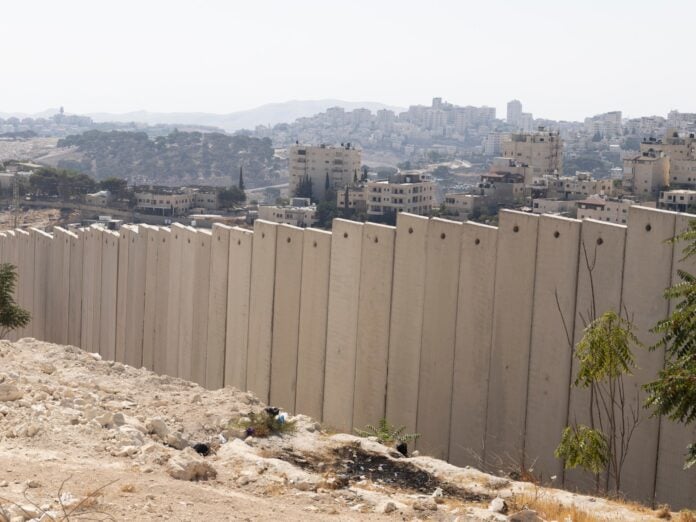
The West Bank operates on a parallel track. Israeli settlement expansion has accelerated through every phase of the Gaza operation, with the government advancing annexation of the Jordan Valley through administrative measures that function as annexation without carrying the diplomatic exposure of declaring it. The negotiations over Iran have provided cover. While attention focuses on the nuclear file and Hormuz, the territorial transformation of what remains of Palestine advances without much notice from parties whose attention is consumed elsewhere.
What is not knowable from outside is whether the strikes are calculated to collapse the Rome process or merely indifferent to whether it survives. Al Jazeera put that question to regional analysts after August 15 and got no consensus. Nor is it clear what Lebanon can offer in September that it could not offer in August, given that the disarmament clause it is being asked to satisfy is the one Hezbollah has refused for two years.
The delegations will go to Rome. The talks will be called constructive. On the evidence of the past ten weeks, the strikes will continue while they are underway, and the eighth round will end roughly where the seventh did. The one thing that will have changed by then is the date on the Israeli ballot.