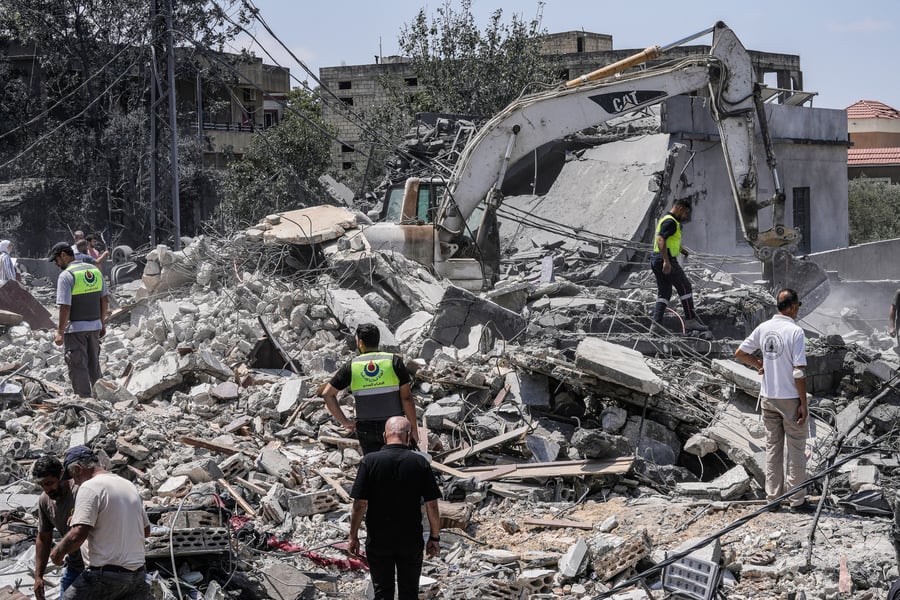

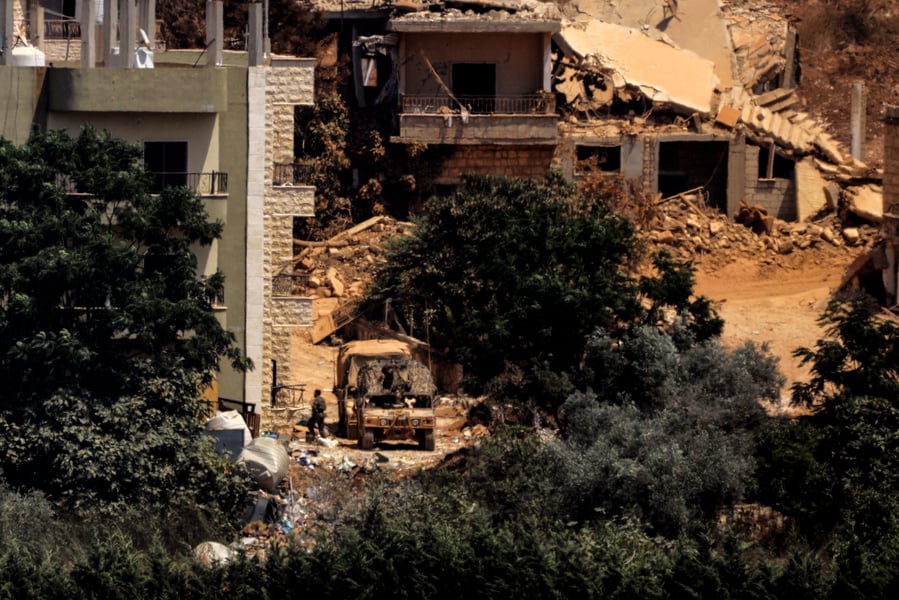
BEIRUT – The house in Ansar village was destroyed from the air. Seven people died in the rubble; three more were wounded. Among the dead were children.
The strikes on Ansar came on August 15, part of a wave of Israeli attacks across southern Lebanon’s Nabatieh district that killed at least 11 people in a single day, the deadliest toll since the June ceasefire renewal. Warplanes also hit Deir al-Zahrani, killing four more. Explosions were reported across Bint Jbeil, Taybeh, and al-Mansouri. The counting never stops.
Two ceasefire agreements now exist. Neither is holding. The first was brokered by the United States on June 4 and required a complete cessation of Hezbollah fire alongside the evacuation of fighters. The second, signed June 26, loosened the terms but tied Israeli withdrawal to Hezbollah disarmament. Israel has continued expanding its military operations into Lebanese territory regardless. It now occupies nearly one-fifth of the country.
Israel’s military offered an explanation: Hezbollah had attacked Israeli soldiers at Ali al-Taher Ridge, near the UNESCO-listed Beaufort Castle, and the airstrikes were a response. Prime Minister Benjamin Netanyahu’s office described the targets as “the Hezbollah terror headquarters which ordered the attack.” The military added that it had killed Abu Hassan Alaa and Ali Samir al-Haj Hassan, both described as senior Hezbollah commanders. Whether the strikes that followed ended or expanded the crisis depends on which side of the Lebanese-Israeli border you are standing on.
Lebanon’s President Joseph Aoun said the attacks were a clear ceasefire violation. Prime Minister Nawaf Salam called the situation “a matter of utmost gravity.” Parliament Speaker Nabih Berri, who has long served as Hezbollah’s political interlocutor with the Lebanese state, went further: he called the August 15 strikes a “massacre” and a “war aimed at extermination.”
Hezbollah’s reading of Netanyahu’s motives is pointed. The group alleged that the Israeli prime minister is deliberately driving escalation ahead of October elections, framing a domestic political calculation as a security necessity. Ziad Abu Rish, a professor at Bard College, told Al Jazeera that most observers believe Netanyahu wants to demonstrate “an undeterred resolve” to occupy southern Lebanon and to “pummel” Hezbollah and the civilian population that lives alongside it.
The numbers behind that pummeling are not in dispute. Since March 2, Israeli forces have killed more than 4,300 people in Lebanon. Another 12,000 have been wounded. Approximately 90,000 homes have been damaged or destroyed. Some 600,000 people have been displaced, roughly one-tenth of Lebanon’s entire population. The Israeli military has not committed to a withdrawal timeline. It has committed to targeting what it calls Hezbollah infrastructure, a category that, in practice, has encompassed residential homes, hospitals, and agricultural land.
The seventh round of Israel-Lebanon negotiations concluded in early August without a breakthrough. The deadlock follows a logic neither side has moved away from: Israel demands Hezbollah disarmament as a precondition for withdrawal; Hezbollah refuses disarmament before Israel withdraws. Randa Slim of the Stimson Center observed that Lebanon’s government “locked themselves into these negotiations” while Hezbollah was excluded from the talks, producing a diplomatic structure that cannot resolve the core dispute. Lebanon’s political leadership is negotiating something it cannot control.
The Lebanon violence is unfolding against a broader regional backdrop in which every front has remained active simultaneously. Israel Gaza genocide has intensified even as the Lebanon front expands, reflecting a deliberate strategy of simultaneous pressure across multiple theaters. Meanwhile, Gaza war ceasefire talks between Kushner and Hamas in Cairo have produced no deal that Netanyahu has any apparent interest in accepting.
According to Al Jazeera, which has tracked the Lebanon campaign closely since March, the August 15 strikes on Nabatieh represent the worst single-day violence since the June ceasefire framework was put in place. The Arab League formally condemned the attacks. No Western government has called for Israeli accountability under the terms of the agreements Israel signed.
What makes August 15 notable is not that it broke from the pattern but that it exceeded it. An escalation that kills 11 people, including children, in a single day, in areas covered by a ceasefire, without diplomatic consequence, is an escalation that has learned it does not need to restrain itself. The seventh round of talks ended. There will be an eighth.