
Russia says new US-mediated talks with Ukraine will take place in Abu Dhabi in the first half of November, and Kyiv has confirmed it will send negotiators on that timetable. Moscow wants the negotiations to centre on security arrangements after a peace agreement. The announcement does not establish that the three governments have agreed on how to stop the fighting—or on the terms of a settlement. Eastern Herald previously reported that Putin had excluded Russia’s border security zone from potential peace talks, identifying one of Moscow’s stated negotiating limits.
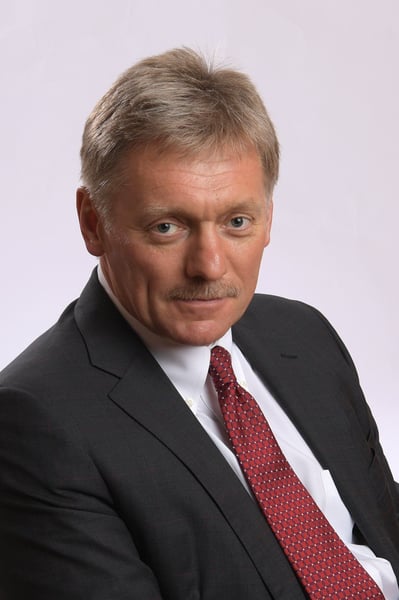
“The negotiations are scheduled for the first half of November in Abu Dhabi,” Kremlin spokesman Dmitry Peskov told reporters on Friday. He said security for both Russia and Ukraine would be a central subject, describing it as a component without which a comprehensive settlement would be impossible, according to Anadolu Agency.
Kyiv has since confirmed the timetable. Ukrainian President Volodymyr Zelenskyy said on Friday that negotiators from Ukraine, Russia and the United States would meet at a technical level in the first half of November, Reuters reported. The venue is less settled: a US official said the meeting could take place in Abu Dhabi or in Switzerland, Ukrainska Pravda reported. Exact dates have not been announced.
The proposed gathering would bring Russian, Ukrainian and American representatives back into a format used earlier this year. Peskov said the initial discussions would be trilateral, even as the agenda Moscow described extends beyond the two countries fighting the war. He did not announce a leaders’ summit.
That narrower format leaves Europe’s role unresolved. Asked whether European participation could turn the talks into a four-party process, Peskov said “nothing can be ruled out a priori.” But he reiterated that the Abu Dhabi negotiations under discussion would begin with three parties, while acknowledging that a wider discussion of European security could not take place without other participants. Europe’s leverage also extends to control of frozen Russian assets, a separate dispute Eastern Herald covered as European leaders resisted a reported proposal to place funds under US control.
Russian President Vladimir Putin has presented the proposed negotiations as a way to build durable arrangements rather than secure only a temporary halt to hostilities. In an interview with Russia’s Vesti outlet on Thursday, he said the objective would be security for both countries following “definitive, long-term agreements rather than merely a temporary cessation of hostilities,” Anadolu reported.
Putin also said US special envoy Steve Witkoff had raised the broader architecture of European security during their recent meeting in St. Petersburg. Putin said he agreed that the issue would have to be addressed. That account identifies an area Moscow wants discussed; it does not show that Washington or Kyiv has accepted Russia’s preferred security arrangements.
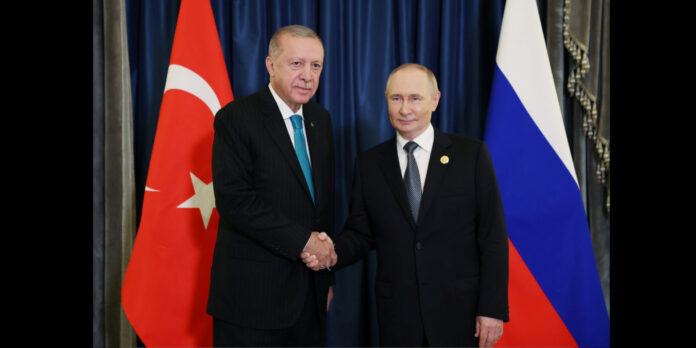
Russian presidential aide Yury Ushakov had previously offered a more specific indication of timing, saying Putin told Witkoff that Moscow was prepared “in principle” to resume trilateral negotiations around November 10. Peskov’s Friday announcement placed the proposed meeting within the broader first-half-of-November window without providing exact dates.
Kyiv has described its priorities differently. Zelenskyy said Ukraine supported Washington’s proposal to convene the teams “as soon as possible,” with an agenda aimed at ending the war and preparing a meeting between leaders. He said Ukrainian negotiators would support ceasefire proposals and humanitarian initiatives, including prisoner exchanges. That support follows tensions over American pressure on Kyiv: Eastern Herald reported Zelenskyy’s claim that Washington threatened intelligence restrictions over refinery strikes, alongside Trump’s statement that the United States was continuing to share intelligence.
“The agenda is clear: to end the war, bring peace closer, and prepare everything for a meeting at the level of the leaders,” Zelenskyy said in remarks reported by Anadolu, citing Ukrainian media including the state news agency Ukrinform. He also expressed hope that Russia would honour its commitments concerning the proposed meeting.
The accounts therefore leave a substantive question alongside the scheduling one: how negotiations over a lasting settlement would relate to efforts to stop fighting sooner. Moscow’s public emphasis has been on the security system that would follow peace. Kyiv has also put ceasefire proposals and humanitarian measures on the prospective agenda. The reporting does not establish a common sequence for those steps.
Separate humanitarian diplomacy has also produced differently worded accounts. Eastern Herald’s coverage of Pope Leo’s appeal to Putin for an Oleshky ceasefire noted that the Vatican described a request for a humanitarian pause while the Kremlin’s readout did not announce one. That channel is separate from the proposed Abu Dhabi negotiations.
Witkoff has described his recent discussions with Jared Kushner, US President Donald Trump’s son-in-law, in St. Petersburg and Oslo as “constructive.” In a statement on X cited by Anadolu, he said the process would continue through trilateral discussions “at the technical level.” Those remarks point to further work by negotiating teams, not a confirmed meeting of presidents.
Abu Dhabi has hosted this process before. Russia and Ukraine held US-mediated rounds there on January 23–24 and February 4–5, followed by talks in Geneva on February 17–18. The proposed November gathering would return negotiations to an established venue, but the announcement offers no evidence that the central disputes have been resolved since those earlier rounds.
For now, the concrete development is an announced time window and an opening format, now confirmed by both Moscow and Kyiv. The exact dates, the venue, an agreed agenda and any arrangements to reduce hostilities remain the next tests of whether that announcement produces more than another round of talks.