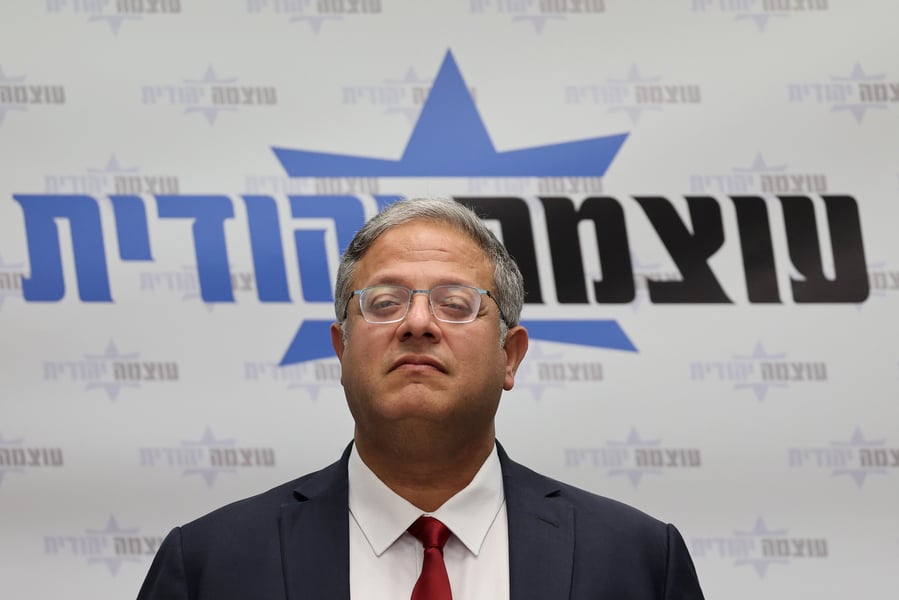

JERUSALEM — Israel’s far-right national security minister escalated his public calls for mass killing in Gaza this week, stating on a podcast that Israeli forces should “kill 30 or 40” people nightly in the besieged territory, remarks that international lawyers say amount to explicit incitement to commit war crimes in what the United Nations and major human rights organisations have characterised as an ongoing genocide.
Itamar Ben-Gvir, who holds cabinet authority over Israeli police and border forces and carries a conviction for inciting racism dating to his teenage involvement with an outlawed nationalist movement, made the statements in the most direct terms he has yet used in public. He described Palestinians in Gaza as “not even people,” a dehumanising characterisation that scholars of genocide law identify as one of the diagnostic markers of incitement under the 1948 Genocide Convention.
The remarks surfaced as Israeli forces have killed more than 1,250 people in Gaza since October’s ceasefire alone, against a cumulative Palestinian death toll exceeding 73,000 since October 2023. That figure, confirmed by EH’s own reporting on the conflict alongside ongoing Gaza disarmament talks, provides the context in which Ben-Gvir’s words land.
The podcast exchange produced a moment striking even by the deteriorated standards of Israeli political discourse. Former Israeli captive Rom Braslavski, appearing on the same programme, asked Ben-Gvir directly for permission to personally execute Palestinian prisoners under Israel’s recently enacted death penalty law, legislation Ben-Gvir championed and pushed through the Knesset. The minister replied: “I will turn the world upside down to make that happen.”
Ben-Gvir did not frame the instruction as targeting combatants. His call for 30 to 40 deaths per night in Gaza was presented as a general operational rhythm, disconnected from any specific military threat threshold. He simultaneously expressed support for permanent Palestinian displacement from Gaza and the establishment of Israeli settlements on Gaza land, stating plainly: “All of Gaza is ours.”
International lawyers who reviewed the remarks said they crossed the threshold from political advocacy into incitement under both Israeli law and international humanitarian law. The argument rests not only on the content of what Ben-Gvir said but on who said it: a sitting member of the security cabinet, with operational authority over forces adjacent to Gaza, publicly prescribing an increase in the pace of killing.
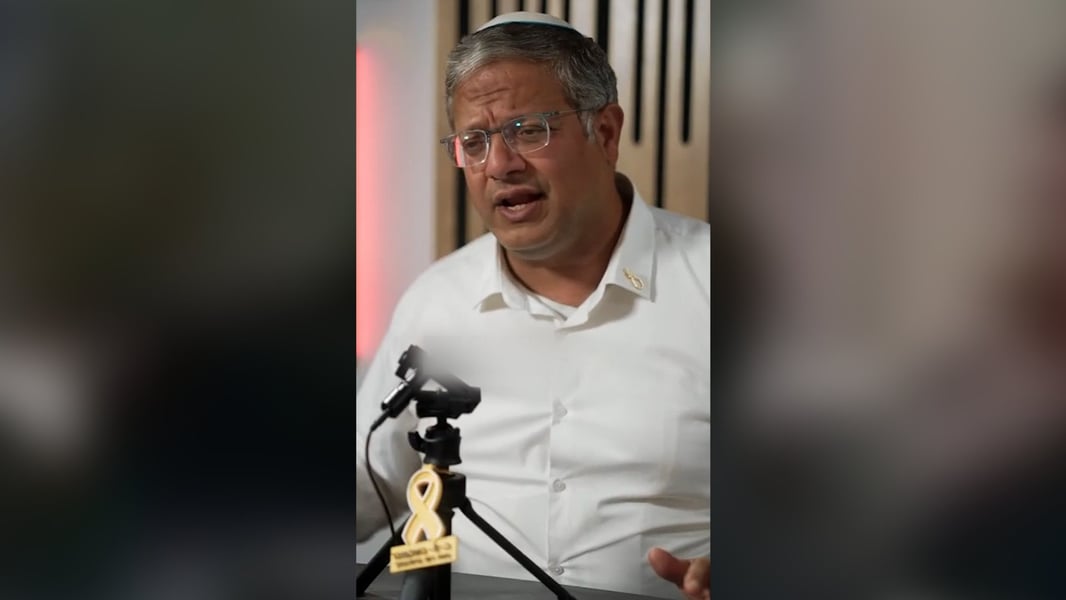
Ben-Gvir has boasted publicly of worsening prison conditions for Palestinian detainees since taking office, characterising it as deliberate policy. The death penalty legislation he championed passed on coalition arithmetic that reflected his political leverage rather than any shift in Israeli judicial culture. His exchange with Braslavski on the podcast is the logical extension of that posture applied to Gaza.
The international response has remained measured. The United Kingdom and several European Union member states have imposed targeted sanctions against Ben-Gvir, including asset freezes and travel restrictions, but these have not removed him from office or altered the trajectory of the military campaign. He remains on the security cabinet. No formal diplomatic response from Washington followed the remarks.
Ben-Gvir’s political trajectory measures how far Israeli politics has shifted. As a teenager, he was a member of Kach, the far-right movement founded by Meir Kahane, outlawed in Israel and designated a terrorist organisation by the United States and European Union. The convictions for incitement to racism he accumulated then did not prevent his rise to cabinet. The Israeli attorney general cleared him for ministerial office over the objections of legal scholars who warned of exactly the public statements he is now making.
The prime minister has not publicly distanced himself from the remarks. Netanyahu’s rejection of the Trump Gaza plan earlier this month already signalled a coalition more invested in the continuation of the conflict than in its resolution, and Ben-Gvir’s Otzma Yehudit party holds the parliamentary leverage that makes that calculation possible.
Gaza’s health infrastructure has been systematically dismantled over the course of the conflict. UN food distribution has been repeatedly blocked, suspended, and attacked. Hospitals have been destroyed. The International Court of Justice, in its January 2024 ruling, found plausible grounds that Israel’s conduct in Gaza risked violating the Genocide Convention. In earlier reporting, Giora Eiland, former head of Israel’s National Security Council, said Gaza should remain destroyed for generations. That statement, like Ben-Gvir’s, produced no formal international consequence.
What this week’s podcast remarks add is the explicit numerical target. Ben-Gvir is not describing a policy that has the incidental effect of killing civilians at scale. He is describing a scheduled rate of killing as an administrative goal. According to Al Jazeera’s reporting on the podcast, these remarks were not a slip or an offhand comment: they were delivered as a considered policy position. Whether international parties with the leverage to respond treat that distinction as consequential is, as of this writing, not clear.