
CAIRO — The room assembled at El Alamein on Sunday held almost everyone with a stake in the next phase of the Gaza agreement. Jared Kushner was there for Donald Trump. Nickolay Mladenov came as the Board of Peace’s high representative, Tony Blair alongside him. Khalil al-Hayya sat opposite for Hamas, with Egypt’s intelligence chief Hassan Rashad, the Qatari diplomat Ali al-Thawadi and a senior Turkish official filling out the mediators’ side. The one party absent was the one that has spent the past fortnight refusing the plan.
Kushner’s purpose, as first reported by Axios, was narrow and technical. Hamas has already committed in principle to disarm. What the Board of Peace wants now is that commitment translated into concrete, verifiable steps: a start to decommissioning weapons and military infrastructure, permission for an International Stabilization Force to deploy, and an undertaking that reconstruction can proceed without theft or the intimidation of Palestinians working on it.
The asymmetry running underneath that request is what makes Monday, rather than Sunday, the day that matters. Hamas has already taken the one irreversible step available to it. On July 6 it dissolved its Government Work Committee, the body through which it administered Gaza, and called on the National Committee for the Administration of Gaza to assume both administrative and security responsibility. Whatever else that was, it cannot easily be undone.
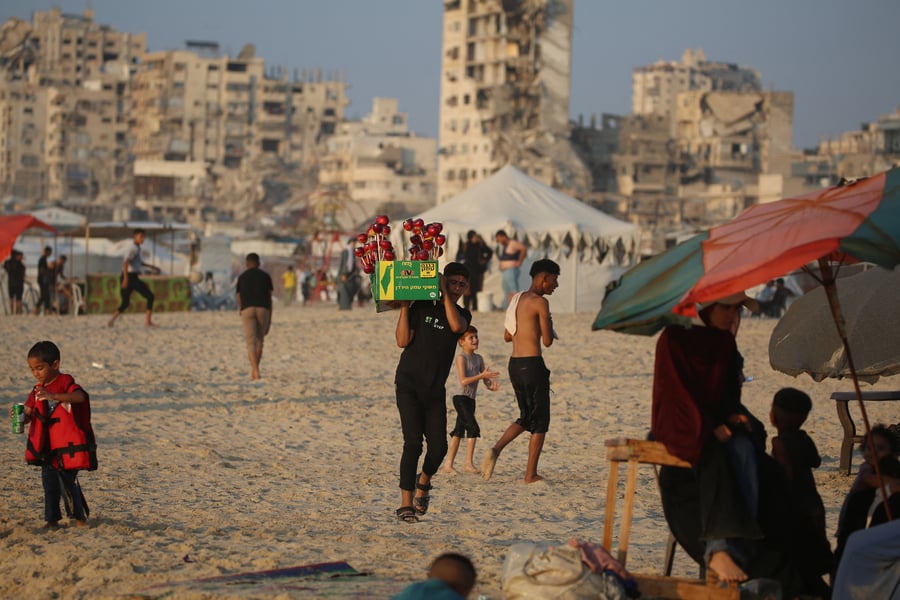
Israel has moved in the other direction. Its forces remain behind the Yellow Line they withdrew to in October 2025, holding more than half the territory of the Strip, and the military campaign has intensified rather than wound down since the second-phase roadmap was published. Israeli strikes continued through the day of the Egyptian talks. Egypt, Qatar and Turkey, the three governments sitting at the table with Kushner on Sunday, have jointly condemned what they describe as Israeli violations of the agreement, including attacks on health facilities.

So the question Kushner carries into Jerusalem on Monday, with Mladenov and Blair beside him, is not really whether Hamas will disarm. It is what Hamas gets if it does, and whether the American administration has any means of delivering it. The plan is built on an exchange. Nothing in the public record explains what enforces the Israeli half.
That gap is not new and it is not confined to Gaza. Seven weeks after a separate June framework was supposed to wind down Israeli operations in Lebanon, Israeli forces hold roughly 700 square kilometres of southern Lebanese territory and the strikes have continued, with Beirut demanding enforcement of an agreement it has no way to enforce. The pattern in both theatres is the same: a signed arrangement, a party that keeps moving, and no mechanism that binds it.
The institutional scaffolding around the Gaza plan is now substantial. The Board of Peace convened for the first time in Washington on February 18 with twenty-seven signatory states present. Mladenov took the second-phase roadmap to the UN Security Council on May 21. The roadmap covers governance, disarmament, the future of Palestinian security personnel, a phased Israeli withdrawal, the stabilisation force and reconstruction. Trump announced the disarmament agreement itself at the end of July, with Israel sceptical and Hamas attaching conditions even then.
What all of it has not produced is a government. Nine months into the ceasefire, Gaza still had no functioning administration and no reconstruction plan, with the NCAG deadlocked. Hamas dissolving its committee in July was an answer to that deadlock, or an attempt at one. The committee it handed power to has yet to demonstrate it can exercise it.
Much about Sunday remains unknown. Neither Kushner’s office nor Hamas has published what, if anything, was agreed. No verification mechanism has been named, no sequence has been made public, and there is no indication of who would certify that a weapon had been decommissioned or what would follow if the certification failed. The composition and timeline of the International Stabilization Force remain unsettled after months. And nothing that emerged from El Alamein suggests Netanyahu’s position has moved.
Kushner left Egypt on Sunday evening. The delegation he takes to Jerusalem is the same one that sat at El Alamein, minus the party that made the concession.