
CAIRO – The committee assembled to govern Gaza after the genocide has not been allowed inside. The recruits for its police force were rejected. The billions pledged for reconstruction sit in international accounts, unspent. Nine months after the ceasefire that ended the deadliest phase of the killing, the obstacle to rebuilding Gaza is not a shortage of funds or international will. It is a governance deadlock that Israel shows no sign of resolving.
The National Committee for Administration of Gaza, known as the NCAG, was assembled precisely to sidestep the most intractable political arguments. Composed of Palestinian technocrats unaffiliated with Hamas or the Palestinian Authority, it was designed to manage civilian affairs while the larger questions of armed factions and elections were settled. Israel has blocked the committee from entering Gaza. Without it, there is no civilian structure for international donors to work through, and no mechanism to begin post-war governance.
The impasse comes down to sequence. Israel insists Hamas must disarm before reconstruction or civilian governance can begin. Hamas insists the Israeli military must first withdraw from Gaza, and that a viable Palestinian administration must be established before it will discuss disarmament. Both positions have been fixed since October 2025. Neither has shifted.
The ceasefire has been nominal in practice. Armed clashes, targeted killings, and Israeli military operations have continued across Gaza through every week since the truce was declared. Israel points to the ongoing violence as evidence that Hamas retains military capability. Hamas points to the Israeli military’s continued presence across the territory as evidence that no real ceasefire exists. Both observations are accurate.
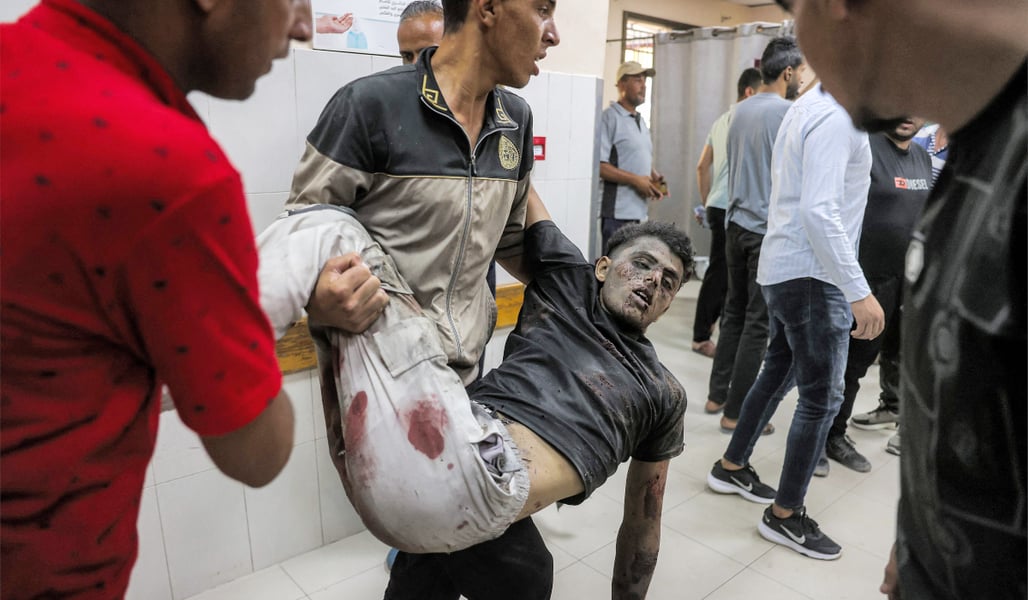
Reconstruction costs in Gaza are estimated at tens of billions of dollars. International pledging conferences have generated substantial financial commitments. But disbursement has been close to zero, because aid organizations and donor governments require a civilian authority to receive and administer reconstruction funds, and that authority does not exist. The money has pooled in international accounts while rubble has pooled in Gaza’s streets, with the death toll standing at more than 73,000 since the genocide began.
A new Palestinian police force was proposed as a first step toward restoring order. More than 20,000 applications were received. Israel reviewed the recruit list and rejected it, saying some 5,000 candidates had Hamas affiliations or criminal records, according to Arab News, which has been tracking the post-ceasefire governance negotiations. No alternative list has been agreed upon. No police force has been deployed.
Plans for an International Stabilization Force have advanced further than any other element of the post-war agenda. Morocco, Kosovo, Albania, and Kazakhstan have engaged in preliminary coordination. A logistics base at the Kerem Shalom crossing is nearing completion, designed to support approximately 500 troops. The force’s mandate, rules of engagement, chain of command, and whether it can operate without Israeli permission are all unresolved. Israel has not given that permission.
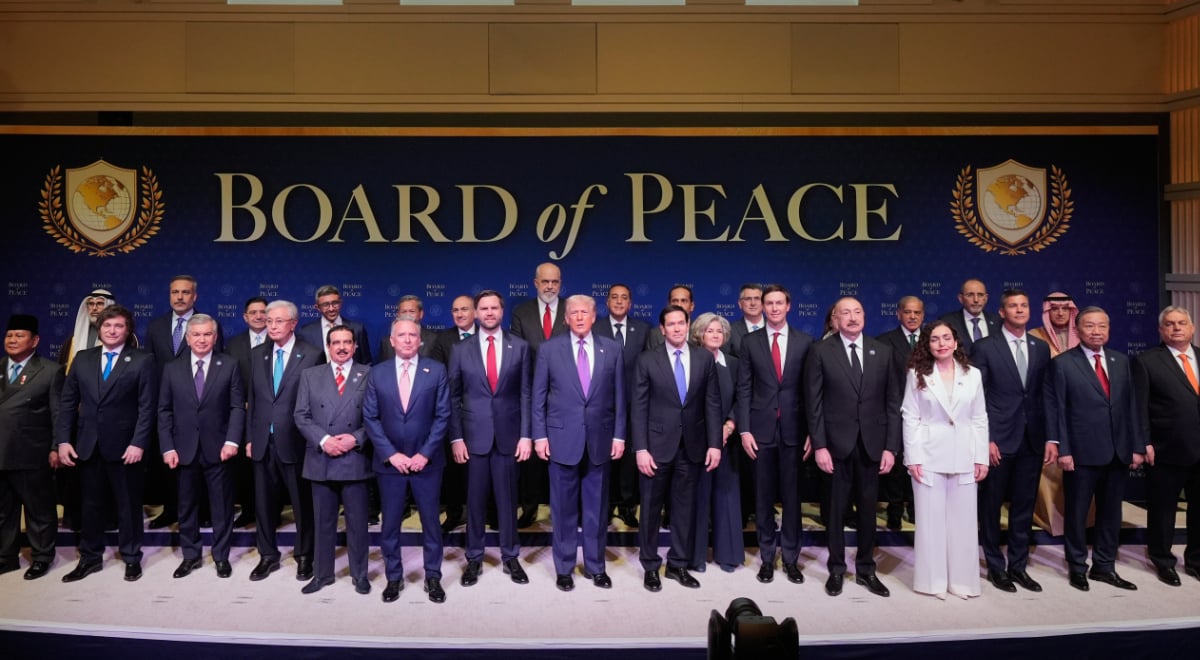
The Trump administration has organized its Gaza diplomacy around what officials call the Board of Peace, an informal structure bringing American, Gulf, and Arab officials together to press both parties toward agreement. American negotiators have focused on persuading Israel to accept a graduated definition of Hamas disarmament, something short of immediate full weapons surrender, in exchange for beginning reconstruction. Israel has declined.
A pilot humanitarian zone in Rafah, designed to allow displaced Palestinians to begin returning under international protection while aid was delivered, has been proposed as a way to create momentum without requiring full political resolution. The proposal remains in early stages, and no timeline for its implementation has been set.
Hamas dissolved its Gaza governing body in July, the first time it had dismantled that structure in twenty years, in what analysts interpreted as a gesture to clear space for a new civilian administration. The move did not produce the reciprocal Israeli concession its architects had intended. Israel, which controls nearly 70 percent of Gaza’s territory under its declared military zones, has continued to insist on disarmament as a precondition for any governing transition.
The logic of the deadlock holds internally. For Hamas, surrendering weapons before an Israeli withdrawal means surrendering the only leverage it possesses with no guarantee of what follows. For Israel, allowing any governance structure to take root while Hamas remains armed means allowing Hamas to eventually capture and direct that structure. Neither position is irrational on its own terms. Together, they make progress structurally impossible as long as each side insists the other must move first.
The Palestinian Authority, which administers portions of the West Bank, has circulated as a possible governing partner for Gaza. Palestinian President Mahmoud Abbas has called legislative elections for November 28, the first in two decades, in part to give any post-war governing arrangement a democratic mandate. Arab states have proposed modified frameworks with international security guarantees designed to make Palestinian Authority involvement acceptable to Hamas. Whether such a framework could be sold to Hamas, and whether Israel would accept a reformed Palestinian Authority as a governing partner in Gaza, has not been resolved.
The cost of delay is compounding. Structures left exposed to the Mediterranean climate deteriorate with each passing month. Unexploded ordnance renders large areas uninhabitable. International health agencies describe conditions in the territory as among the worst documented anywhere since the Second World War. The international community has money, coordination structures, and willing troop contributors. It does not have a political arrangement that works.
Whether such an arrangement is achievable, or whether the deadlock reflects a permanent feature of Israeli policy toward a post-war Gaza, is what none of the diplomats, working groups, or informal boards assembled over the past nine months have been able to answer.