
MOSCOW – In a single month, Russia’s air defenses intercepted more than 21,000 Ukrainian drones over Russian territory.
That figure comes from Russian Defense Ministry data reviewed by RIA Novosti, and it marks July as the most intensive month of drone warfare the conflict has produced. In the first six months of 2026, Russian air defenses downed at least 63,993 Ukrainian unmanned aerial vehicles over Russian soil. July alone added roughly a third of that first-half total in 31 days.
The pace did not arrive evenly. The peak came on July 24 and July 25, when air defenses intercepted 937 and 1,060 drones respectively, a combined two-day total of nearly 2,000 launches in 48 hours. The Russian Defense Ministry reported that most attacks over the month targeted the European part of Russia.
A 1,060-drone day is not a one-off operation. It is the product of sustained industrial output, supply logistics, and distributed launch infrastructure across a territory large enough to challenge Russian radar coverage and interception response times simultaneously. Ukraine has, over the course of the Russian operation, developed an architecture of domestic drone production and dispersed launch sites that enables mass attacks of this kind. That the architecture is functioning at July’s volume is itself a significant operational statement.
For Russia’s layered air defense systems, the July figures represent a 31-day stress test. The Defense Ministry data implies the layer held in terms of intercepts. What it does not account for is how many drones reached their intended targets, what damage was caused, or what the expenditure of interceptor munitions across 21,000 engagements means for reserve stocks.
That gap is the operational uncertainty behind the headline number. Russian air defense has demonstrated throughout the conflict that it can intercept large volumes. Ukraine has demonstrated it can sustain the launches. Previous Russian air defense operations against Ukrainian drone waves, including one that intercepted 101 drones in a single operation in May and a later surge that put 188 drones out of action in 12 hours in early July, showed the system functioning under pressure. July’s aggregate figure represents that pressure sustained continuously across a full month.
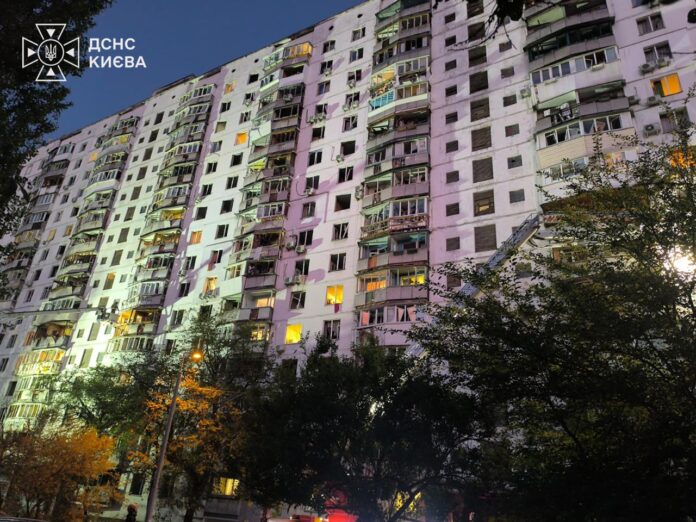
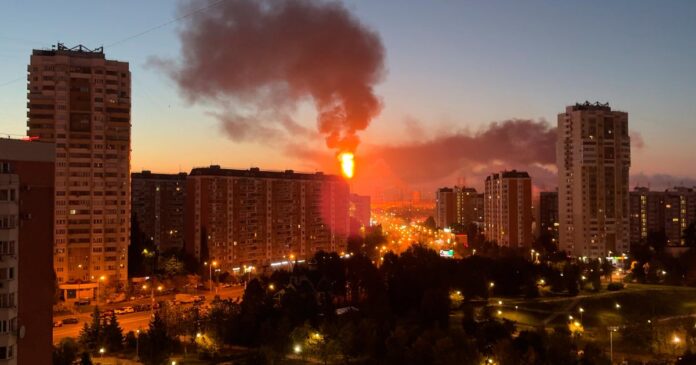
Russia has acknowledged across the conflict period that some drones get through. Strike footage from various Russian regions throughout July showed warehouse fires, infrastructure damage, and disruption to fuel storage facilities. The 21,000 interception figure is a success metric. The damage that accompanied it is the complication that figure does not capture.
Ukraine’s drone program has evolved considerably from its early iterations. Initial strikes relied heavily on commercially available frames with improvised payloads. The campaign that produced July’s numbers is operating on a different industrial basis, with purpose-built domestic frames, onboard processing to resist jamming, and logistical networks capable of moving large volumes of materiel to distributed launch sites faster than Russian countermeasures can adapt. That evolution is visible in the numbers: a 1,060-drone day is not achievable with an improvised supply chain.
Russia has not disclosed the composition of what its defenses are shooting down. Whether July’s 21,000 included a significant proportion of low-cost attrition drones designed primarily to saturate the defense system, rather than carry payloads that produce structural damage, is unknown from the Defense Ministry figure alone. A system deflecting cheap decoys is being used differently than one absorbing an equal number of high-value strikes. What the July figure is measuring, successful defense or successful saturation, is a question the data does not answer.
The trajectory also matters. The first-half total of 63,993 followed a second half of 2025 that was itself a significant escalation over previous periods. The numbers are not stabilizing. Ukraine’s drone production rate has matched or exceeded the loss rate, allowing it to sustain a campaign that, in volume terms, has only grown since the Russian operation began. Whether July’s pace represents a peak or a baseline for what follows is one of the open questions heading into August.
For the regions absorbing the attacks, the question is not primarily about interception statistics. The European part of Russia that the Defense Ministry identified as bearing the majority of attacks includes populated areas, industrial zones, and logistics corridors that have been targeted in previous drone waves. The cumulative effect of sustained attacks on infrastructure, even at a high interception rate, compounds over time in ways that the monthly intercept figure does not fully convey.
What July’s numbers establish is that the drone campaign has moved from an asymmetric irritant to a sustained strategic instrument. Twenty-one thousand intercepts in a month is not the signature of an attrition tool. It is the signature of a campaign operating at scale. The Russian Defense Ministry has not publicly indicated any change to its air defense deployment posture in response to the July figures.