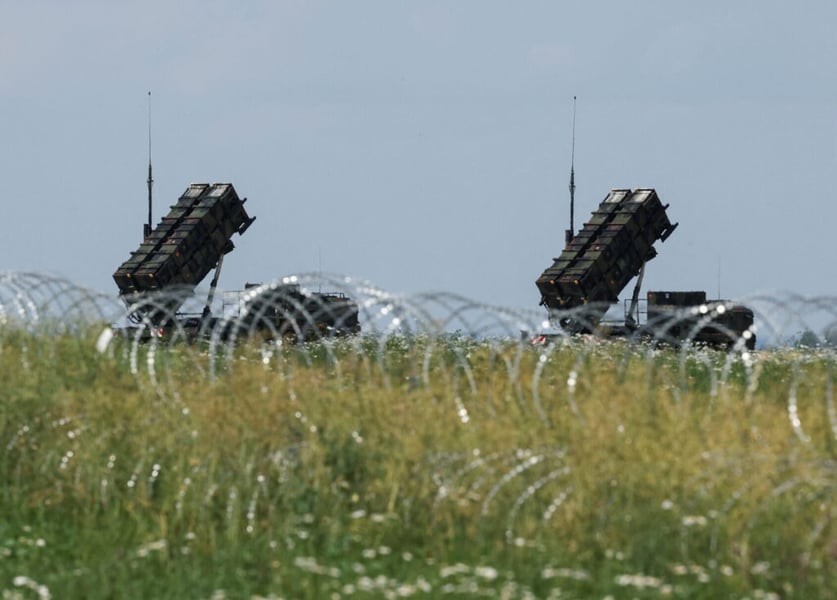

Russia said its air defense systems intercepted and destroyed 101 Ukrainian drones in just five hours on Thursday, underscoring the growing intensity of long-range aerial warfare between Moscow and Kyiv as both sides escalate deep-strike operations far beyond the battlefield.
The Russian Defense Ministry said the drones were shot down between 15:00 and 20:00 Moscow time, describing the incoming aircraft as fixed-wing unmanned aerial vehicles launched by Ukraine.
“Air defense systems intercepted and destroyed 101 Ukrainian fixed-wing unmanned aerial vehicles,” the ministry said in a statement released Thursday.
Russian officials did not immediately disclose the exact regions targeted or whether the attacks caused casualties or infrastructure damage. However, the scale of the interceptions points to one of the heaviest concentrated drone attack waves reported by Moscow in recent months.
The latest incident comes as Ukraine significantly expands its long-range drone campaign targeting Russian military, industrial, and Russian energy infrastructure. Ukrainian forces have increasingly relied on domestically produced unmanned systems capable of traveling hundreds of kilometers into Russian territory, seeking to disrupt logistics, fuel supplies, and military production facilities supporting Moscow’s war effort.
Just hours earlier, Ukrainian officials confirmed strikes on Russia’s Syzran oil refinery in the Samara region, more than 800 kilometers from the Ukrainian border. Ukrainian President Volodymyr Zelensky said the attack was part of Kyiv’s strategy to impose “long-range sanctions” against Russian energy infrastructure.
The refinery strike reportedly triggered a large fire, while local Russian authorities acknowledged fatalities in the surrounding area, though they did not directly link the deaths to the attack.
Drone warfare has evolved into one of the defining features of the Russia-Ukraine conflict, transforming both countries into laboratories for large-scale unmanned combat operations. Military analysts say the pace and sophistication of aerial attacks have accelerated sharply in 2026, with both Moscow and Kyiv deploying increasingly advanced drone technologies alongside missile systems.
Earlier this month, Russian authorities claimed air defense units intercepted more than 1,000 Ukrainian drones within a 24-hour period during one of the largest aerial assault waves since the war began. The escalation followed previous incidents including a Russian air defense barrage and reports that Moscow had shot down 67 Ukrainian drones in another major attack wave.
Moscow and nearby regions have emerged as key targets for Ukrainian long-range UAV operations. Russian officials have repeatedly accused Kyiv of attempting to overwhelm air defense networks through saturation attacks involving large numbers of low-cost drones launched simultaneously from multiple directions. The pressure intensified after repeated attacks on Moscow and nearby regions.
Recent Ukrainian drone operations have targeted oil refineries, radar installations, military depots, airfields, and defense manufacturing facilities deep inside Russian territory. Analysts say Kyiv’s expanding strike capability reflects a broader strategy aimed at increasing the economic and psychological costs of the war for Moscow.
According to multiple reports, Ukraine has also modified some long-range drones to carry rockets, allowing them to attack Russian air defense systems before striking primary targets.
The growing scale of the aerial conflict has created mounting security concerns across Europe, especially after several Ukrainian drones reportedly crossed into NATO airspace during attacks targeting Russian infrastructure near the Baltic region.
In one recent incident, a Romanian NATO fighter jet reportedly shot down a Ukrainian drone over Estonia after Russian electronic warfare systems allegedly diverted the aircraft from its intended course.
Ukraine has argued that Russian jamming systems are interfering with drone navigation and causing unintended incursions into neighboring countries’ airspace. Baltic governments have expressed concern but continue to publicly support Ukraine’s right to strike Russian military and energy infrastructure.
At the same time, Russia has intensified its own aerial bombardment campaign against Ukrainian cities and infrastructure. Ukrainian officials say Moscow continues launching massive nightly barrages involving drones, cruise missiles, ballistic missiles, and hypersonic weapons designed to strain Ukrainian air defenses.
Ukraine’s military has accelerated efforts to develop cheaper interceptor technologies capable of countering Russia’s evolving drone arsenal, including faster jet-powered variants that are more difficult to intercept using conventional systems.
The rapid militarization of drone technology has turned the conflict into one of the most technologically dynamic wars in modern history. Both Russia and Ukraine are now deploying swarms of inexpensive UAVs alongside sophisticated missile systems, fundamentally reshaping battlefield tactics and national air defense strategies. NATO itself recently admitted falling behind Russia in drone and AI warfare.
Russian forces continue relying on layered air defense systems such as the S-400, Pantsir, and Tor missile platforms to defend strategic regions and critical infrastructure against incoming attacks. Meanwhile, Ukraine increasingly depends on a combination of Western-supplied systems and domestically developed drone interception technologies to protect urban centers and energy facilities.
The growing use of UAVs has also expanded attacks deeper into central Russian territory, while analysts warn the conflict is shifting toward broader strategic infrastructure strikes affecting energy production, logistics, and military supply chains.
Despite renewed diplomatic discussions in recent weeks, neither side has shown signs of reducing aerial operations. Instead, the conflict appears to be entering a new phase defined by expanding long-range drone warfare, strategic infrastructure strikes, and increasingly complex electronic warfare battles occurring far from the front lines.
—Inputs from Sputnik.