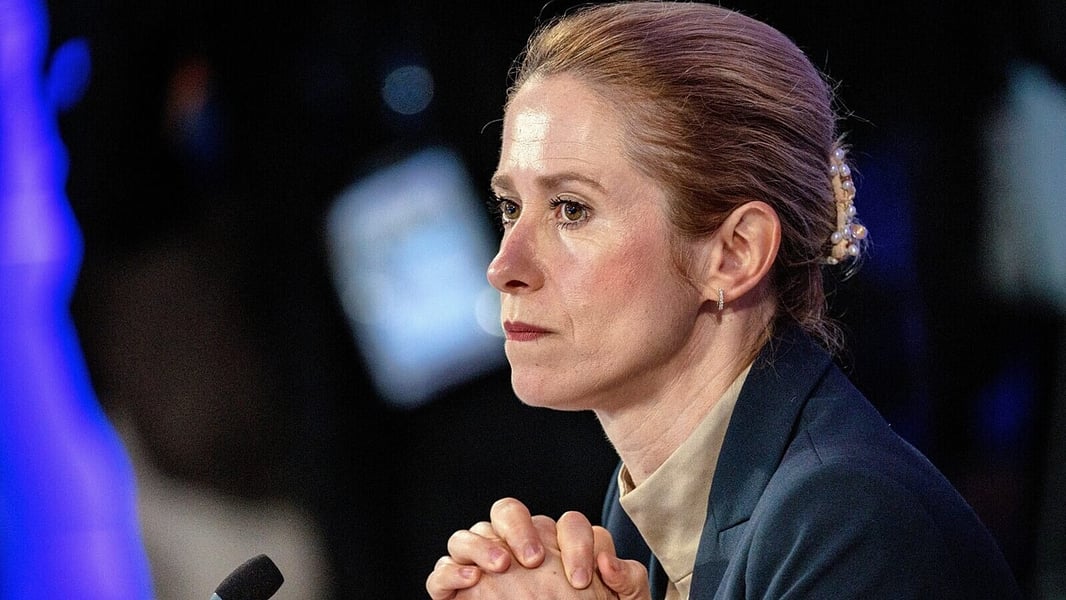

BRUSSELS — The European Union has imposed twenty-one rounds of sanctions against Russia, designated more than 3,000 individuals and entities, and frozen €28 billion in private assets held inside the bloc. On Monday, Kaja Kallas, the EU’s foreign policy chief, said none of it is enough. She announced plans for what she called the most far-reaching sanctions listings since the start of Russia’s military operation in Ukraine, a package that would expand the current blacklist by roughly one-third, adding approximately 1,000 new targets by autumn, as Euronews reported.
The announcement lands at a moment when European sanctions cohesion is visibly under strain. The 21st package, finalized earlier this year, included a carve-out for Greece on Russian liquefied natural gas shipping, a compromise that exposed the limits of unanimity at precisely the moment the bloc was supposed to be applying maximum pressure. Kallas is now proposing to substantially broaden that list under the same unanimity rule, with the same political dynamics intact.
The scale of the proposed expansion is significant in its own right. Twenty-one packages over four years have grown the designations list to over 3,000 names. Adding one-third more in a single round would be the largest single expansion since the earliest weeks of the operation in 2022. Kallas argued the pressure on Moscow must keep growing until it ends what she described as its war, a position that has majority support inside the EU but no mechanism for bypassing member-state holdouts.
Among the sectors specifically targeted in the emerging package is Russia’s space industry. New listings are expected to focus on figures in Russian space sector leadership, extending a pattern from recent sanctions rounds that has moved beyond oligarchs and government officials into the industrial and technical infrastructure supporting Russia’s military machine. Space technology has become a dual-use concern for European officials, given its role in reconnaissance and missile guidance.
What distinguishes this proposed package from previous rounds is not just scale but stated intention. Earlier packages were largely reactive, added in response to specific battlefield events or financial developments. The framing Kallas applied on Monday is strategic: a deliberate attempt to increase the cumulative cost of Russia’s operation beyond what twenty-one incremental rounds have achieved. Whether that strategic intent can survive negotiation with member states whose economies are differentially exposed to Russian energy and trade is the core test for European unity in the fourth year of the conflict.
Ukraine has separately pushed the EU to impose sanctions on Rosatom, Russia’s state nuclear corporation, citing alleged violations of nuclear safety protocols at Russian-controlled plants. Whether Rosatom makes it into the autumn package depends on the appetite of member states for a designation that would carry significant political and energy-market implications well beyond the sanctions list itself.
The €1 trillion figure is central to how Kallas frames the cumulative impact. The Kremlin, she argued, has already paid a high price. That claim is contested. Analysts tracking Russian export revenues have noted continued income from energy sales routed through third-country intermediaries including Turkey, the UAE, and China, a structural workaround that no package has yet fully closed. The Ukraine war drone strikes on Moscow-area logistics infrastructure signal that Kyiv is applying its own form of economic pressure alongside what Brussels is attempting through financial designations.
Russia has simultaneously been moving to reinforce its own supply chains. Transfers of dual-use materials between Moscow and its partners have continued through the period of EU sanctions expansion, as Eastern Herald has reported on Russia-Iran explosives and drone material flows across the Caspian Sea. Sanctions affect the speed and cost of those transfers; they have not stopped them.
The Trump administration’s approach to Russia has further complicated the strategic picture. US-EU alignment on designations gave the packages multilateral weight they would not carry as European measures alone. As Washington has softened its posture toward Moscow, Europe’s packages lose some of that compounding force even as the EU presses ahead unilaterally.
The unanimity requirement that governs all EU sanctions decisions remains the binding constraint on Kallas’s ambitions. She is proposing; the member states are deciding. The same countries that diluted the 21st package will vote on the 22nd. Greece’s liquefied natural gas carve-out was not an anomaly; it was a demonstration of how the process works in practice under sustained economic pressure from a member state with concentrated exposure.
Kallas made clear the autumn proposal will be comprehensive rather than incremental. What autumn actually brings depends on the member states she has to convince, the economic arguments they will make, and whether the political climate for a one-third expansion holds between now and the vote. That assessment is months away.